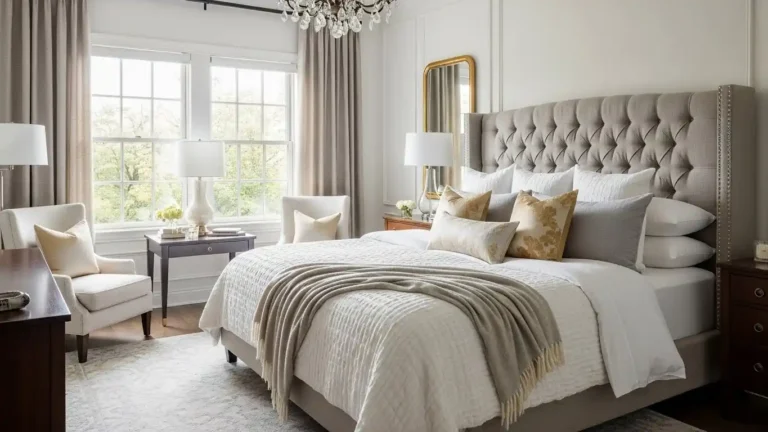
1. Neutral Zen Retreat
A neutral Japandi Bedroom Designs creates instant calm by blending warm beige, ivory, and soft taupe shades. These understated colors allow natural textures to shine, keeping the room light and grounded. A low-profile wooden bed paired with linen bedding enhances the peaceful aesthetic while maintaining a refined, minimalist look ideal for everyday comfort.
This design prioritizes balance and breathability, making it perfect for unwinding after a long day. Subtle decor like ceramic vases or woven accents adds warmth without clutter. Natural light plays a key role, highlighting organic materials and reinforcing the Japandi philosophy of simplicity, mindfulness, and timeless comfort.
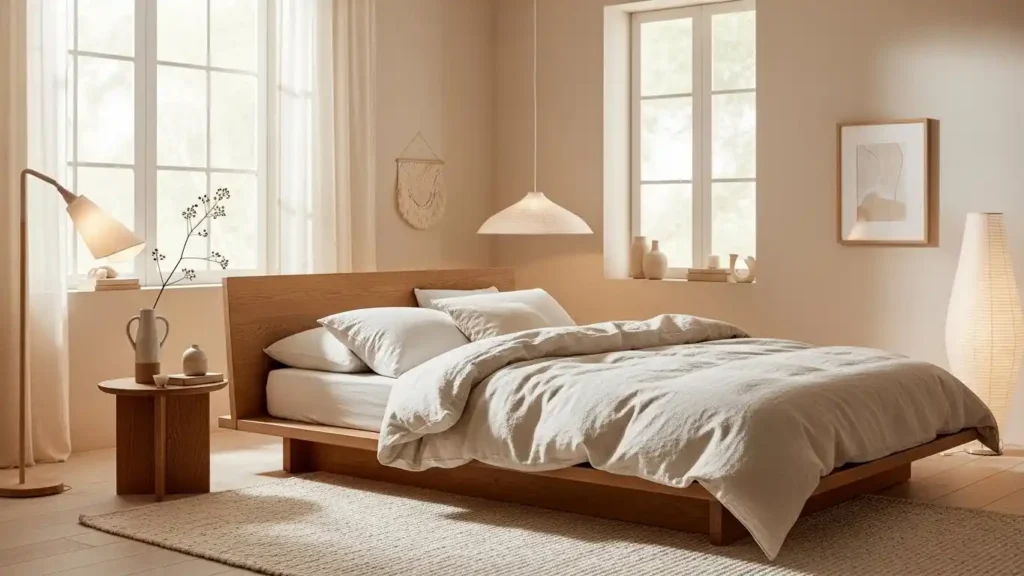
2. Warm Wood Haven
Warm wood elements are central to Japandi bedroom design, offering both durability and visual warmth. Oak or walnut bed frames instantly ground the space while maintaining a minimalist feel. Paired with white or soft gray walls, the wood becomes a focal point that feels organic rather than overpowering.

This style promotes a cozy yet uncluttered environment, perfect for Pinterest audiences seeking serenity. Soft throws, neutral rugs, and minimal wall art elevate comfort without disrupting the clean aesthetic. The result is a bedroom that feels welcoming, timeless, and deeply connected to nature.
3. Low Bed Minimalism
A low bed instantly channels Japanese design principles while enhancing the minimalist appeal of a Japandi bedroom. Positioned close to the floor, it creates a grounded, peaceful atmosphere that encourages rest. Clean lines and neutral bedding keep the look refined and effortlessly modern.
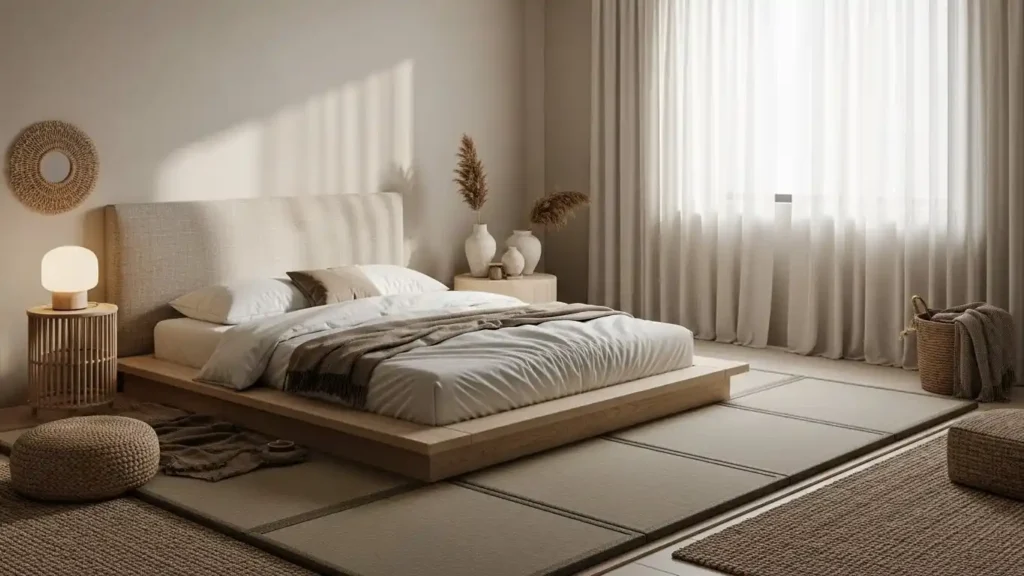
This design works beautifully in both small and spacious bedrooms. The open visual space enhances airflow and natural light, making the room feel larger. Paired with minimal furniture and subtle textures, a low bed layout delivers unmatched comfort rooted in simplicity and mindful living.
4. Soft Linen Layers
Layered linen bedding brings softness and tactile comfort to Japandi bedroom interiors. Natural fabrics in muted tones enhance the relaxed aesthetic while maintaining a refined, minimalist look. Linen’s breathable quality also supports restful sleep, making it both practical and visually appealing.
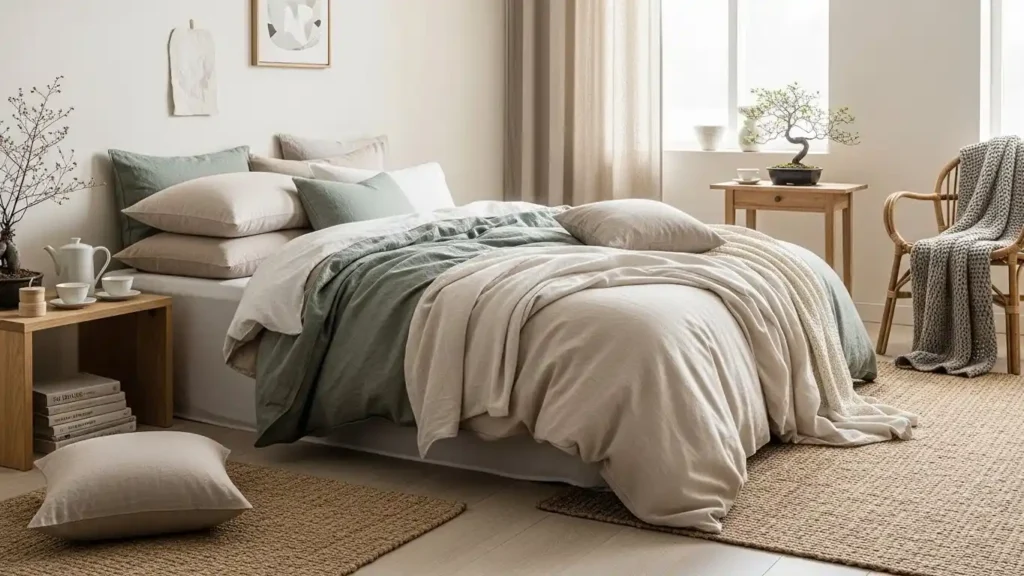
This approach adds depth without clutter, a key element of Japandi style. Light throws, textured pillows, and simple bed styling create an inviting atmosphere. When paired with wooden furniture and minimal accessories, linen layers transform the bedroom into a calm retreat perfect for daily relaxation.
5. Earth-Toned Serenity
Earth tones like clay, sand, and soft brown bring warmth and grounding energy to Japandi bedrooms. These hues connect the space to nature, creating a soothing environment ideal for rest. Paired with wooden furniture, they enhance the organic appeal without overwhelming the minimalist layout.
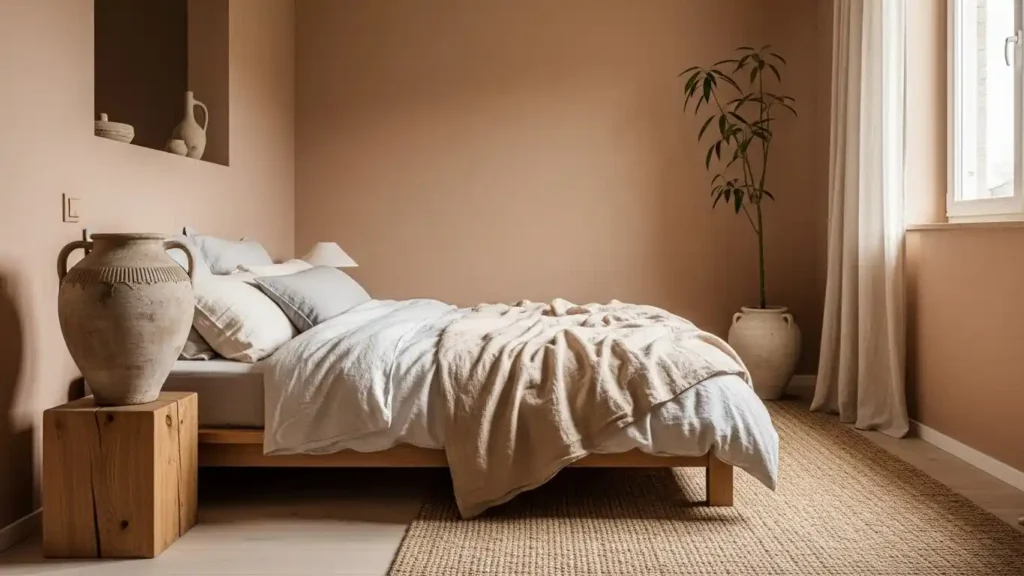
This design style feels especially comforting during quiet evenings. Natural textures, ceramic accents, and subtle contrast keep the room visually interesting yet peaceful. Earth-toned Japandi bedrooms are perfect for those seeking emotional calm through thoughtful, nature-inspired interior design.
6. Scandinavian Light Balance
Scandinavian brightness blends beautifully with Japanese minimalism in Japandi bedroom designs. White walls reflect light, creating an airy feel that enhances relaxation. Light wood furniture adds warmth without disrupting the clean, uncluttered aesthetic that defines this style.
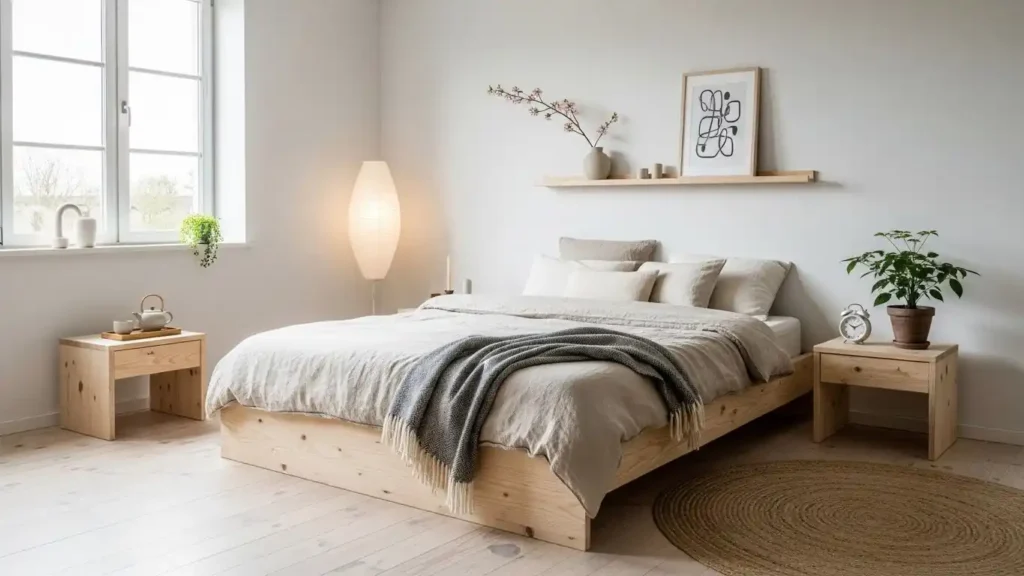
This balance makes the bedroom feel fresh yet cozy, ideal for Pinterest audiences who love modern simplicity. Soft textiles and functional decor ensure comfort remains a priority. The result is a harmonious space that feels open, calm, and perfectly suited for minimalist living.
7. Minimal Wall Decor
Minimal wall decor plays a vital role in maintaining Japandi bedroom serenity. Simple line art or a single framed piece keeps visual noise low while adding subtle personality. Neutral frames blend seamlessly into the calming color palette.
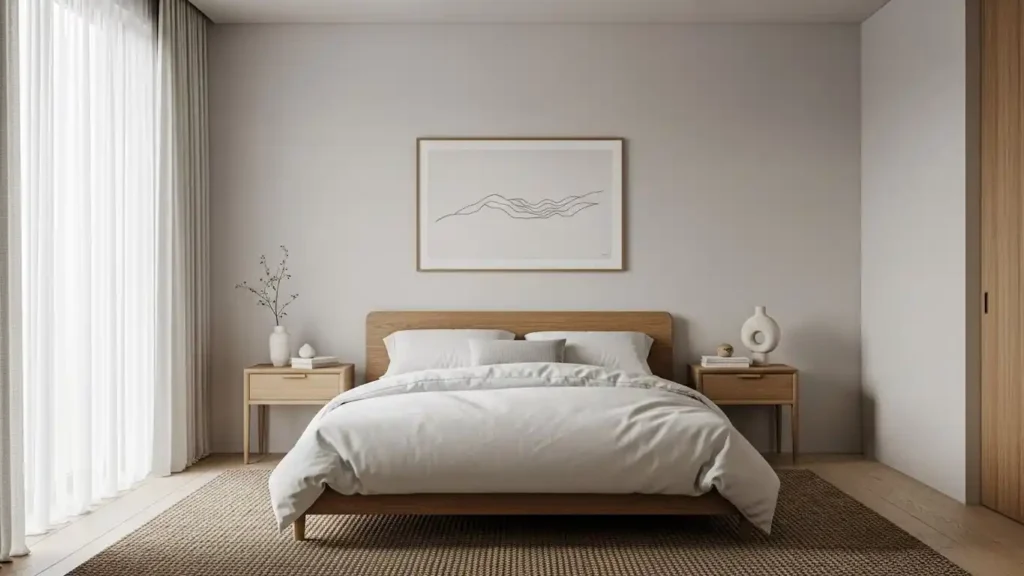
This restrained approach allows the room to breathe, supporting mindfulness and relaxation. Empty space is intentional, not unfinished. By limiting wall decor, the focus remains on textures, materials, and natural light—key elements that define Japandi’s minimalist comfort.
8. Natural Light Focus
Natural light transforms a Japandi bedroom into a tranquil sanctuary. Large windows paired with sheer curtains soften sunlight while maintaining privacy. This gentle illumination enhances textures and neutral tones, creating a peaceful visual rhythm throughout the space.

Designing around light also supports mental well-being and relaxation. Furniture placement remains minimal to avoid blocking windows. The result is a bright yet calming bedroom that feels connected to nature, aligning perfectly with Japandi design principles.
9. Tatami-Inspired Calm
Tatami-inspired elements introduce authentic Japanese influence into Japandi bedrooms. Floor-level designs and natural materials evoke calm and simplicity. Even without actual tatami mats, similar textures can create the same grounding effect.
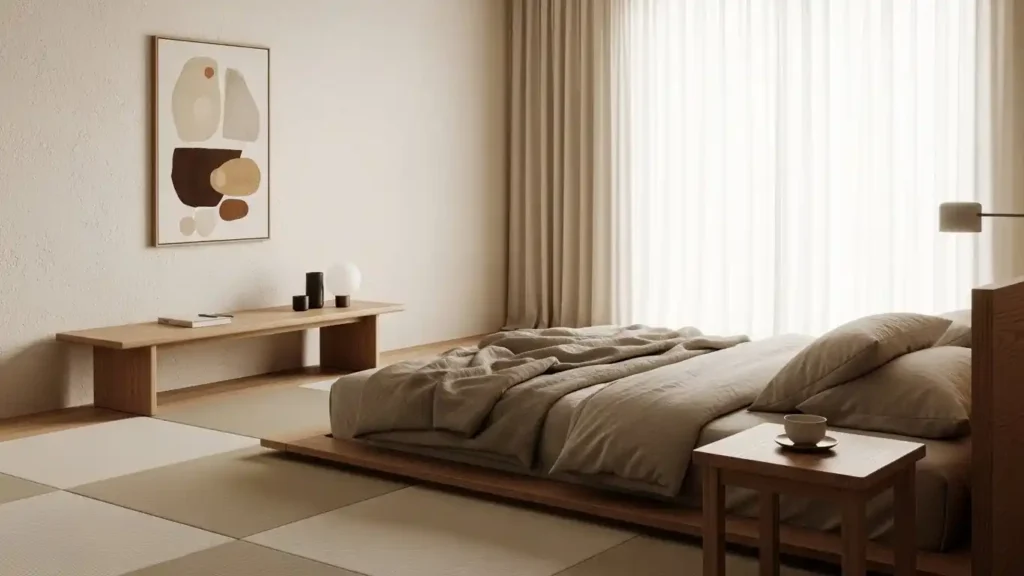
This approach emphasizes mindful living and intentional design choices. Minimal furniture keeps the room uncluttered, while soft textiles maintain comfort. Tatami-inspired Japandi bedrooms are ideal for those seeking harmony, balance, and understated elegance.
10. Cozy Neutral Textures
Texture is essential for making neutral Japandi bedrooms feel warm and inviting. Woven rugs, knit throws, and linen bedding add depth without overwhelming the space. These tactile elements keep the minimalist design from feeling cold or sterile.

By layering textures thoughtfully, the bedroom achieves visual interest while preserving simplicity. Natural materials dominate, reinforcing the Japandi connection to nature. This design delivers comfort, balance, and Pinterest-worthy charm.
11. Japandi Black Accents
Black accents add depth and contrast to Japandi bedroom interiors without overpowering the calm aesthetic. Used sparingly in lamps, frames, or bed details, black grounds the space while enhancing its modern appeal. Combined with light woods and neutral fabrics, it creates a refined yet soothing visual balance.
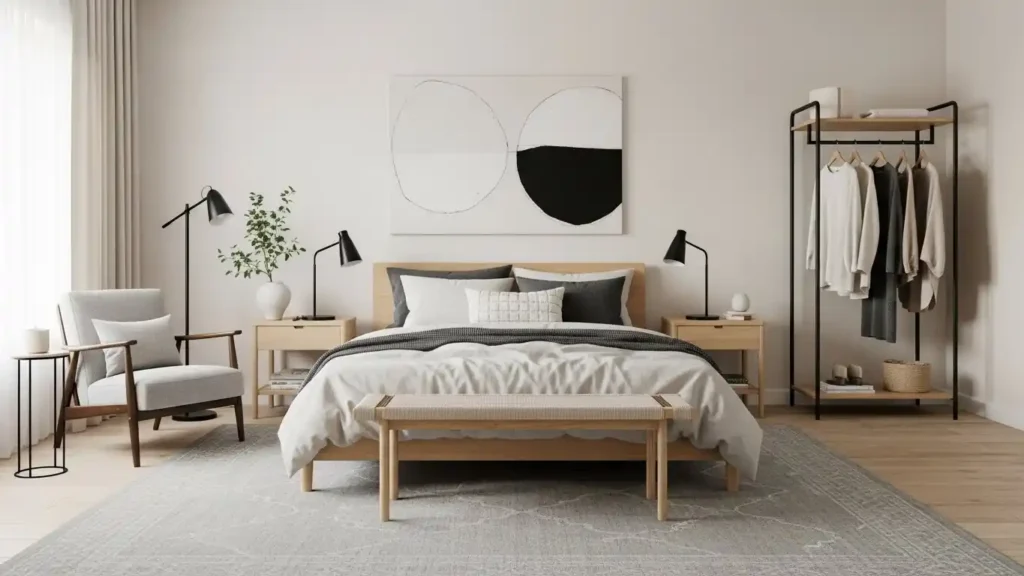
This contrast-driven approach appeals to minimalists who want subtle drama. Clean lines and thoughtful placement keep the room uncluttered. The result is a serene bedroom that feels intentional, stylish, and perfect for contemporary Japandi living.
12. Soft Gray Harmony
Soft gray tones bring elegance and tranquility to Japandi bedroom designs. Acting as a neutral base, gray complements natural wood and linen textures beautifully. It adds sophistication without disrupting the minimalist vibe, making the bedroom feel calm yet polished.
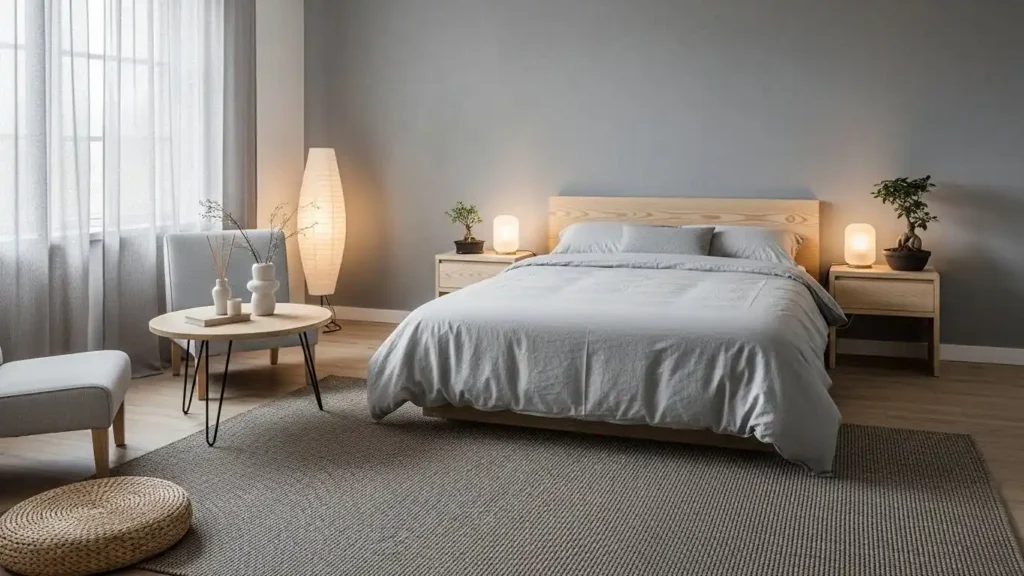
This color choice works well in both small and large spaces. Layered gray textiles paired with warm lighting enhance comfort. The overall effect is a peaceful, Pinterest-worthy bedroom that supports rest and mindful living.
13. Wooden Slat Feature Wall
A wooden slat feature wall adds architectural interest to Japandi bedrooms while staying true to minimalist principles. The vertical lines introduce texture and warmth without overwhelming the space. Paired with a low bed, it creates a balanced and grounded look.
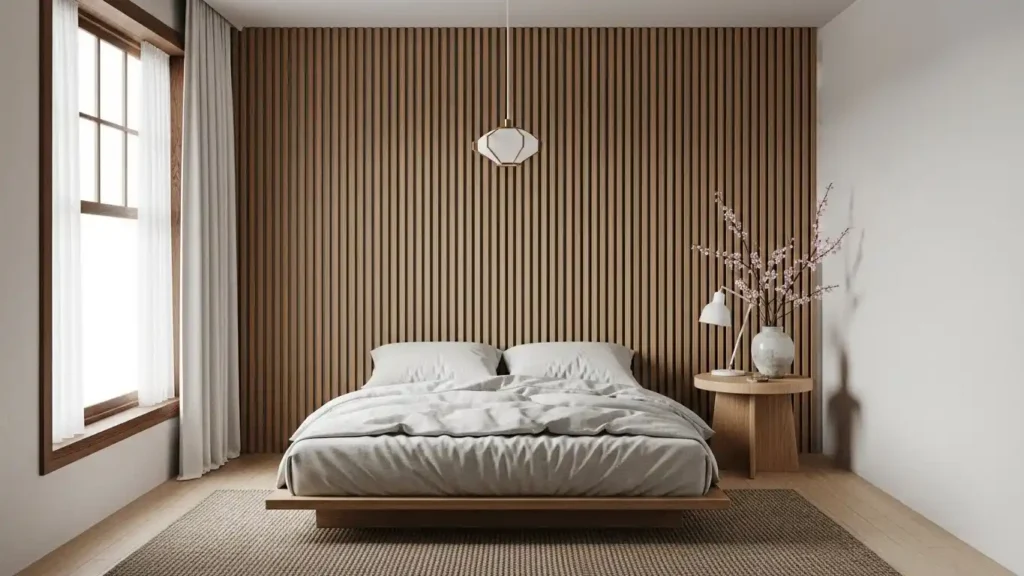
This feature works as a subtle focal point, reducing the need for extra decor. Natural finishes maintain harmony and simplicity. It’s a stylish way to elevate the bedroom while preserving Japandi’s calm and organic feel.
14. Floor Cushion Comfort
Floor cushions reflect Japanese living traditions while enhancing comfort in Japandi bedrooms. They encourage relaxation and add versatility without adding bulky furniture. Neutral fabrics keep the look cohesive and uncluttered.
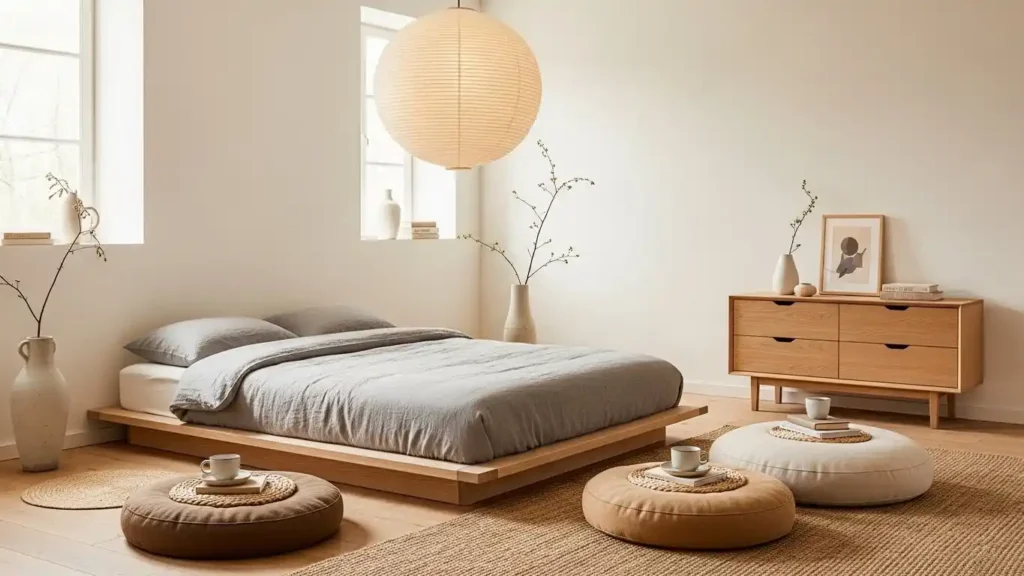
This design choice creates a casual, welcoming vibe perfect for reading or meditation. Paired with low furniture and soft lighting, floor cushions reinforce mindful living. The bedroom feels intentional, cozy, and deeply calming.
15. Warm Ambient Lighting
Warm ambient lighting transforms Japandi bedrooms into peaceful sanctuaries. Soft-glow lamps and paper lanterns create a gentle atmosphere that promotes rest. Lighting remains subtle, avoiding harsh contrasts or bright overhead fixtures.
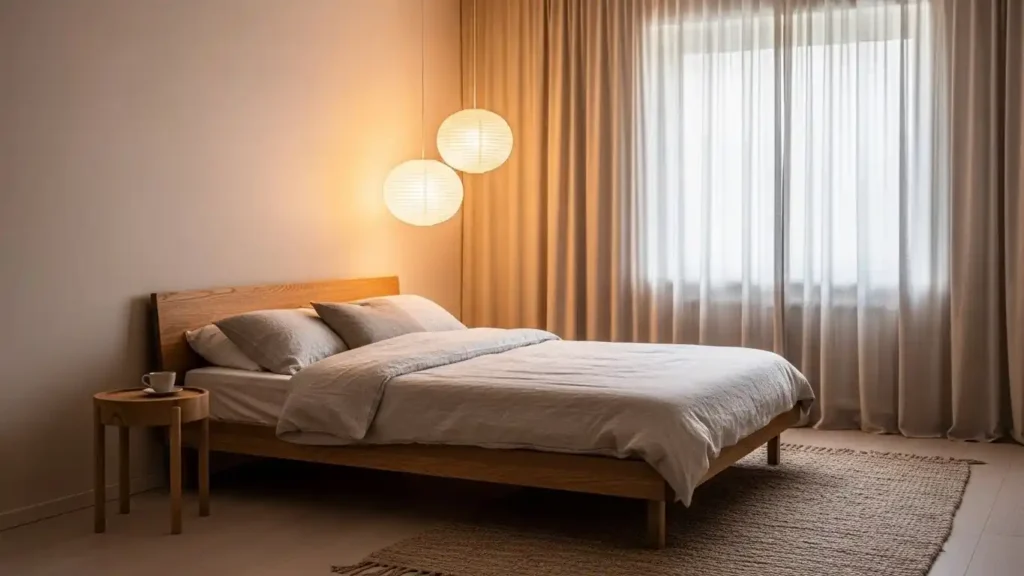
This approach highlights textures and natural materials beautifully. Warm lighting also enhances emotional comfort, making the bedroom feel cozy and inviting. It’s a simple yet powerful way to elevate Japandi’s minimalist charm.
16. Minimal Nightstand Styling
Minimal nightstand styling supports the Japandi principle of intentional simplicity. A single ceramic vase or book adds personality without clutter. Clean surfaces help maintain a calming visual flow throughout the room.
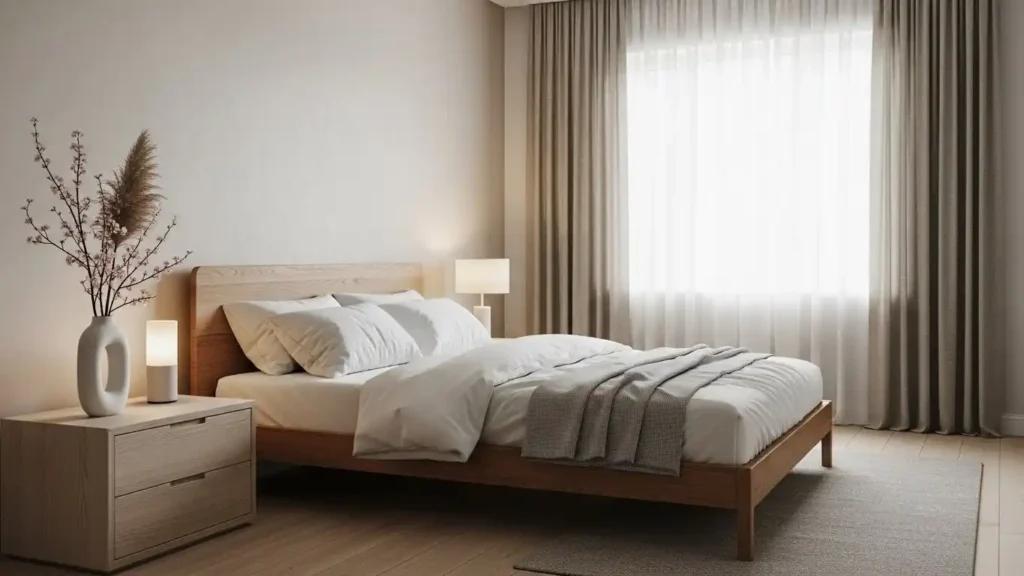
This design choice emphasizes functionality and mindfulness. Everything has a purpose, reducing distractions. The result is a bedroom that feels organized, peaceful, and perfectly aligned with Japandi aesthetics.
17. Nature-Inspired Decor
Nature-inspired decor strengthens the Japandi connection to the outdoors. Indoor plants, stone accents, or organic textures introduce life and freshness. These elements enhance well-being without disrupting the minimalist layout.
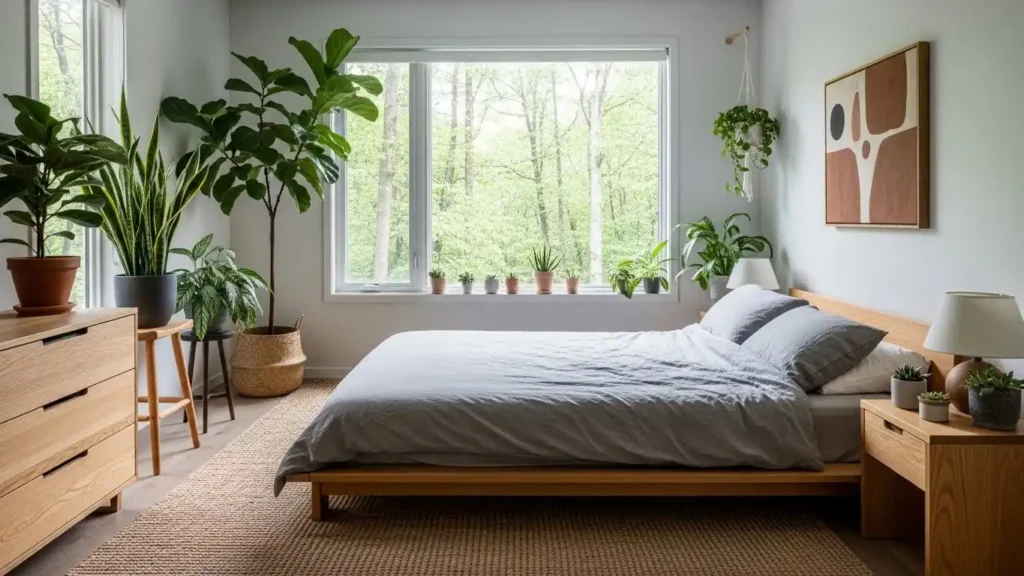
The key is restraint—one or two natural accents are enough. Combined with neutral tones and clean lines, nature-inspired decor creates a soothing environment that feels balanced and timeless.
18. Neutral Canopy Touch
A soft fabric canopy adds elegance to Japandi bedrooms while preserving simplicity. Light, neutral materials create visual softness without heaviness. The canopy frames the bed, enhancing comfort and intimacy.
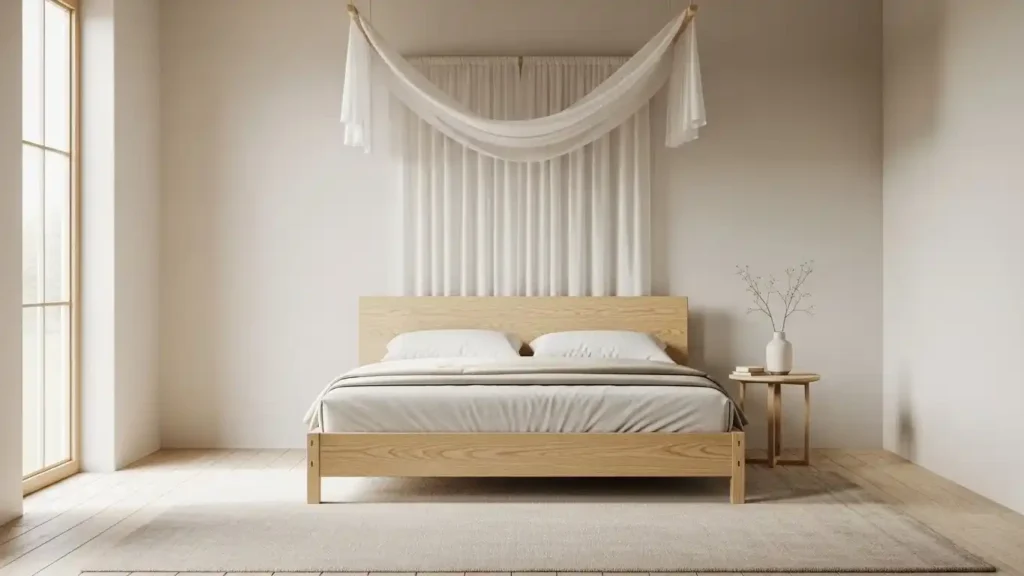
This design works especially well in spacious rooms. When styled minimally, it elevates the aesthetic without clutter. The result is a serene, Pinterest-worthy bedroom with subtle luxury.
19. Hidden Storage Minimalism
Hidden storage solutions help maintain Japandi bedroom simplicity. Built-in drawers or under-bed storage keep essentials out of sight, preserving clean lines. This approach supports a clutter-free environment.
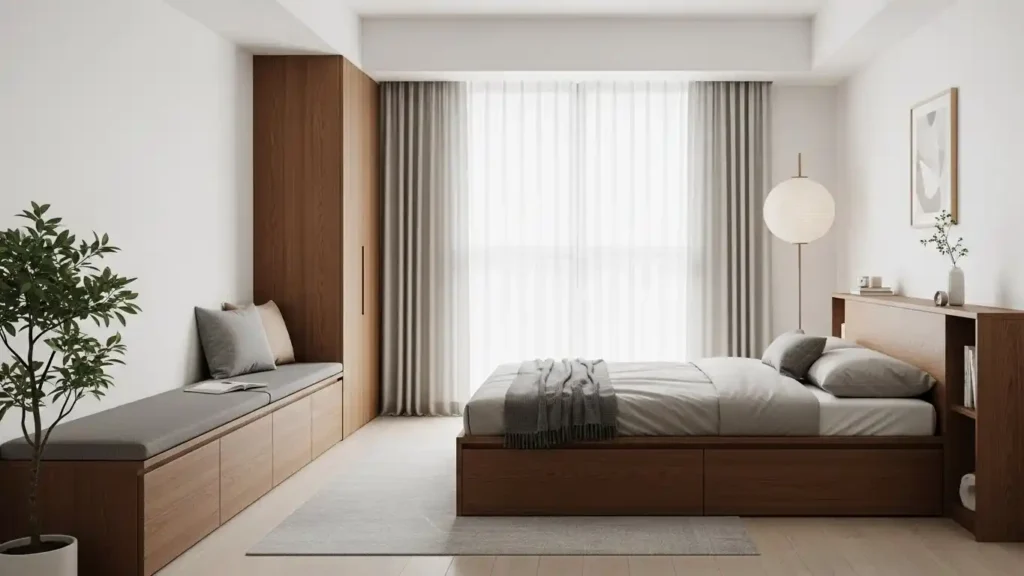
Functionality blends seamlessly with aesthetics here. Organized spaces promote mental calm and relaxation. Hidden storage ensures the bedroom remains visually peaceful and effortlessly minimalist.
20. Textured Wall Finishes
Textured wall finishes add subtle depth to Japandi bedroom interiors. Plaster or limewash walls introduce organic character without bold patterns. Neutral tones keep the look cohesive and calming.
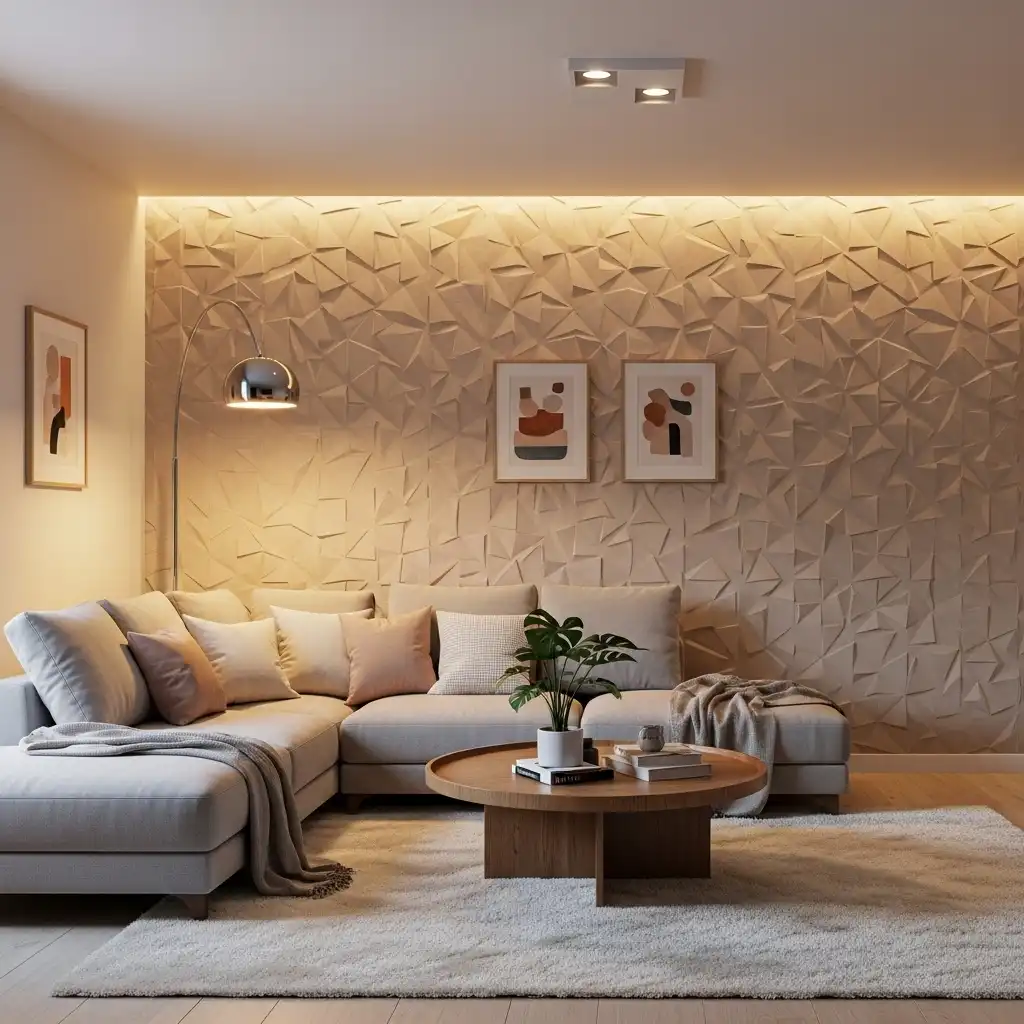
These finishes interact beautifully with natural light, enhancing warmth and texture. The bedroom feels handcrafted and serene, aligning perfectly with Japandi’s understated elegance.
21. Soft Beige Palette
A soft beige palette creates warmth while maintaining minimalist balance. Beige tones complement wood textures and natural fabrics effortlessly. The result is a cozy yet refined bedroom atmosphere.
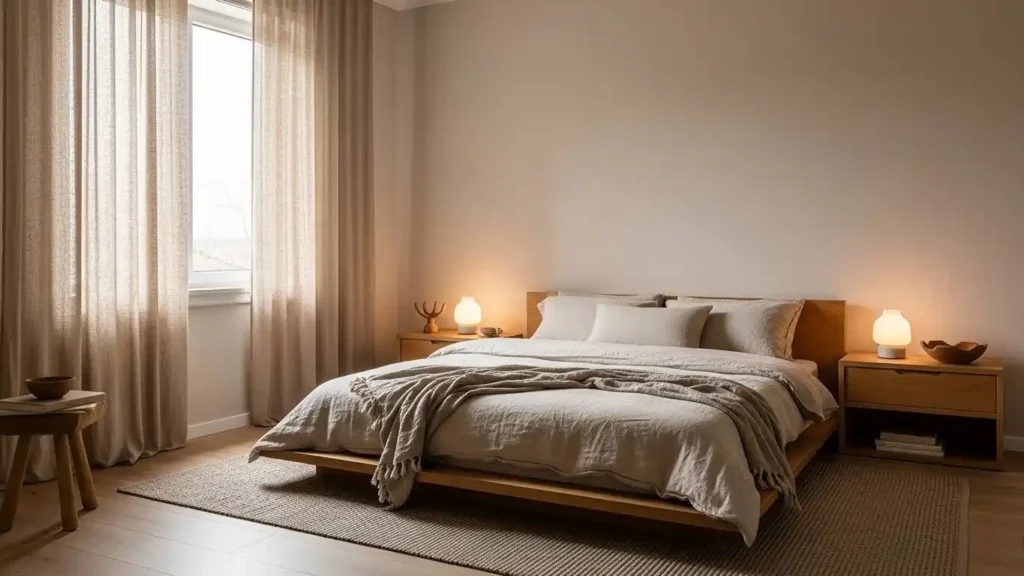
This palette feels timeless and adaptable. Layered neutrals enhance depth without clutter. Beige Japandi bedrooms are ideal for those seeking calm, comfort, and visual harmony.
22. Minimal Headboard Design
A minimal headboard reinforces Japandi’s clean aesthetic. Simple wooden designs add structure without visual noise. The focus remains on comfort and material quality.
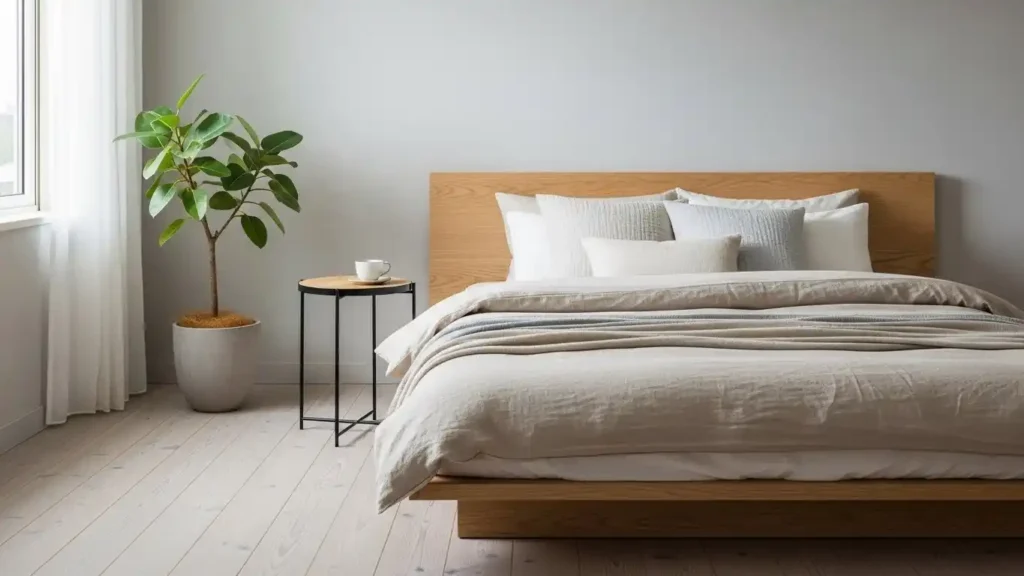
This understated approach works well with low beds and neutral palettes. It enhances the bedroom’s calm energy, making the space feel intentional and balanced.
23. Japandi Symmetry
Symmetry creates visual order in Japandi bedroom designs. Balanced layouts promote calm and stability. Matching elements add harmony without excess decoration.
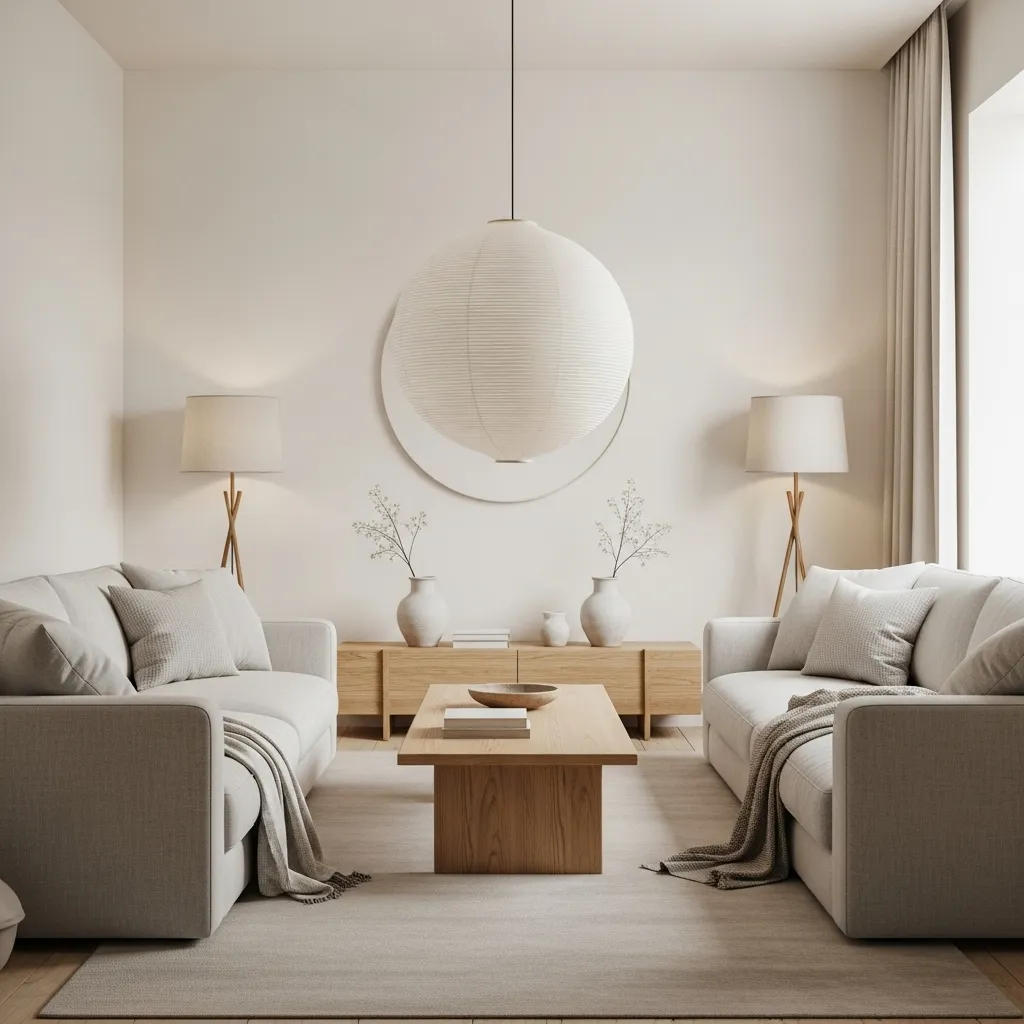
This structured approach supports relaxation and mindful living. The bedroom feels organized and serene, appealing to Pinterest users who value balance and simplicity.
24. Matte Finish Elegance
Matte finishes enhance Japandi’s understated sophistication. They reduce glare and create a softer visual experience. Wood surfaces appear more natural and calming.
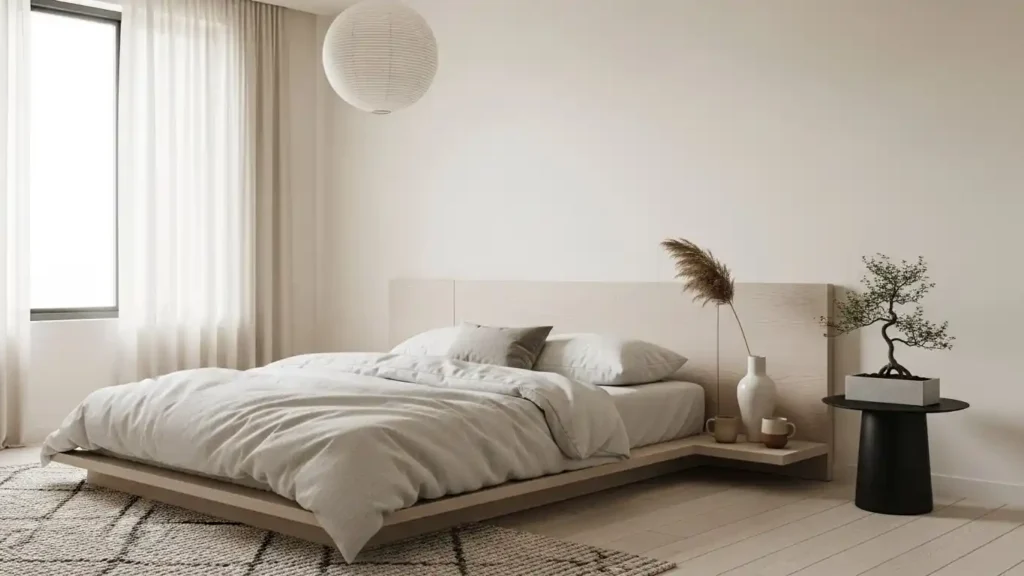
This finish choice complements minimalist design beautifully. The bedroom feels refined yet approachable, blending comfort with modern elegance.
25. Ultimate Calm Sanctuary
The ultimate Japandi bedroom combines all key elements—neutral colors, natural textures, minimal decor, and intentional layout. Every detail supports rest and tranquility.
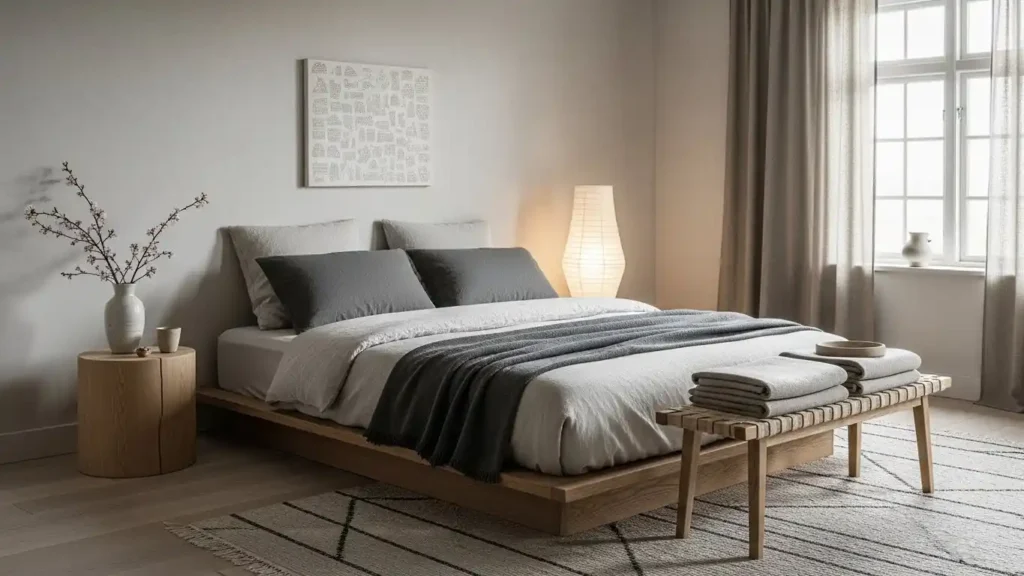
This design feels timeless and deeply comforting. It’s a sanctuary that promotes balance, mindfulness, and everyday calm—perfectly aligned with Pinterest-inspired minimalist living.
Conclusion
Japandi bedroom design is all about creating a peaceful sanctuary where simplicity meets warmth. By blending Japanese minimalism with Scandinavian coziness, this style emphasizes natural materials, muted color palettes, and thoughtful design choices that feel both modern and timeless. Each element serves a purpose, making the bedroom feel uncluttered, balanced, and deeply calming.
Whether you prefer soft neutrals, low-profile furniture, or organic textures, these 25 Japandi bedroom designs prove that minimalist living doesn’t have to feel cold or boring. Instead, it invites comfort, serenity, and intentional beauty—perfect for transforming your bedroom into a soothing retreat you’ll love coming home to.