1. Neutral Wood Harmony Dining Room
The neutral wood harmony Japandi dining room ideas is a foundation of Japandi design, blending Scandinavian warmth with Japanese simplicity. Light oak or ash wood dining tables create a calm and welcoming focal point. Soft beige or off-white walls enhance natural light while maintaining a minimal aesthetic. The result is a peaceful dining space that feels uncluttered, breathable, and effortlessly elegant.
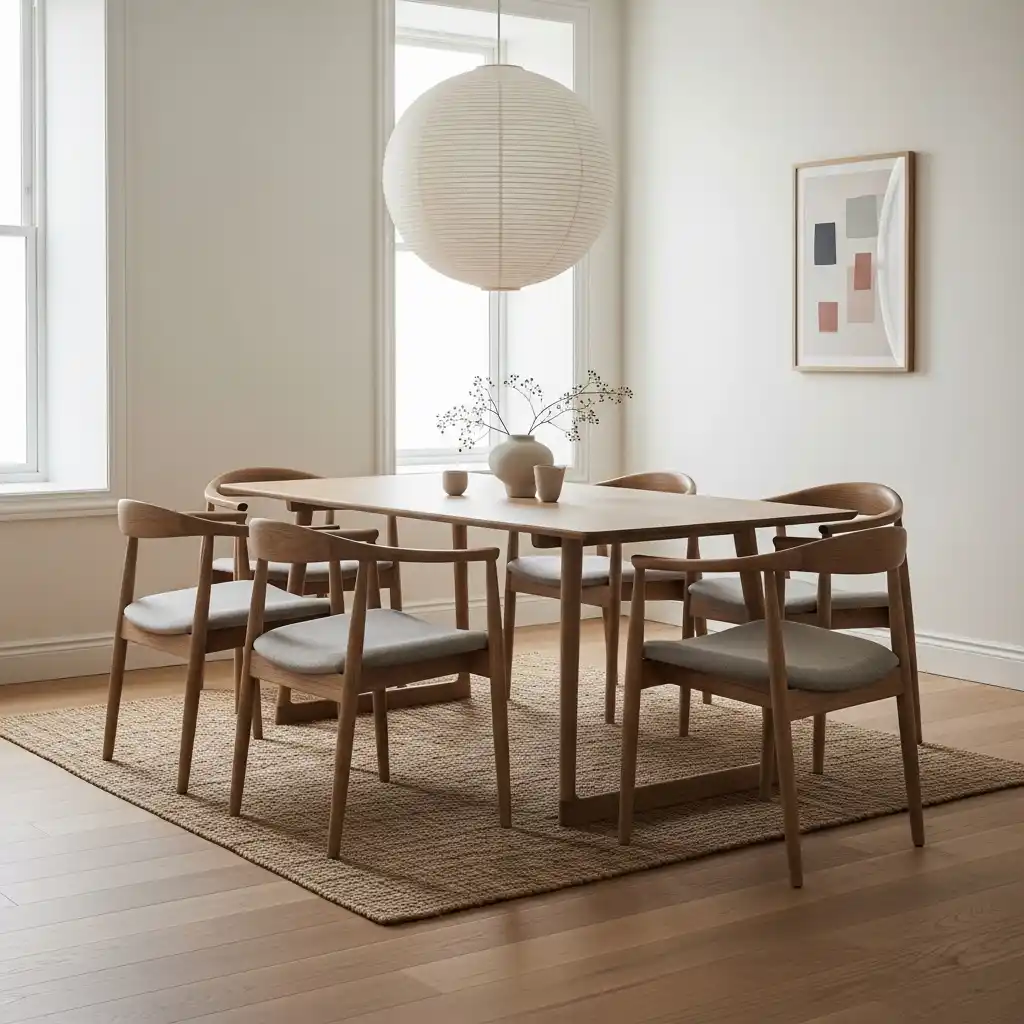
This setup prioritizes comfort through simplicity. Pair wooden furniture with subtle textures like linen cushions or woven placemats to avoid visual flatness. Keep decor minimal—perhaps a single ceramic vase or a small branch arrangement. This balance allows the materials to speak for themselves, creating a dining room that feels grounded, warm, and ideal for everyday meals or intimate gatherings.
2. Low-Profile Japanese-Inspired Dining
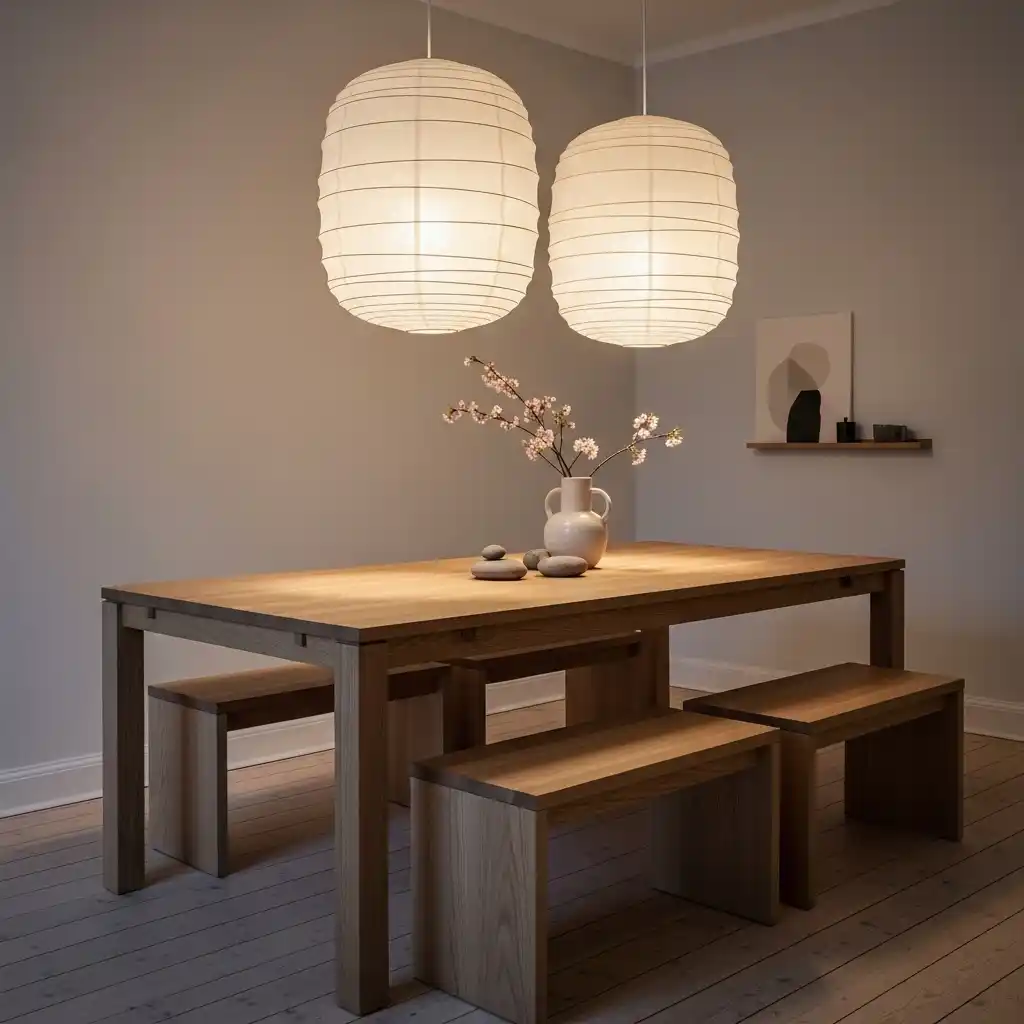
Low-profile dining spaces draw inspiration from traditional Japanese interiors, making them perfect for a Japandi dining room. A lower dining table paired with slim chairs or floor cushions creates a grounded, intimate feel. The minimal height keeps the room visually open while reinforcing the Japandi principle of staying close to nature and simplicity.
This dining style encourages slow, mindful meals and relaxed conversations. Use neutral textiles and natural fibers to add comfort without clutter. Soft lighting, such as paper lanterns or warm pendants, enhances the tranquil ambiance. The result is a dining room that feels intentional, calming, and deeply connected to Japandi’s minimalist philosophy.
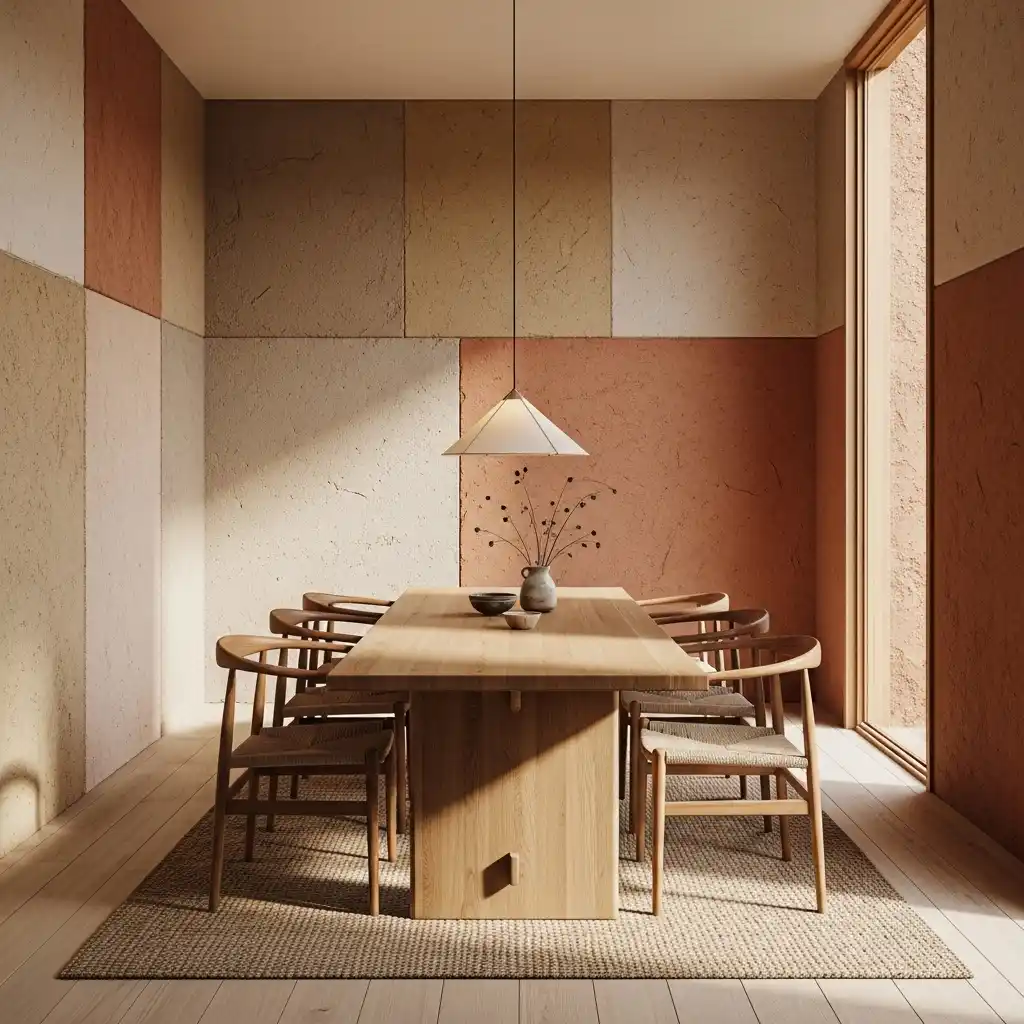
3. Earth-Toned Japandi Dining Space
Earth tones are central to Japandi interiors, bringing warmth and depth without overwhelming the space. Shades like clay, sand, taupe, and warm gray create a grounded dining room atmosphere. These colors pair beautifully with natural wood furniture, reinforcing the connection between Scandinavian comfort and Japanese restraint.
In a dining room, earth tones help establish a cozy yet refined mood. Keep the palette consistent across walls, furniture, and accessories for a cohesive look. Introduce texture through pottery, linen runners, or matte finishes. This subtle layering makes the room feel welcoming while preserving the minimalist elegance that Pinterest audiences love to save and replicate.
4. Minimalist Japandi Dining with Clean Lines
Clean lines are a defining feature of Japandi dining rooms, creating a sleek and timeless look. Choose dining tables and chairs with simple silhouettes and no ornate detailing. This approach keeps the space visually light and organized, allowing the craftsmanship of the materials to take center stage.
A clean-lined dining room feels calm and purposeful, perfect for minimalist comfort. Avoid excessive decor and let negative space work in your favor. Even a small dining area can feel expansive when clutter is eliminated. This style resonates strongly on Pinterest because it combines modern aesthetics with practical, livable design.
5. Soft Lighting Japandi Dining Room
Lighting plays a crucial role in creating a Japandi dining room that feels both cozy and refined. Soft, warm lighting enhances natural materials and creates a welcoming atmosphere. Paper lanterns, linen pendants, or frosted glass fixtures work beautifully without overpowering the minimalist aesthetic.
Layered lighting adds depth while maintaining simplicity. Use a central pendant above the table and subtle accent lighting around the room. Avoid harsh or overly bright lights, as Japandi design favors calmness. This gentle lighting approach transforms the dining space into a soothing environment ideal for relaxed meals and meaningful conversations.
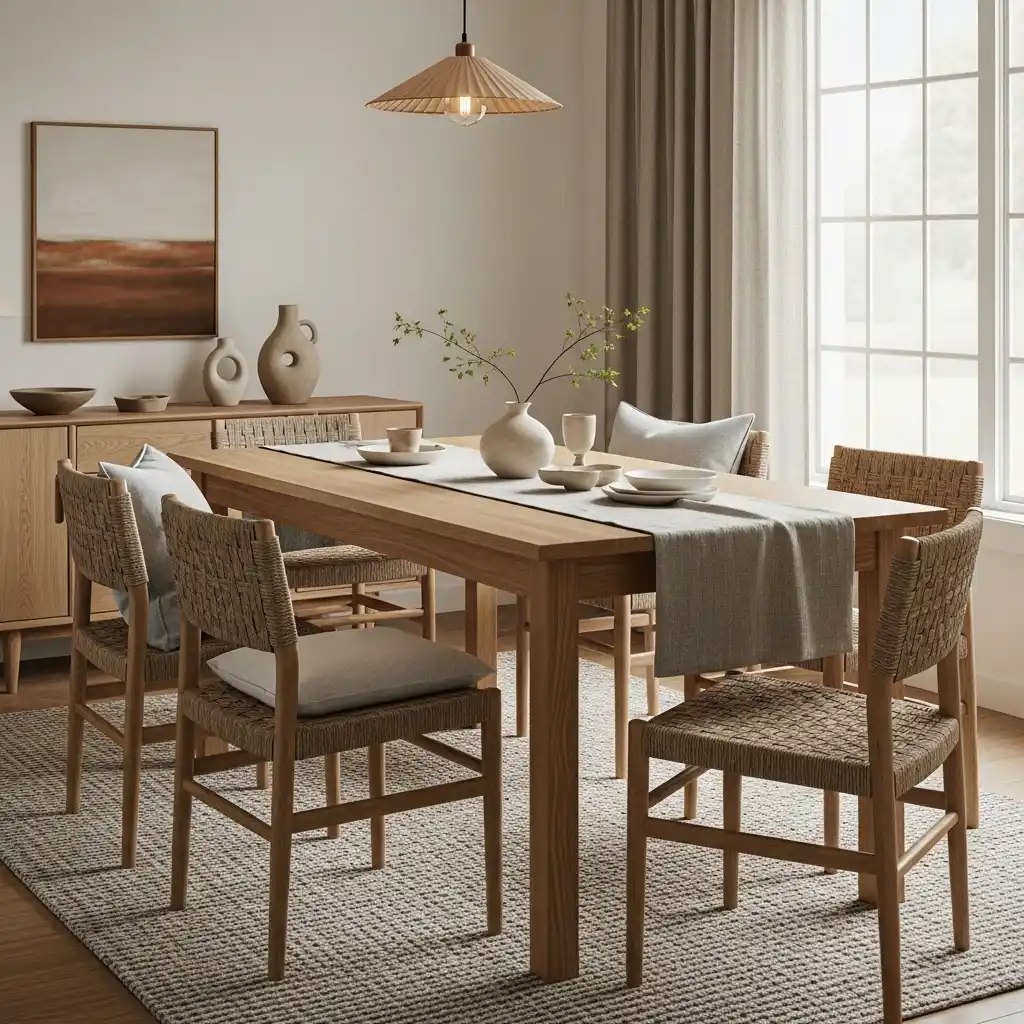
6. Natural Texture Focused Dining Area
Natural textures bring warmth and tactility to Japandi dining rooms. Wood grain, woven fibers, linen fabrics, and ceramic surfaces create visual interest without adding clutter. These elements align with the Japandi philosophy of celebrating imperfections and organic beauty.
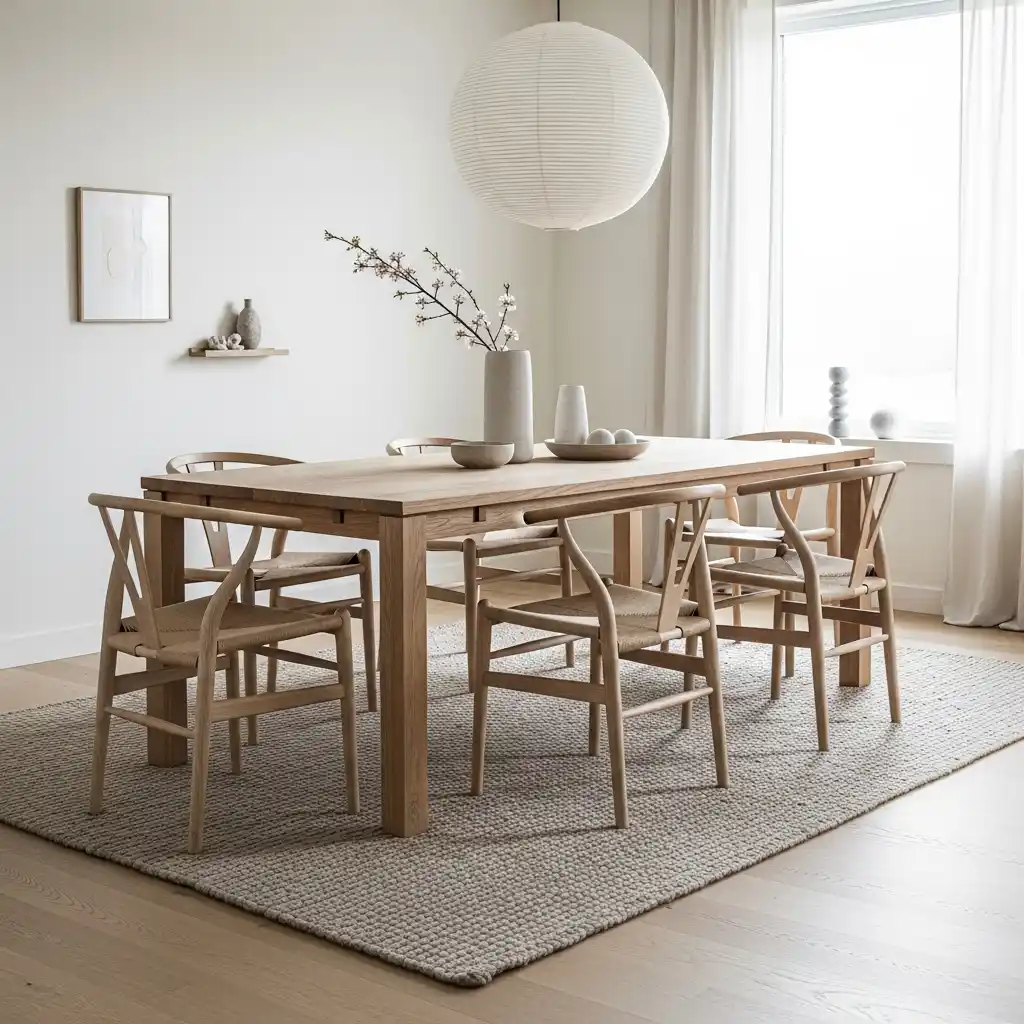
Incorporating texture makes a minimalist dining room feel inviting rather than cold. Choose chairs with woven seats or add a textured table runner for subtle contrast. Keep colors neutral to maintain balance. Pinterest users are drawn to these details because they offer inspiration that feels both elevated and achievable in real homes.
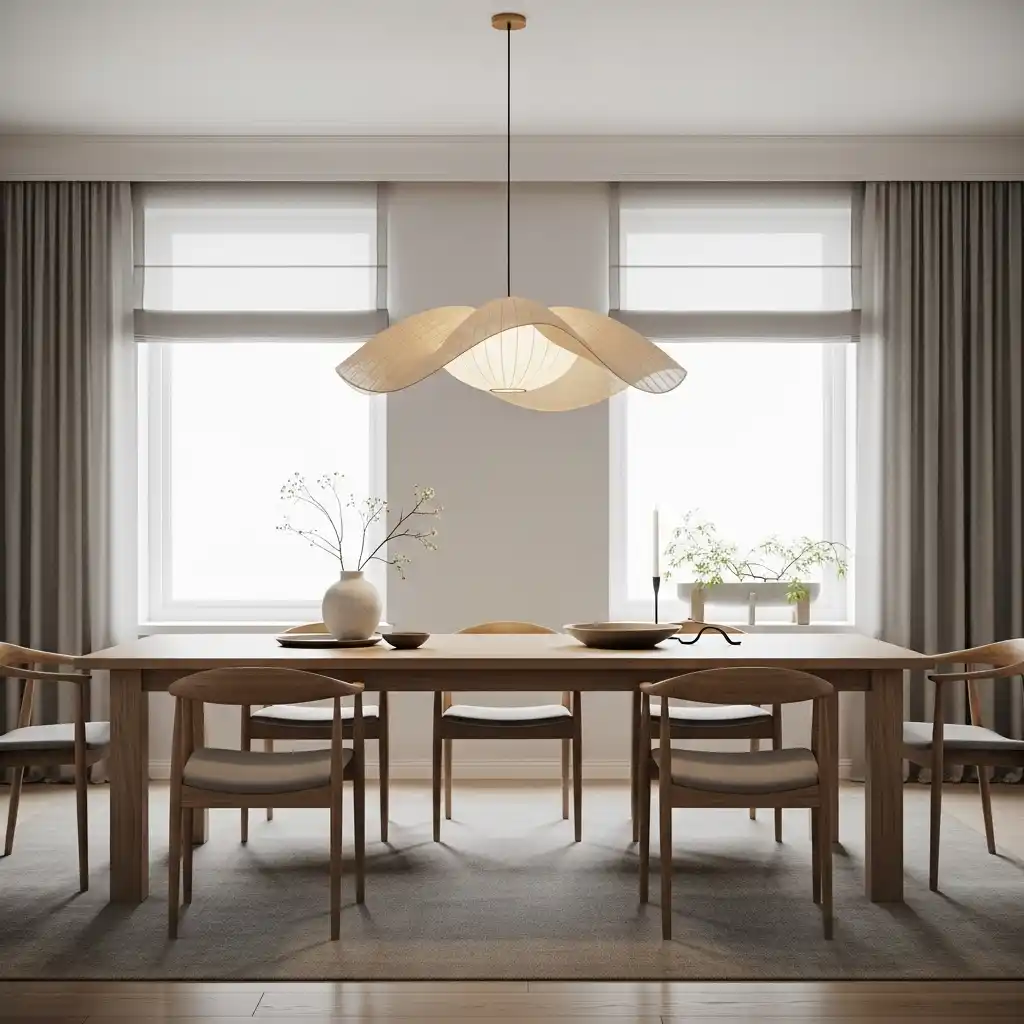
7. Japandi Dining Room with Statement Pendant
A statement pendant light can become the focal point of a Japandi dining room without disrupting its minimalist feel. Choose a sculptural yet simple design made from natural materials like paper, wood, or rattan. This adds character while staying true to Japandi aesthetics.
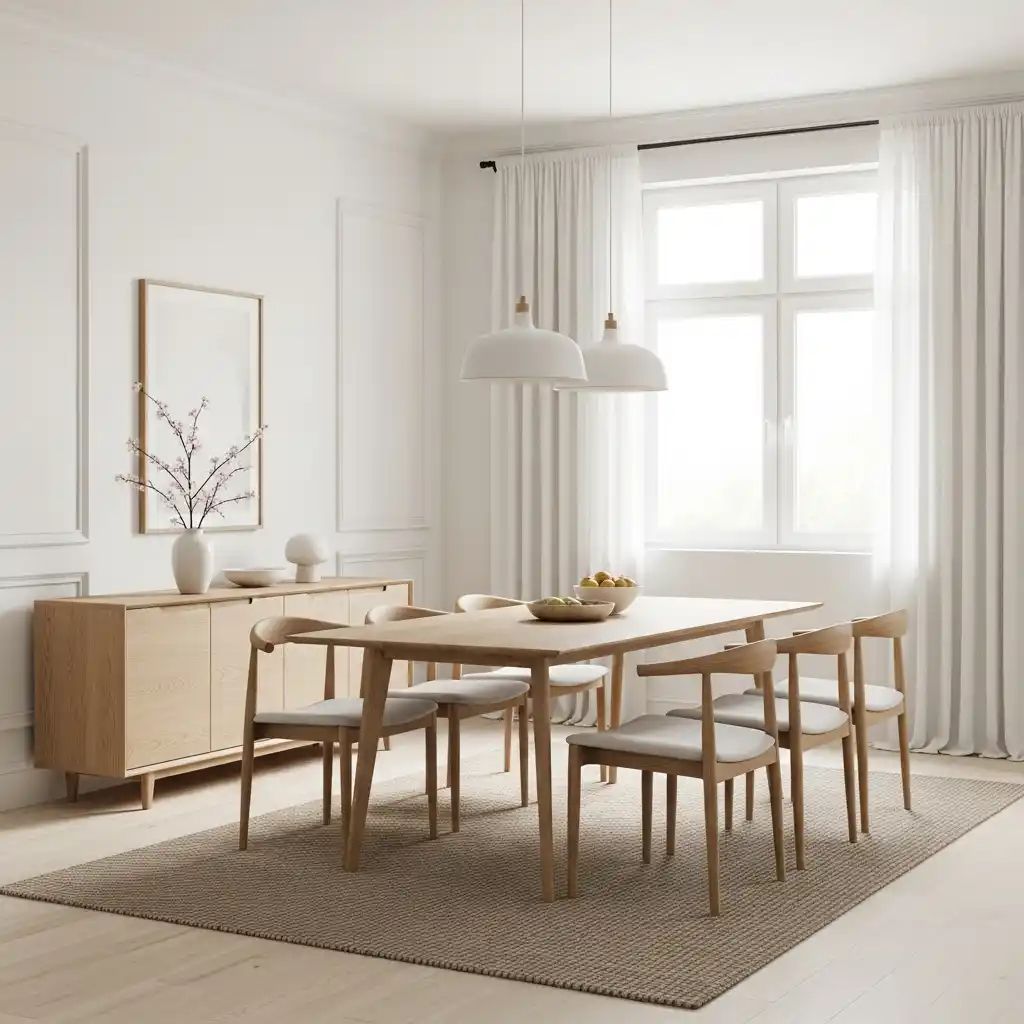
The key is balance—let the pendant stand out while keeping the rest of the space understated. A single bold element draws the eye and adds depth to the room. This design approach works especially well for Pinterest, as statement lighting creates a visually striking image that encourages saves and clicks.
8. Scandinavian Seating with Japanese Table
Mixing Scandinavian seating with a Japanese-style dining table perfectly captures Japandi’s fusion essence. Scandinavian chairs offer ergonomic comfort and lightness, while a Japanese-inspired table adds grounded elegance. Together, they create a harmonious and functional dining space.
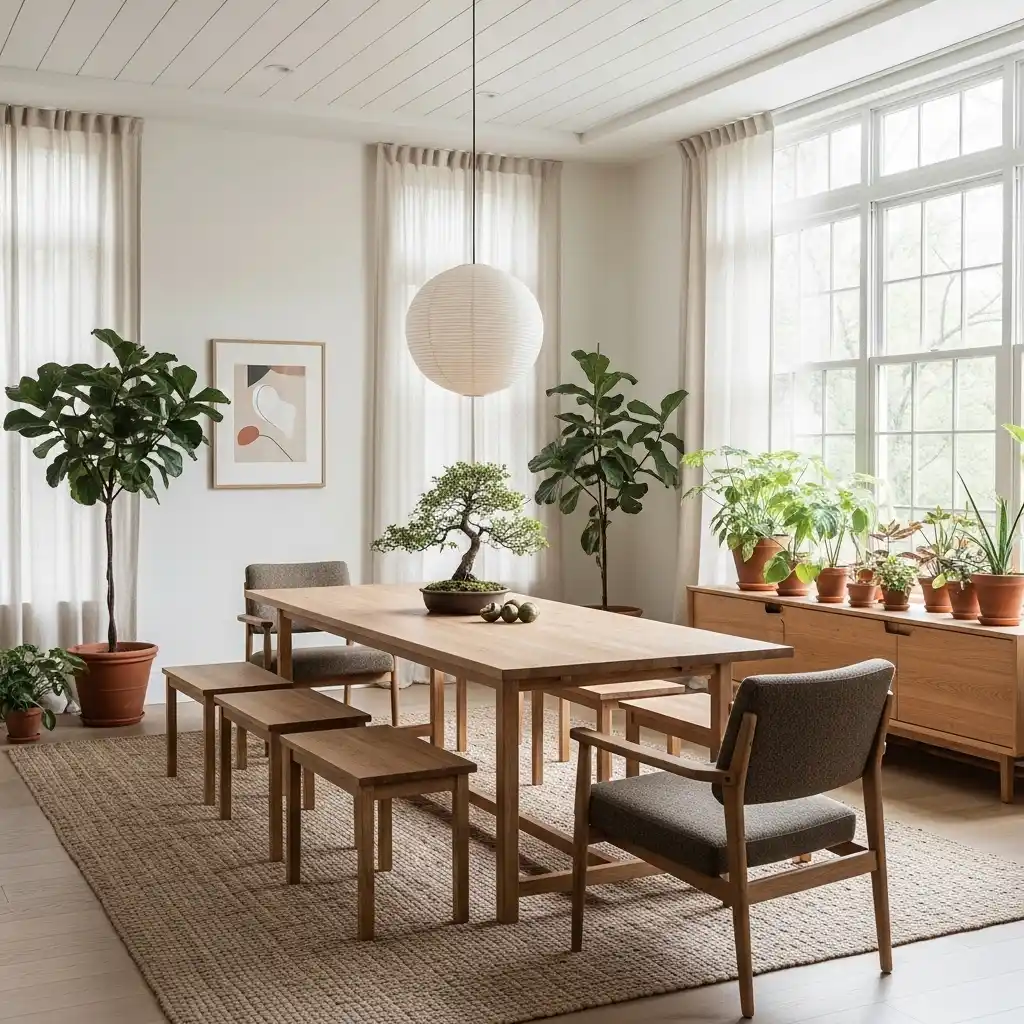
This blend allows flexibility in styling while maintaining cohesion. Stick to similar wood tones and neutral upholstery for a unified look. The contrast between chair and table styles adds subtle interest without overwhelming the minimalist design. It’s an ideal setup for modern homes seeking comfort with a refined, Pinterest-worthy aesthetic.
9. Calm White Japandi Dining Room
A calm white Japandi dining room feels airy, clean, and timeless. White walls reflect natural light and enhance the simplicity of the space. When paired with warm wooden furniture, the room avoids feeling sterile and instead feels balanced and inviting.
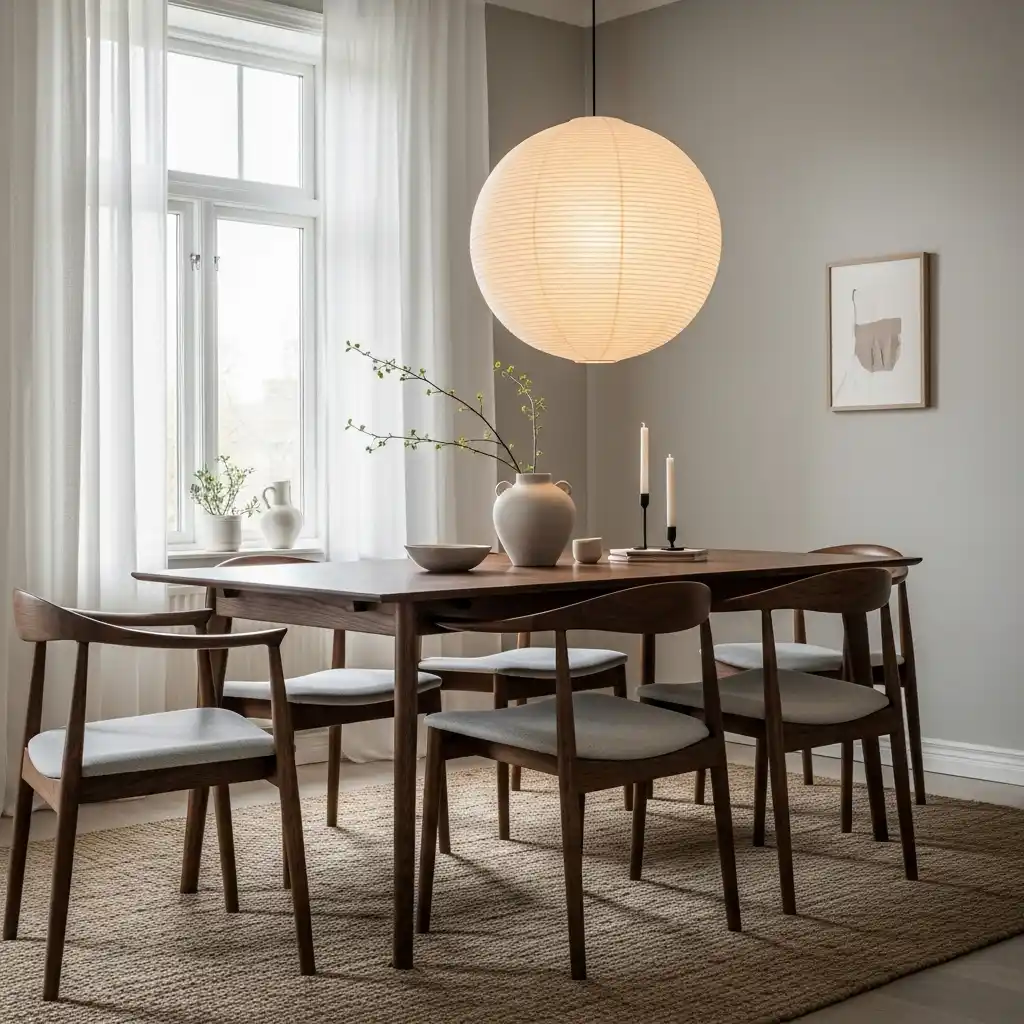
To maintain comfort, introduce soft textures and subtle contrast. Wooden chairs, linen textiles, or ceramic accessories help break up the white palette. This style is especially popular on Pinterest because it photographs beautifully and offers a blank canvas that many homeowners find easy to adapt to their own spaces.
10. Japandi Dining with Indoor Greenery
Indoor greenery adds life and freshness to a Japandi dining room. Simple plants like bonsai, olive trees, or minimalist branches complement the natural materials and calm palette. Greenery enhances the connection to nature, a core principle of Japandi design.
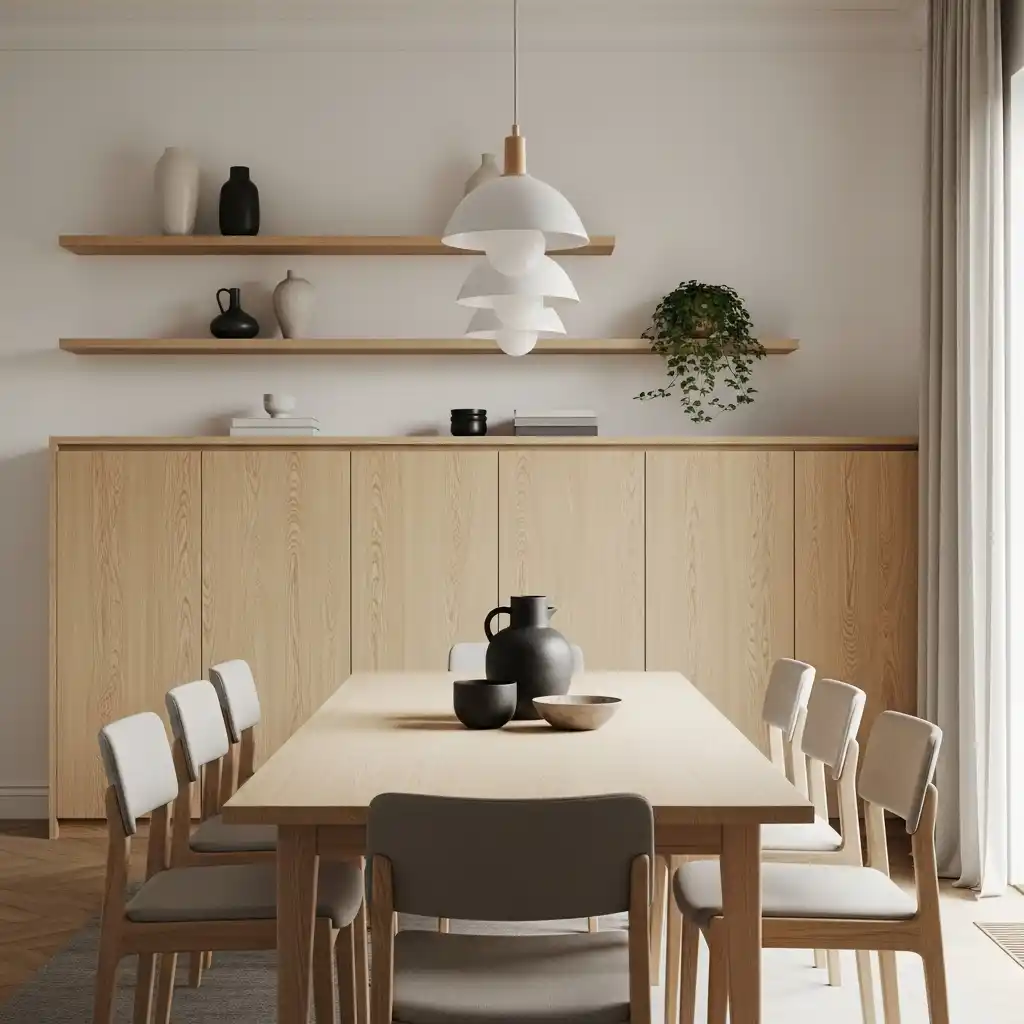
Keep plant choices minimal and intentional to avoid visual clutter. One or two well-placed plants are enough to elevate the space. The contrast between greenery and neutral interiors creates a visually appealing scene that performs well on Pinterest, encouraging users to save and recreate the look.
11. Dark Wood Japandi Dining Elegance
Dark wood introduces sophistication and depth to Japandi dining rooms. Walnut or stained oak tables create a rich contrast against light walls, adding warmth while maintaining minimalism. This approach works well in larger dining spaces where darker tones won’t feel heavy.
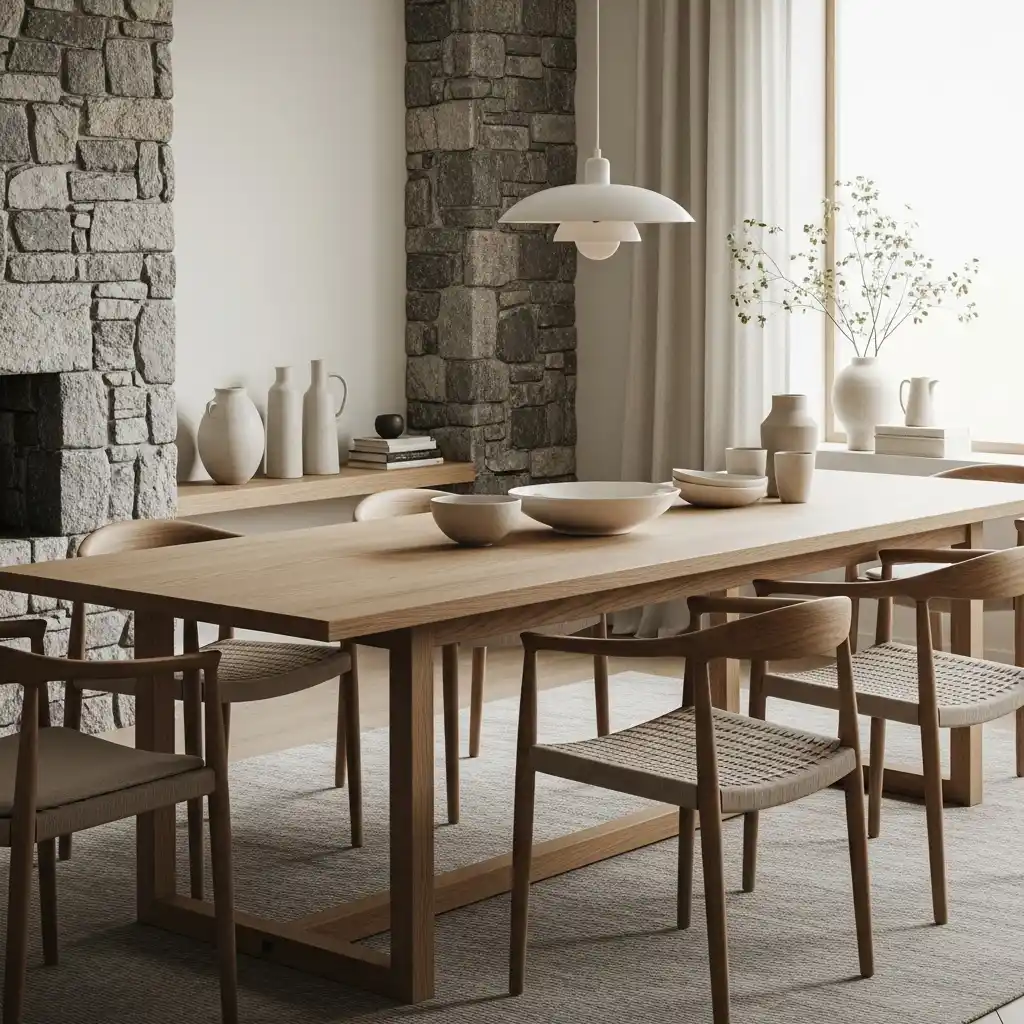
Balance is essential when using dark wood. Pair it with neutral walls, soft lighting, and minimal decor to keep the space calm. The result is a refined dining room that feels cozy yet elegant. Pinterest audiences often gravitate toward this style for its luxurious yet grounded appeal.
12. Japandi Dining Room with Built-In Storage
Built-in storage enhances functionality while preserving the clean lines of a Japandi dining room. Minimal cabinets or open shelves in natural wood provide space for essentials without cluttering the room. This aligns with the Japandi emphasis on intentional living and organization.
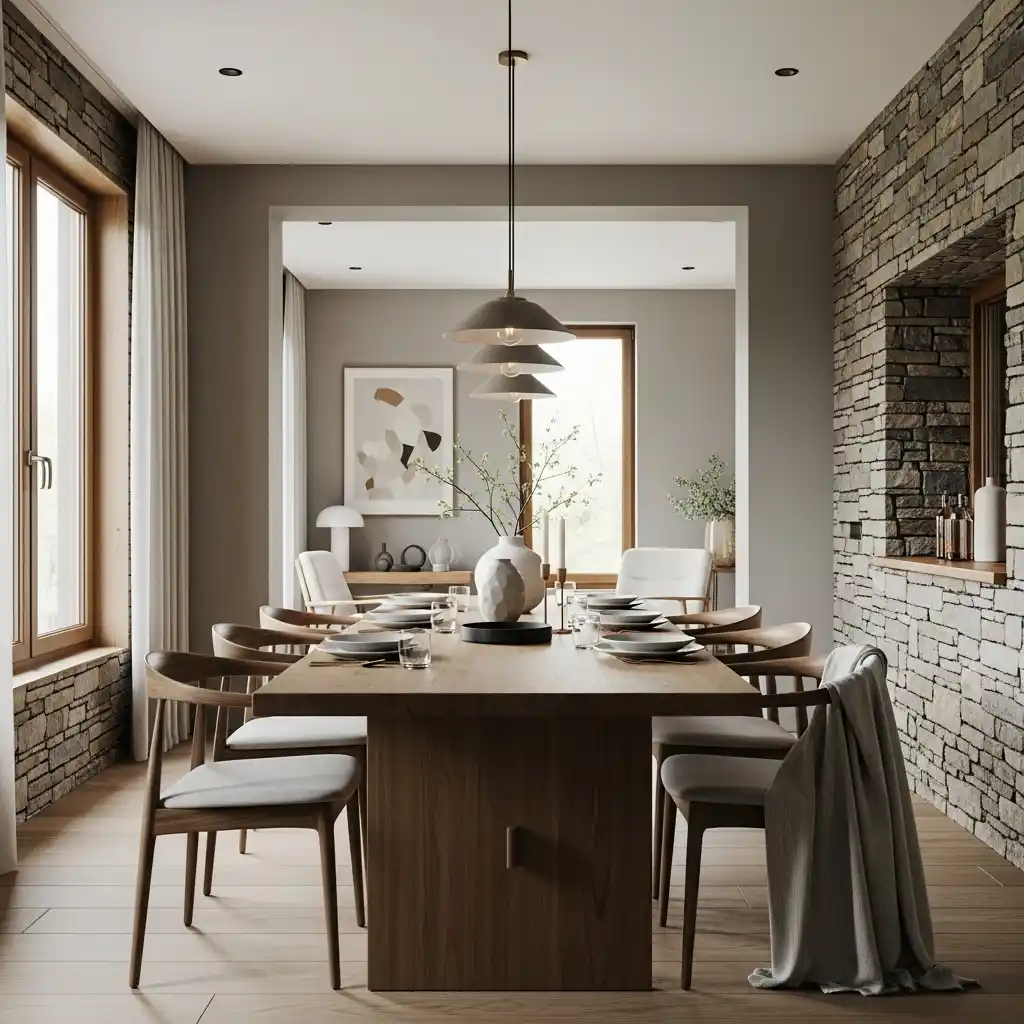
Use storage to display a few curated items like ceramics or glassware. Avoid overcrowding shelves to maintain visual calm. This practical yet stylish solution is highly appealing on Pinterest, where users seek ideas that combine beauty with everyday functionality in small or modern homes.
13. Stone and Wood Japandi Dining Combo
Combining stone and wood creates a tactile and balanced Japandi dining room. Stone elements, such as a feature wall or tabletop accessories, add subtle contrast and durability. When paired with warm wood, the space feels grounded and harmonious.
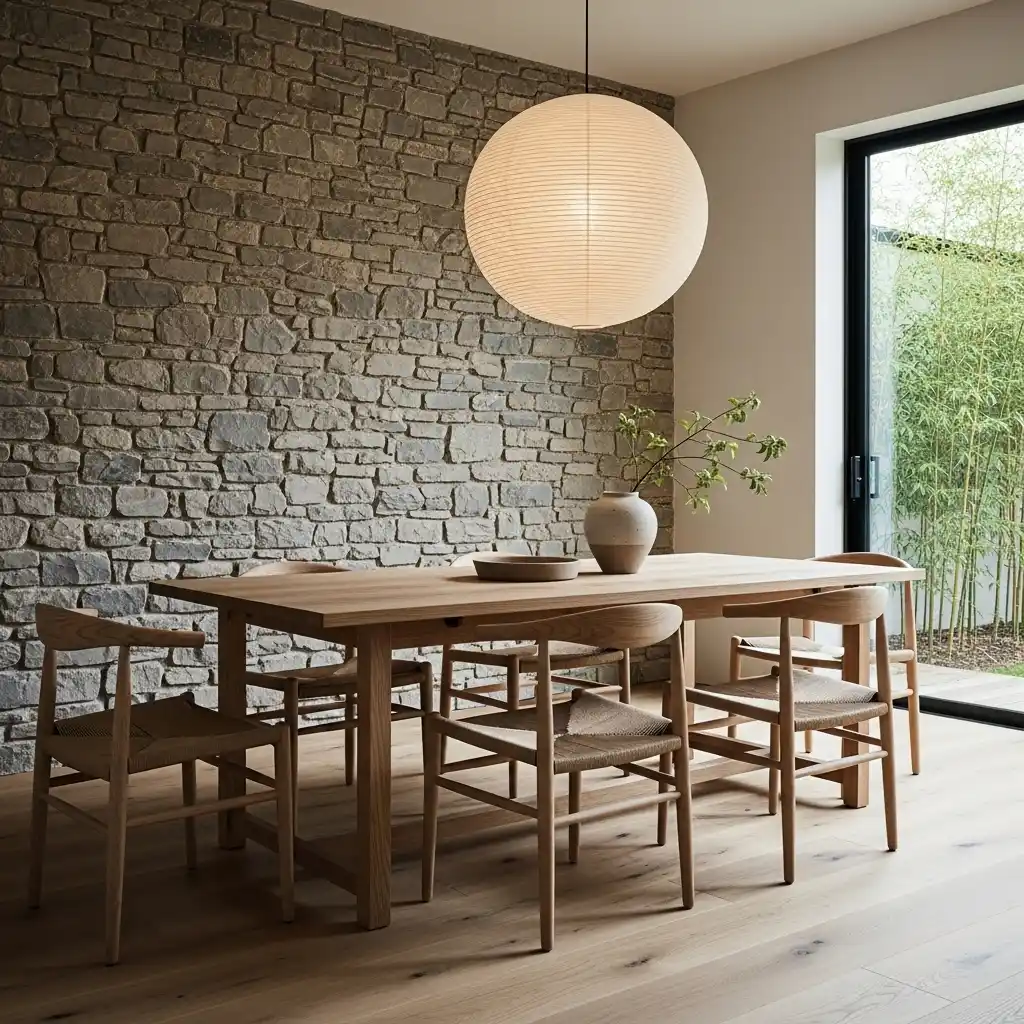
This combination reflects nature’s raw beauty while maintaining minimalism. Keep finishes matte and colors neutral to avoid visual noise. Pinterest users love this pairing because it feels modern yet timeless, offering inspiration that works in both contemporary and traditional dining spaces.
14. Japandi Dining with Soft Textiles
Soft textiles add comfort to Japandi dining rooms without sacrificing minimalism. Linen table runners, seat cushions, or subtle rugs introduce warmth and tactility. These elements soften hard surfaces and make the dining area more inviting.
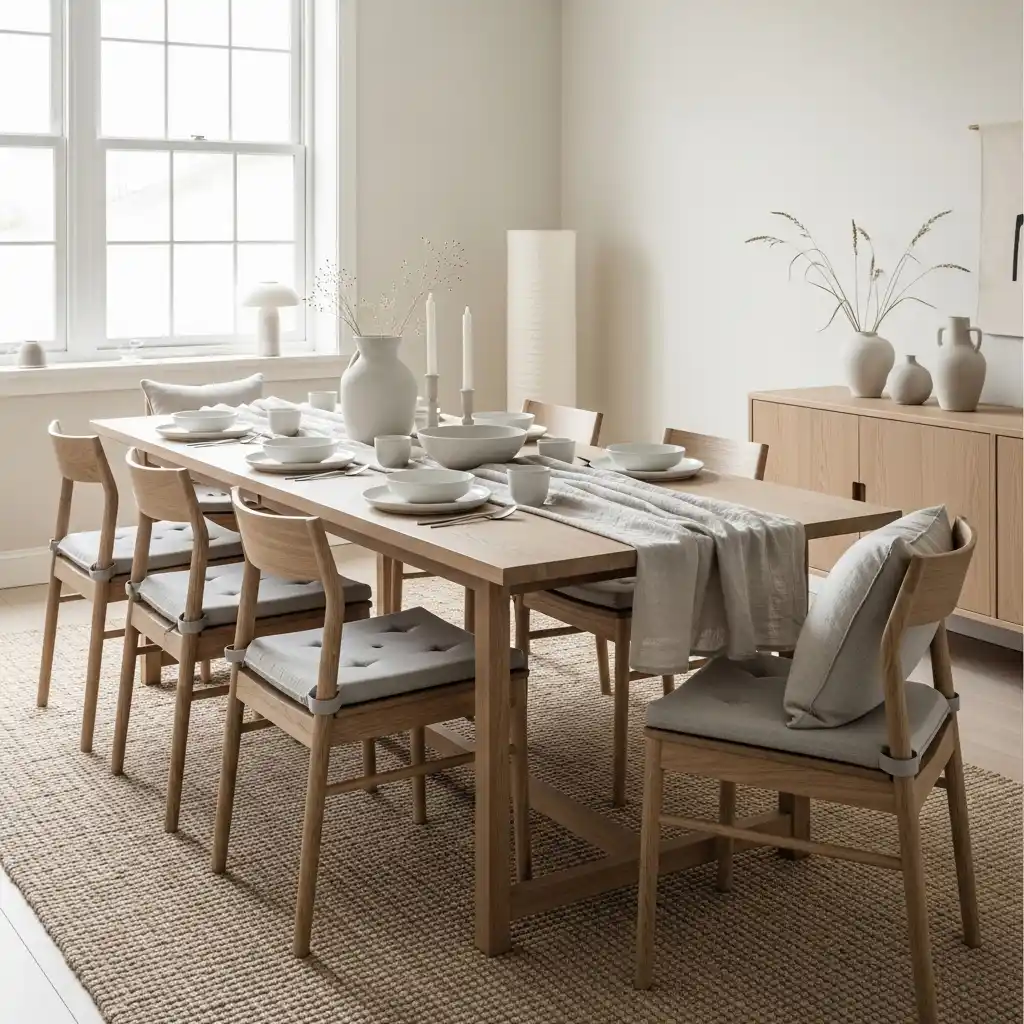
Stick to neutral or muted tones to maintain harmony. Textiles should complement, not dominate, the space. This gentle layering approach appeals to Pinterest audiences who want minimalist interiors that still feel livable and cozy for everyday dining experiences.
15. Compact Japandi Dining for Small Spaces
Japandi design works beautifully in small dining spaces due to its emphasis on simplicity and function. A compact wooden table with slim chairs maximizes space while maintaining comfort. Light colors and minimal decor help the room feel open and uncluttered.
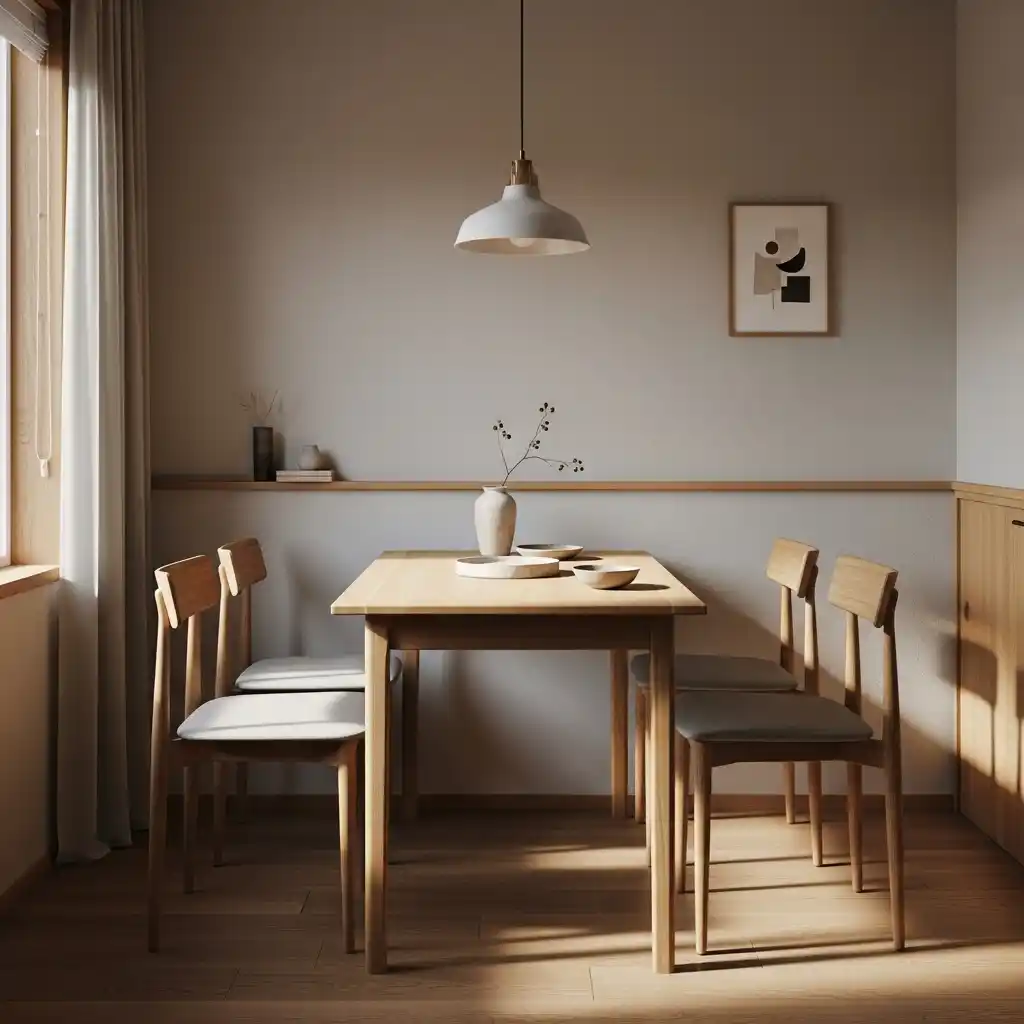
Choose multifunctional furniture and keep layouts efficient. Even a small dining nook can feel serene with the right Japandi elements. Pinterest users frequently search for small-space inspiration, making this idea highly shareable and practical for apartments and modern homes.
16. Japandi Dining with Matte Finishes
Matte finishes enhance the understated elegance of Japandi dining rooms. Unlike glossy surfaces, matte textures absorb light and create a softer, more natural look. This works especially well with wooden tables, ceramic decor, and neutral walls.
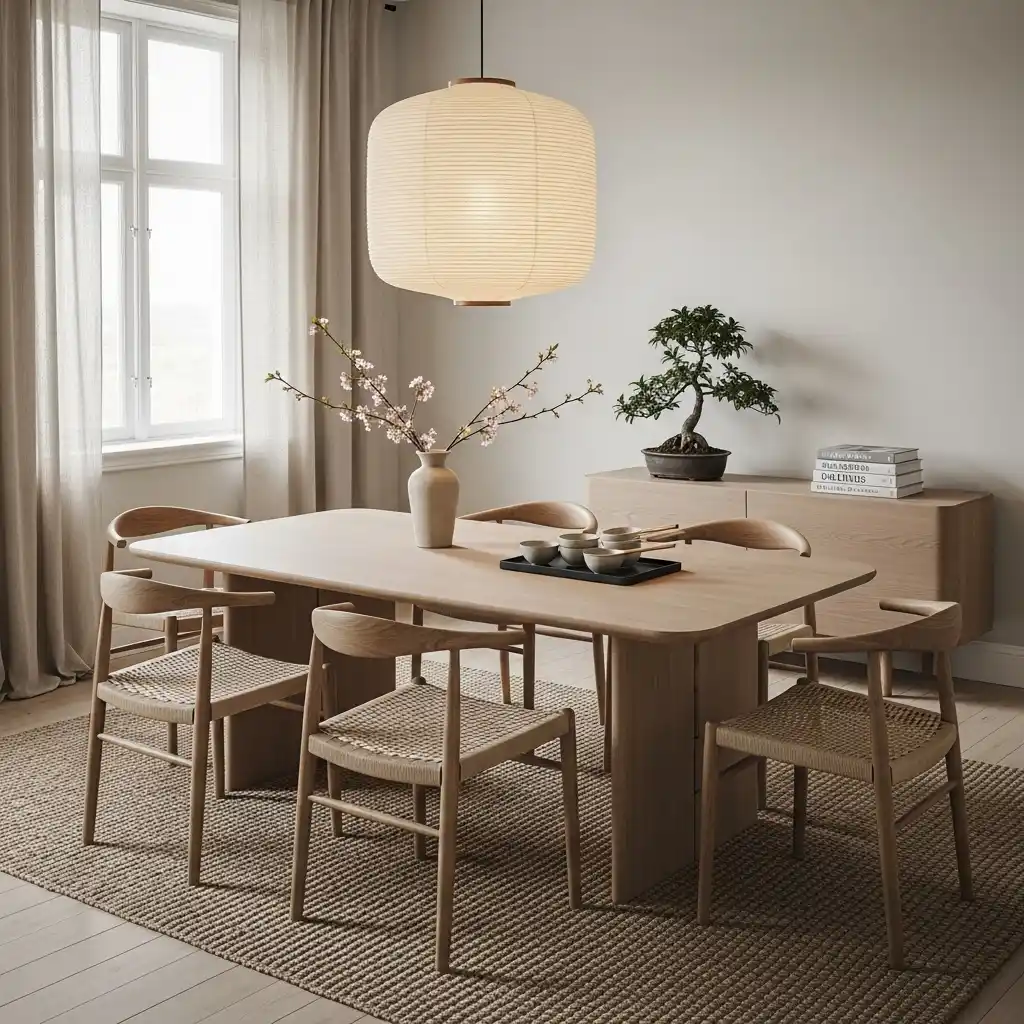
Matte finishes also help reduce visual distractions, keeping the space calm and cohesive. Pair them with warm lighting and simple forms for maximum impact. This subtle detail resonates with Pinterest audiences seeking refined interiors that feel modern, organic, and effortlessly stylish.
17. Japandi Dining with Open Space Flow
An open and flowing layout is key to Japandi dining rooms. Keeping the space uncluttered allows natural light and movement to define the room. This approach creates a seamless connection between dining, living, and kitchen areas.
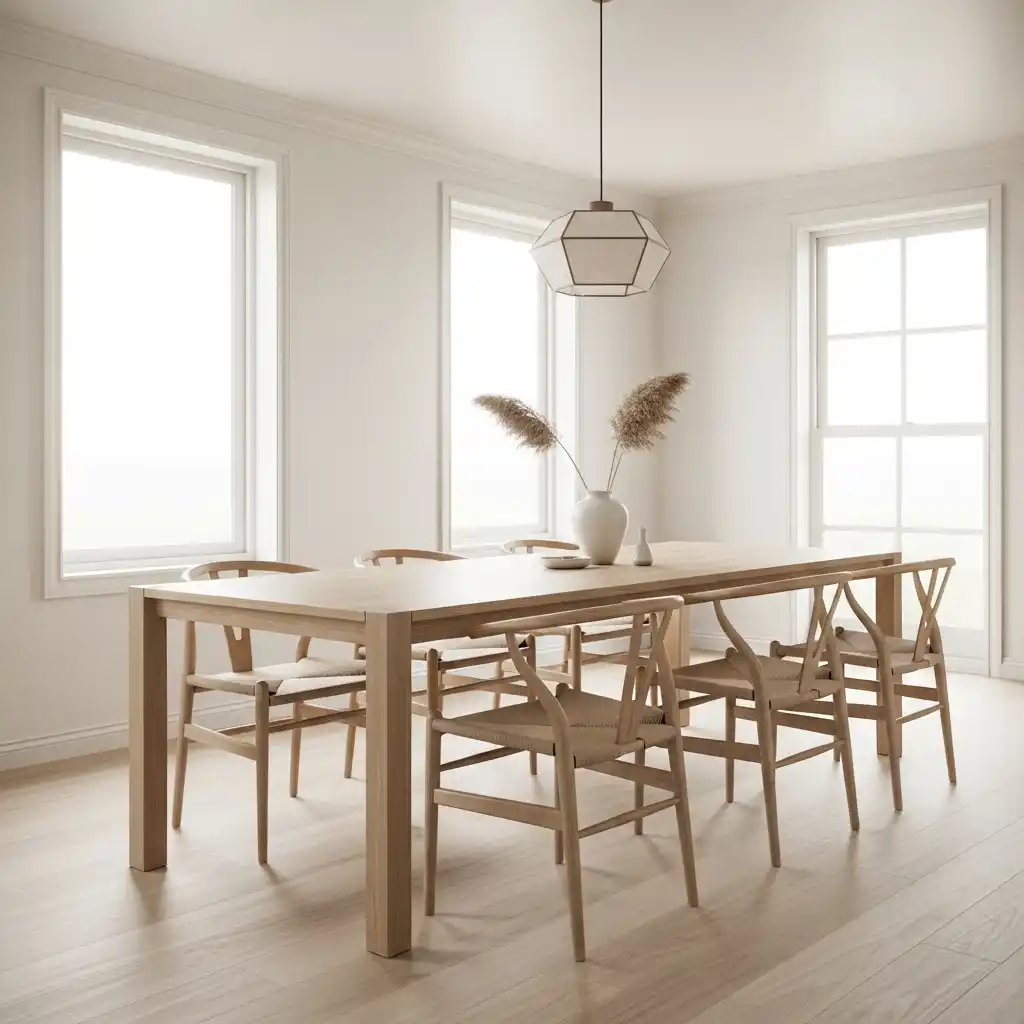
Choose furniture with slim profiles to maintain openness. Avoid unnecessary partitions or heavy decor. The airy feel promotes relaxation and comfort, making meals more enjoyable. Pinterest users are drawn to open Japandi layouts because they offer both aesthetic beauty and practical living solutions.
18. Japandi Dining with Ceramic Accents
Ceramic accents add authenticity and character to Japandi dining rooms. Handmade bowls, vases, or tableware reflect Japanese craftsmanship and embrace subtle imperfections. These elements bring warmth and personality without overwhelming the minimalist design.
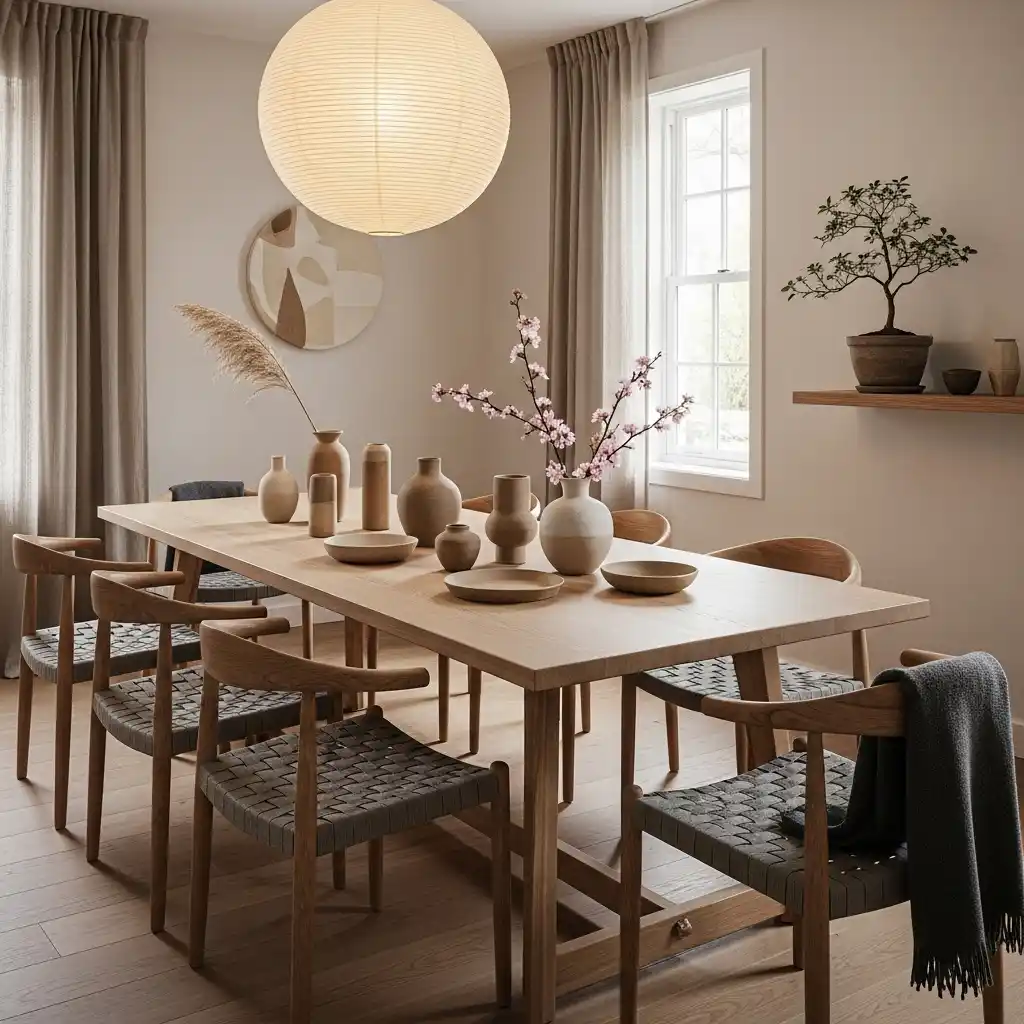
Display ceramics sparingly to maintain balance. Choose neutral or earthy glazes that complement the room’s palette. This thoughtful use of decor is highly appealing on Pinterest, where users appreciate meaningful, artisan-inspired details in minimalist interiors.
19. Japandi Dining Room with Sliding Panels
Sliding panels introduce a strong Japanese influence to Japandi dining rooms. Shoji-style or wooden slatted panels create privacy while allowing light to flow through. They add architectural interest without cluttering the space.
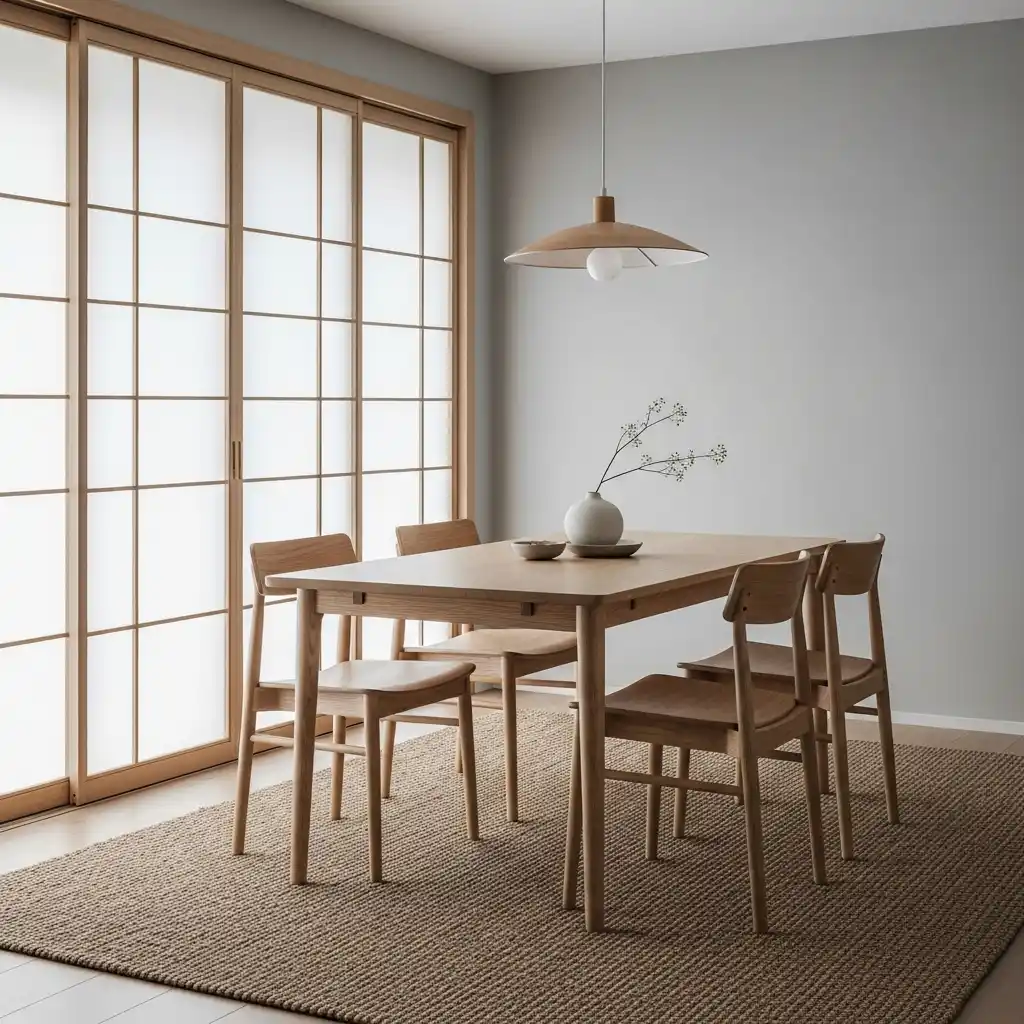
These panels are perfect for open-plan homes or flexible dining areas. Their clean lines and natural materials align beautifully with Japandi principles. Pinterest audiences love this feature for its elegance, cultural inspiration, and functional design versatility.
20. Warm Minimal Japandi Dining Room
Warm minimalism defines the heart of Japandi dining rooms. Soft beige walls, warm wood tones, and gentle lighting create a cozy yet uncluttered environment. This balance ensures the space feels inviting without excess decoration.
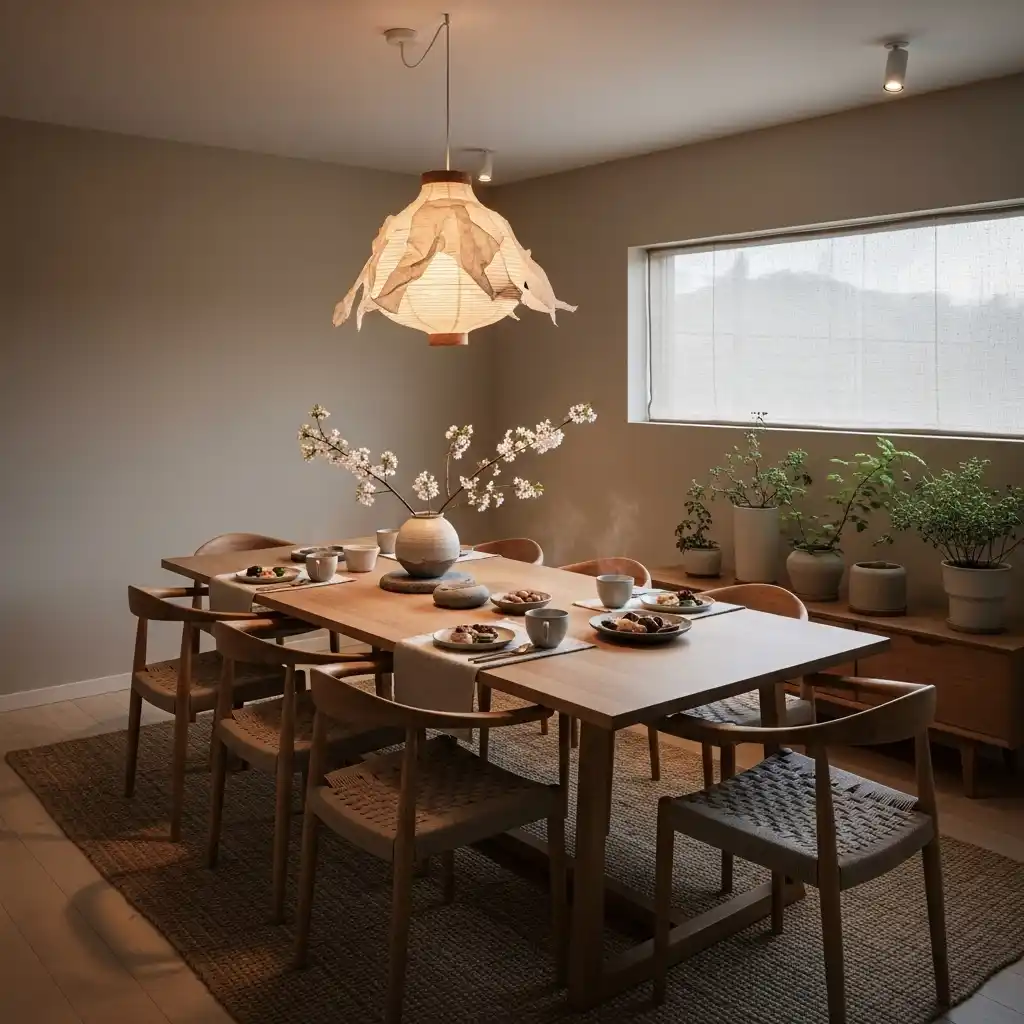
Focus on quality over quantity when selecting furniture and decor. Each piece should serve a purpose or bring calm to the room. This approach resonates strongly on Pinterest, where users seek interiors that feel peaceful, practical, and emotionally comforting.
21. Japandi Dining with Symmetrical Layout
Symmetry adds harmony and order to Japandi dining rooms. A centered dining table with evenly spaced chairs creates visual balance and calm. This layout feels intentional and supports the minimalist philosophy of thoughtful design.
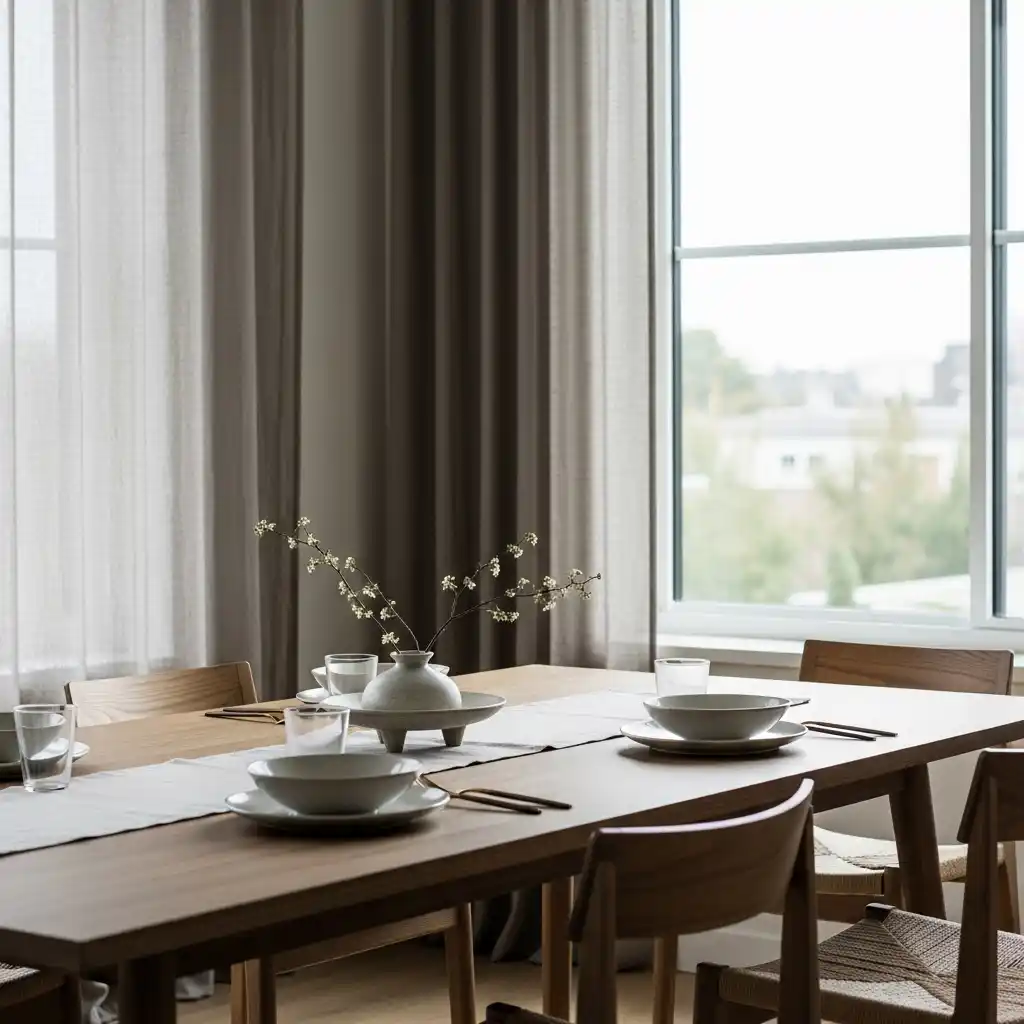
Keep decor minimal and evenly distributed. Symmetry enhances the room’s sense of structure without feeling rigid. Pinterest users often gravitate toward symmetrical spaces because they photograph well and evoke a sense of tranquility and control.
22. Japandi Dining with Minimal Wall Decor
Wall decor in Japandi dining rooms should be subtle and meaningful. A single piece of minimalist art or a simple wall hanging adds interest without overwhelming the space. This restrained approach keeps the focus on materials and form.
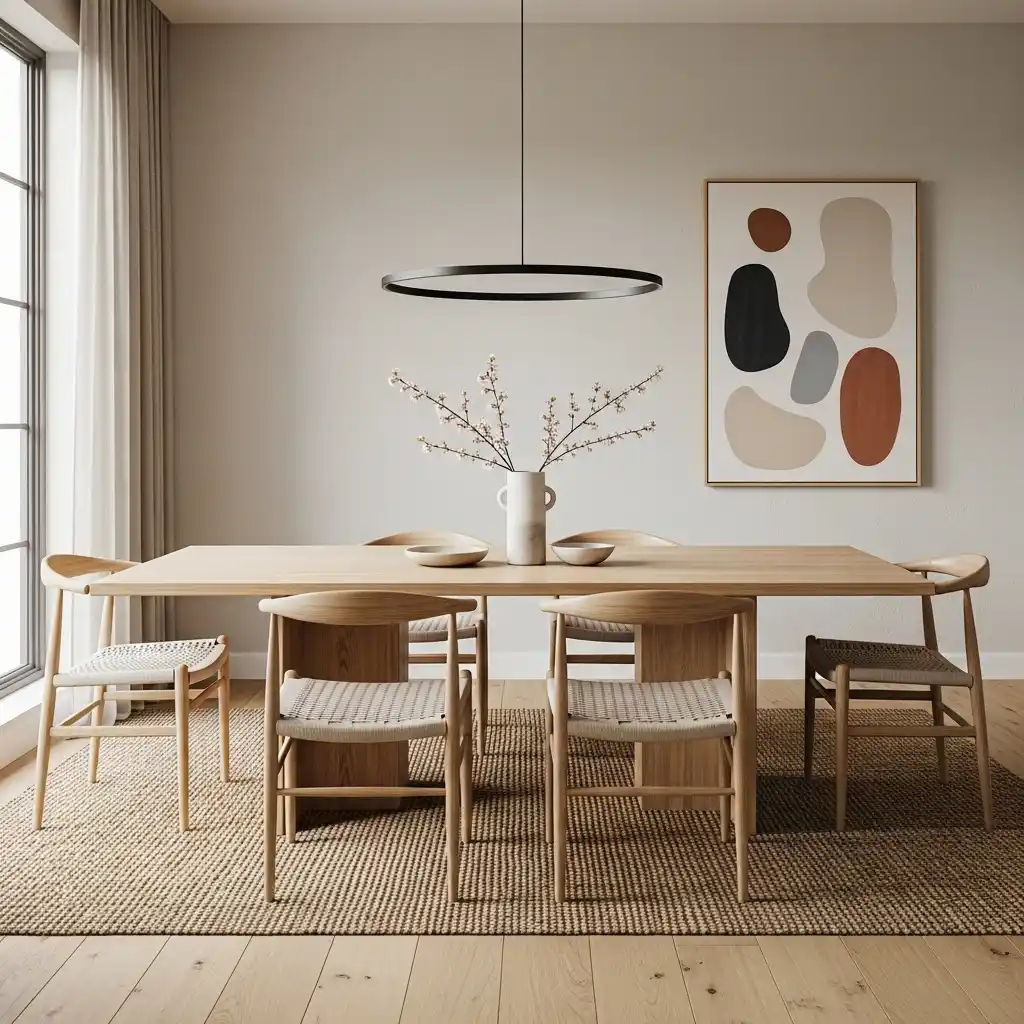
Choose artwork with neutral tones or natural themes. Avoid gallery walls or bold colors. This minimalist styling appeals to Pinterest users who appreciate clean, calming visuals and want dining rooms that feel curated rather than crowded.
23. Timeless Japandi Dining Room Design
A timeless Japandi dining room focuses on longevity, comfort, and simplicity. Neutral colors, natural materials, and classic furniture shapes ensure the space remains stylish for years. This approach avoids trends in favor of enduring design.
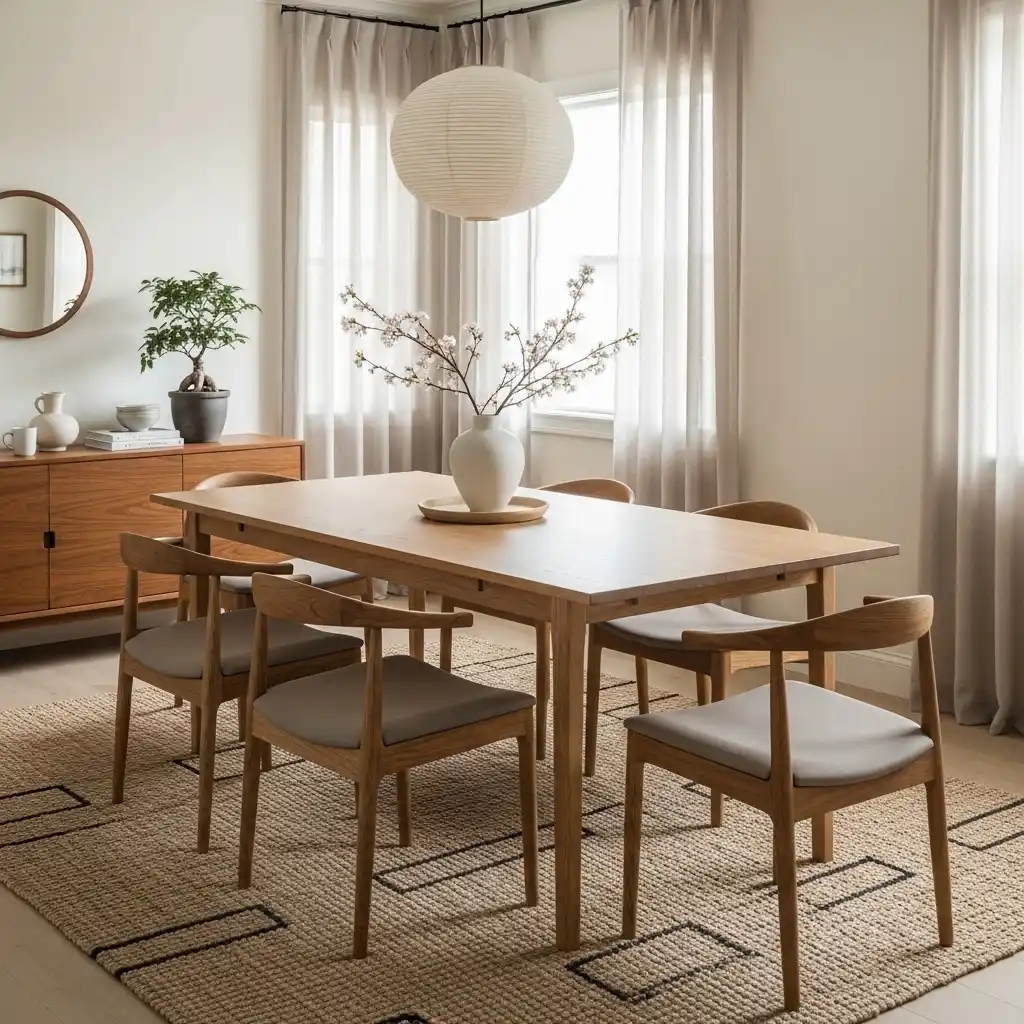
By prioritizing quality and restraint, the dining room becomes a peaceful retreat for daily life. Pinterest audiences love timeless Japandi interiors because they offer inspiration that feels both aspirational and realistic, making them perfect for saving, sharing, and recreating at home.
Conclusion
The Japandi dining room is more than a design trend—it’s a lifestyle rooted in balance, simplicity, and comfort. By blending the warmth of Scandinavian interiors with the refined minimalism of Japanese design, these 23 Japandi dining room ideas show how intentional choices in furniture, materials, and color palettes can transform your space into a calm and inviting retreat.
Whether you prefer natural wood tones, neutral hues, handcrafted décor, or clutter-free layouts, Japandi style proves that minimalism doesn’t have to feel cold or empty. Instead, it encourages mindful living, functional beauty, and timeless elegance—perfect for modern homes seeking both comfort and sophistication.
Let these Japandi dining room inspirations guide you in creating a space where every meal feels peaceful, purposeful, and beautifully understated.