1.Neutral Japandi Color Palette
A neutral color palette is the backbone of Japandi Living Room Ideas and design. Soft shades of beige, warm whites, greige, and muted gray help create a peaceful, uncluttered environment. These tones reflect light beautifully, making the living room feel open, airy, and balanced. Neutral colors also allow natural materials like wood and linen to shine without visual competition.
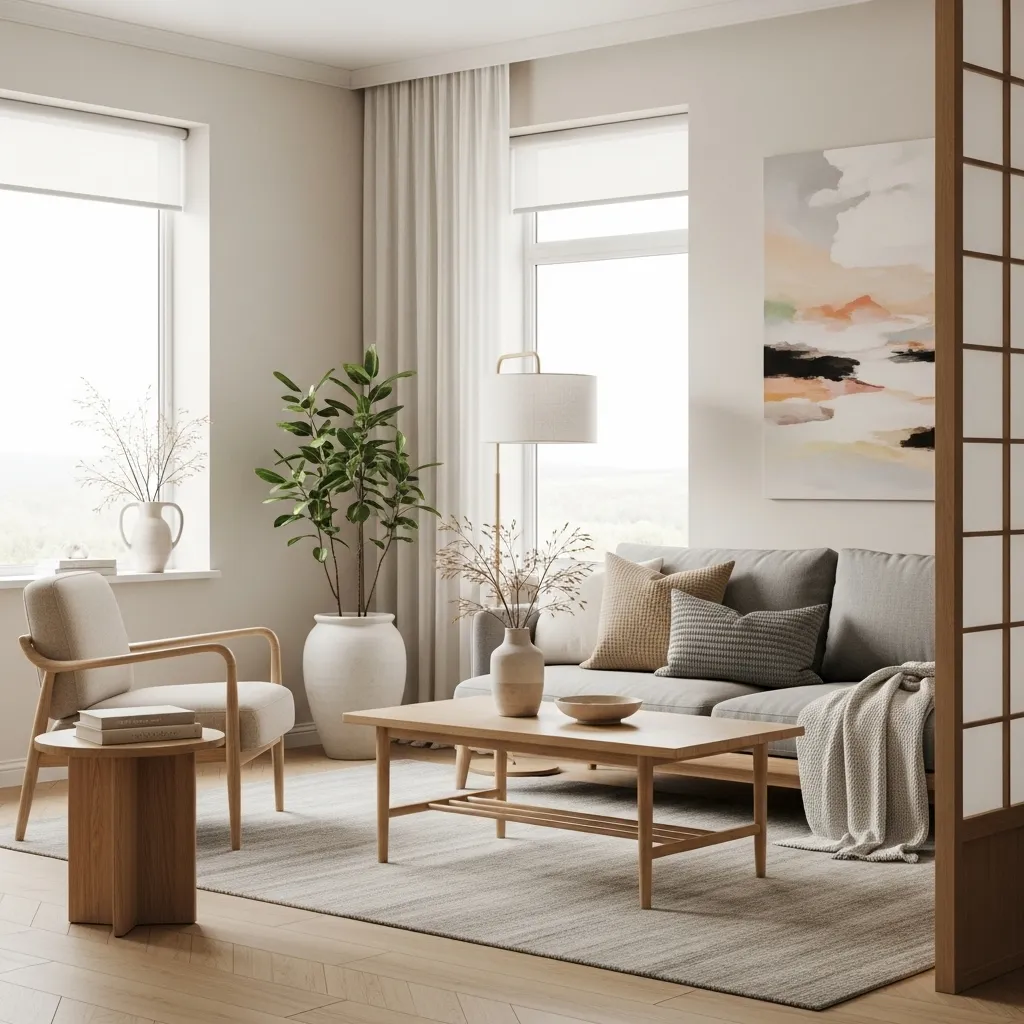
From an SEO and Pinterest perspective, neutral Japandi living rooms appeal to minimalist decor lovers searching for calming interiors. Layering similar hues adds depth without overwhelming the space. This approach creates a cozy yet refined atmosphere that feels timeless, intentional, and deeply comforting for everyday living.
2.Low-Profile Japandi Furniture
Low-profile furniture is a defining feature of Japandi interiors, inspired by traditional Japanese living. Sofas, chairs, and tables sit closer to the ground, creating a grounded and relaxed atmosphere. This furniture style visually lowers the room, making ceilings feel higher and the space more open, which is ideal for minimalist living rooms.
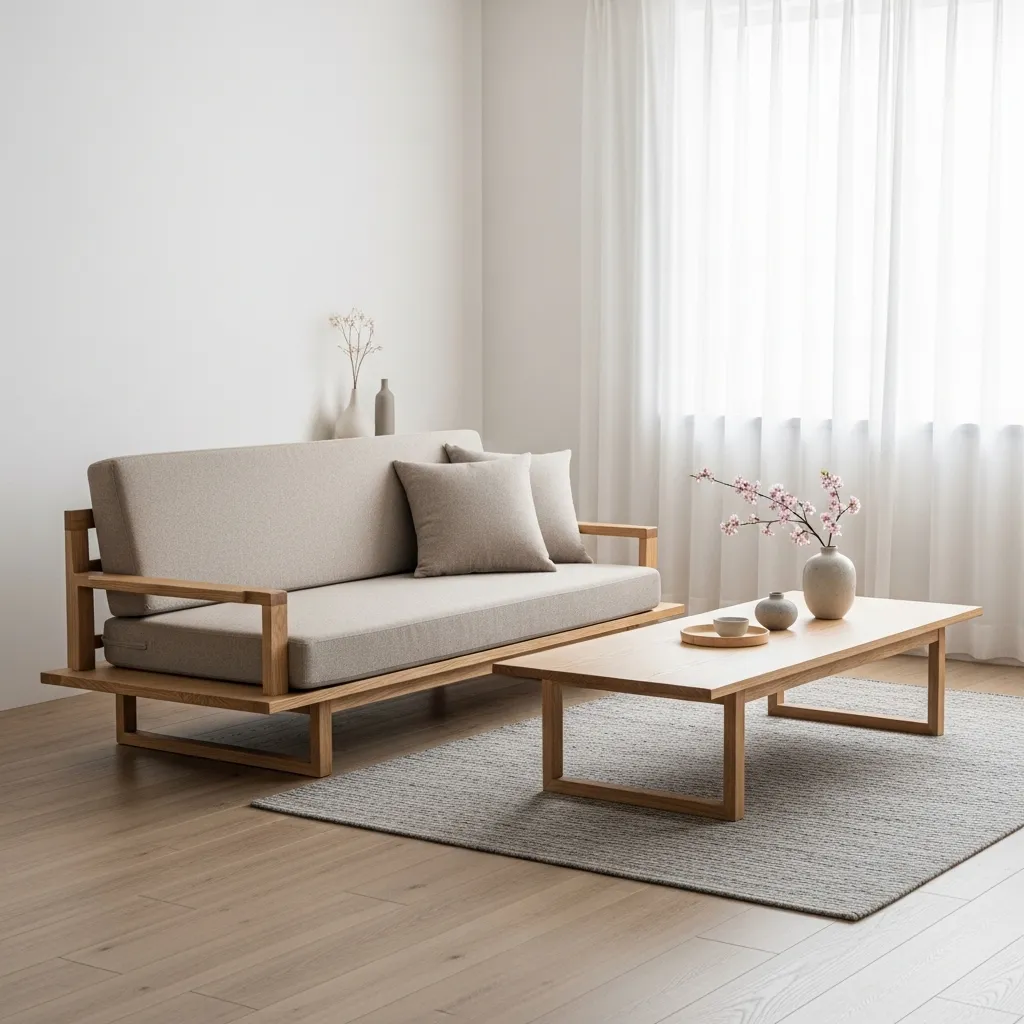
Pinterest users love low-profile Japandi furniture because it combines elegance with comfort. When paired with plush cushions and warm textiles, it feels inviting rather than rigid. This balance of simplicity and coziness supports the Japandi philosophy of mindful, intentional living.
3.Natural Wood Japandi Accents
Natural wood elements bring warmth and organic beauty to Japandi living rooms. Light woods like oak, ash, and birch soften minimalist spaces and add texture without clutter. Wood coffee tables, shelving, and furniture frames reinforce the connection to nature, which is central to Japandi interior design.
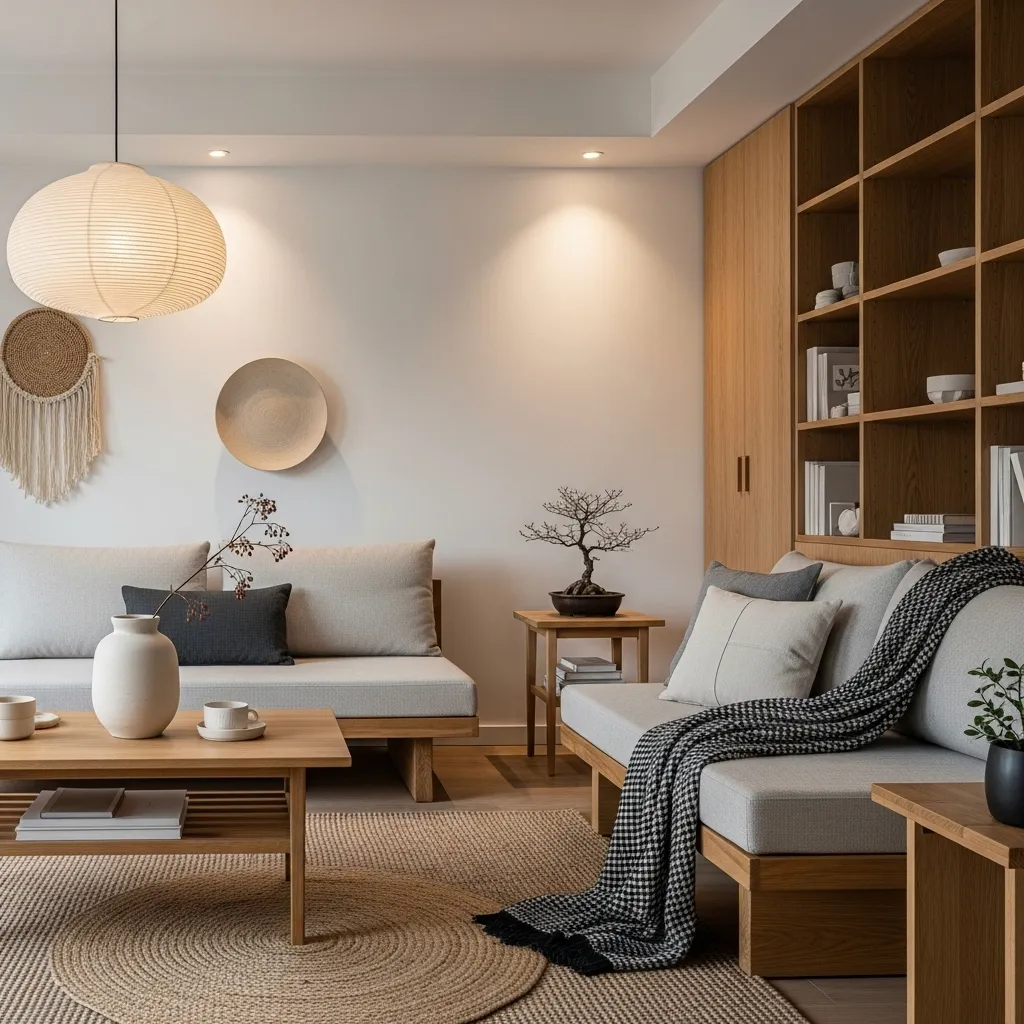
For Pinterest audiences, visible wood grain feels authentic and calming. Wood balances clean lines with warmth, preventing minimalist spaces from feeling cold. Incorporating natural wood enhances both comfort and visual harmony, making the living room feel grounded, cozy, and effortlessly stylish.
4. Minimalist Furniture Layout
A minimalist furniture layout improves both visual flow and daily comfort in a Japandi living room. Instead of filling the room, furniture is placed intentionally, allowing negative space to breathe. This thoughtful arrangement promotes relaxation and makes the space feel calm, organized, and functional.
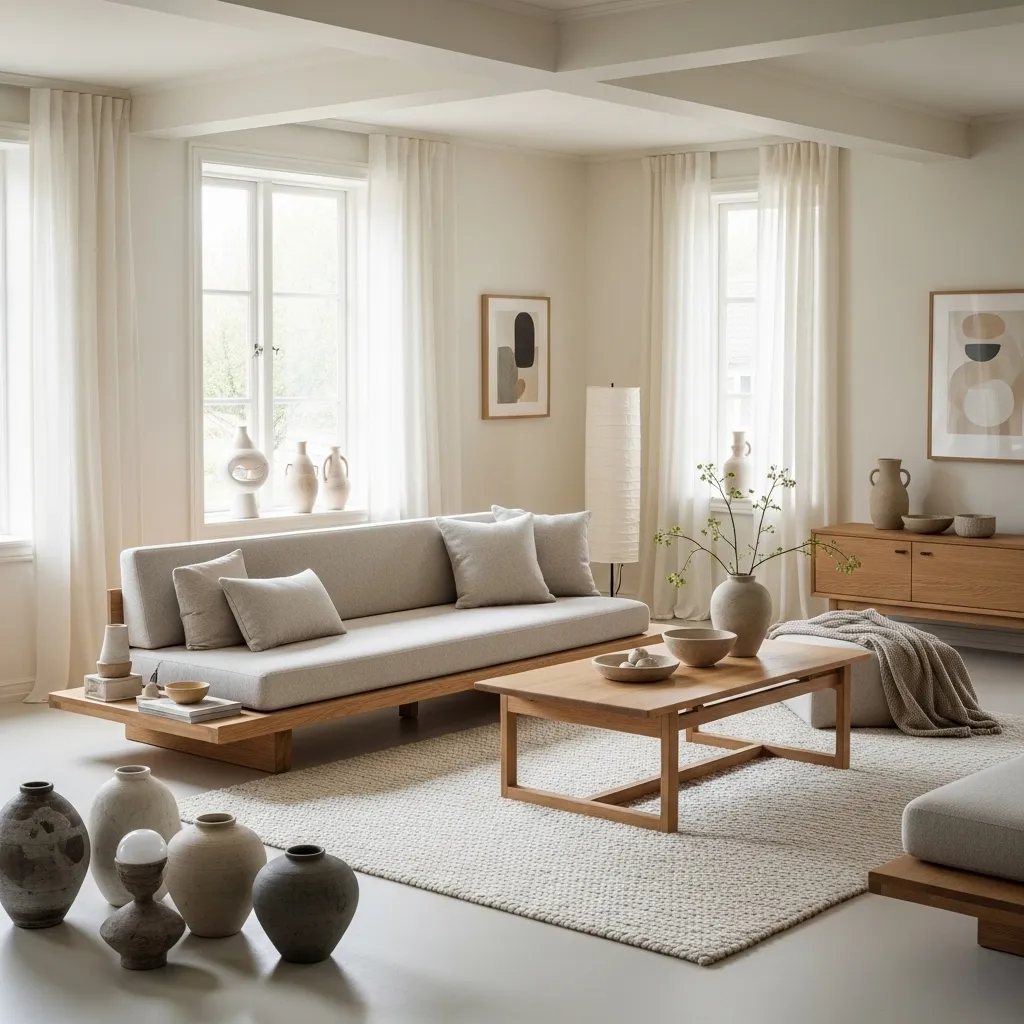
Pinterest users are drawn to living rooms that feel open yet cozy. Leaving space between furniture pieces enhances movement and balance. This layout philosophy supports a clutter-free lifestyle while emphasizing comfort, making the living room a peaceful retreat rather than an overstimulating space.
5. Soft Japandi Textiles
Soft textiles play a key role in adding comfort to Japandi living rooms. Linen sofas, wool throws, and cotton cushions introduce warmth while maintaining a clean, understated aesthetic. These fabrics soften hard surfaces and enhance the room’s tactile appeal without overwhelming the minimalist design.
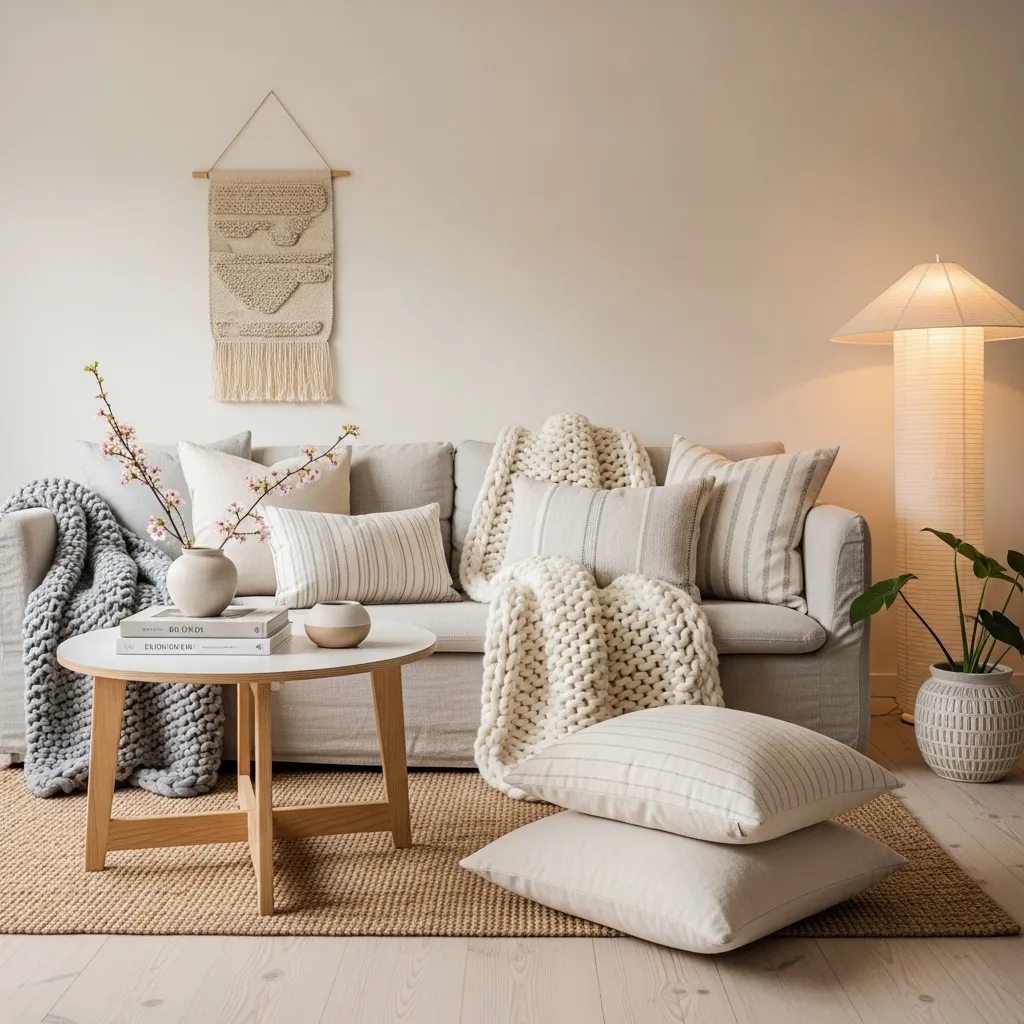
Pinterest audiences love cozy textures that still feel refined. Layering textiles in similar neutral shades creates depth and comfort while preserving simplicity. This combination of softness and restraint is what makes Japandi interiors feel both minimalist and welcoming.
6. Handcrafted Ceramic Decor
Handcrafted ceramic decor adds subtle character to Japandi living rooms. Imperfect shapes, matte finishes, and earthy tones reflect the Japanese wabi-sabi philosophy of embracing natural beauty. These pieces serve as quiet focal points without disrupting the calm, minimalist environment.
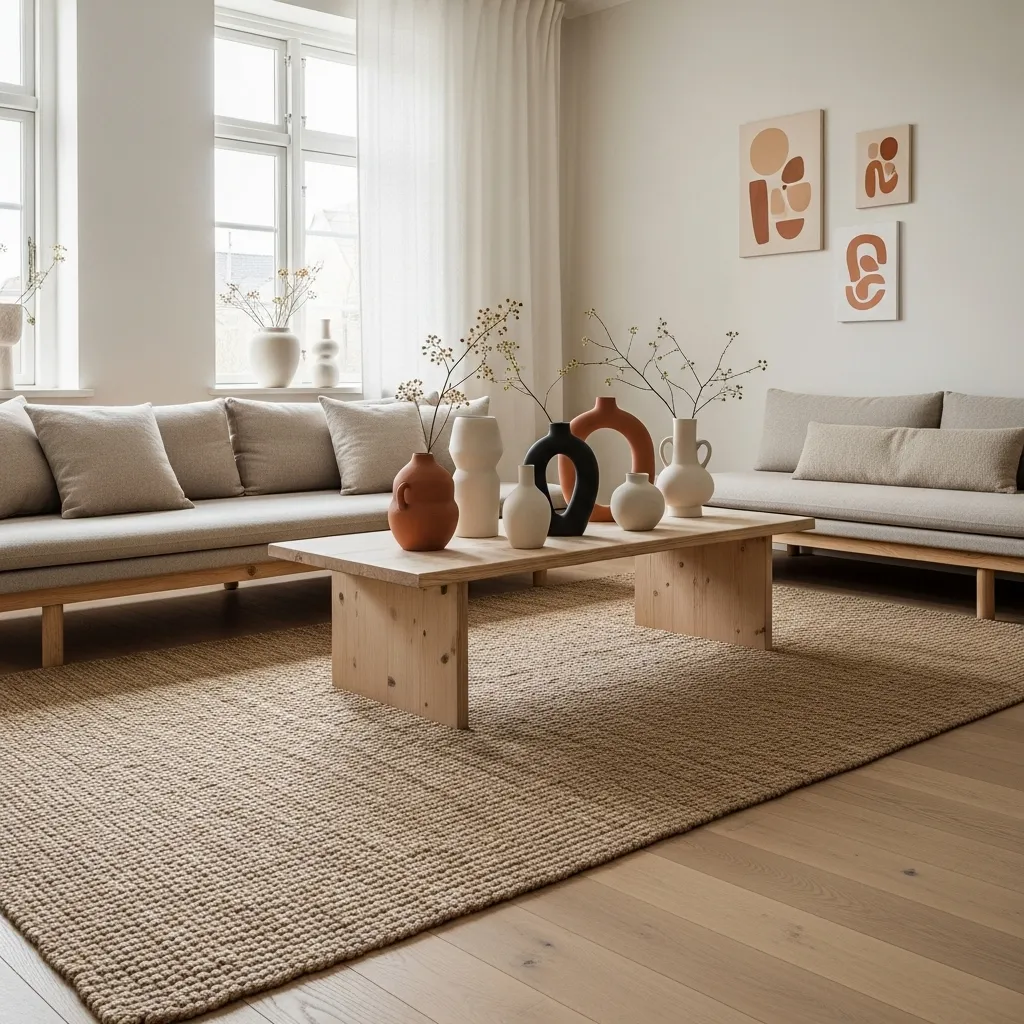
Pinterest users gravitate toward artisanal decor that feels meaningful and authentic. Ceramic vases or bowls placed sparingly enhance warmth and texture. They elevate the living room’s aesthetic while reinforcing Japandi’s emphasis on craftsmanship, simplicity, and intentional living.
7. Neutral Japandi Area Rugs
A neutral area rug anchors the Japandi living room while adding softness underfoot. Woven or flatweave rugs in beige, taupe, or soft gray enhance comfort without overpowering the space. Rugs help define seating areas while maintaining a clean, harmonious look.
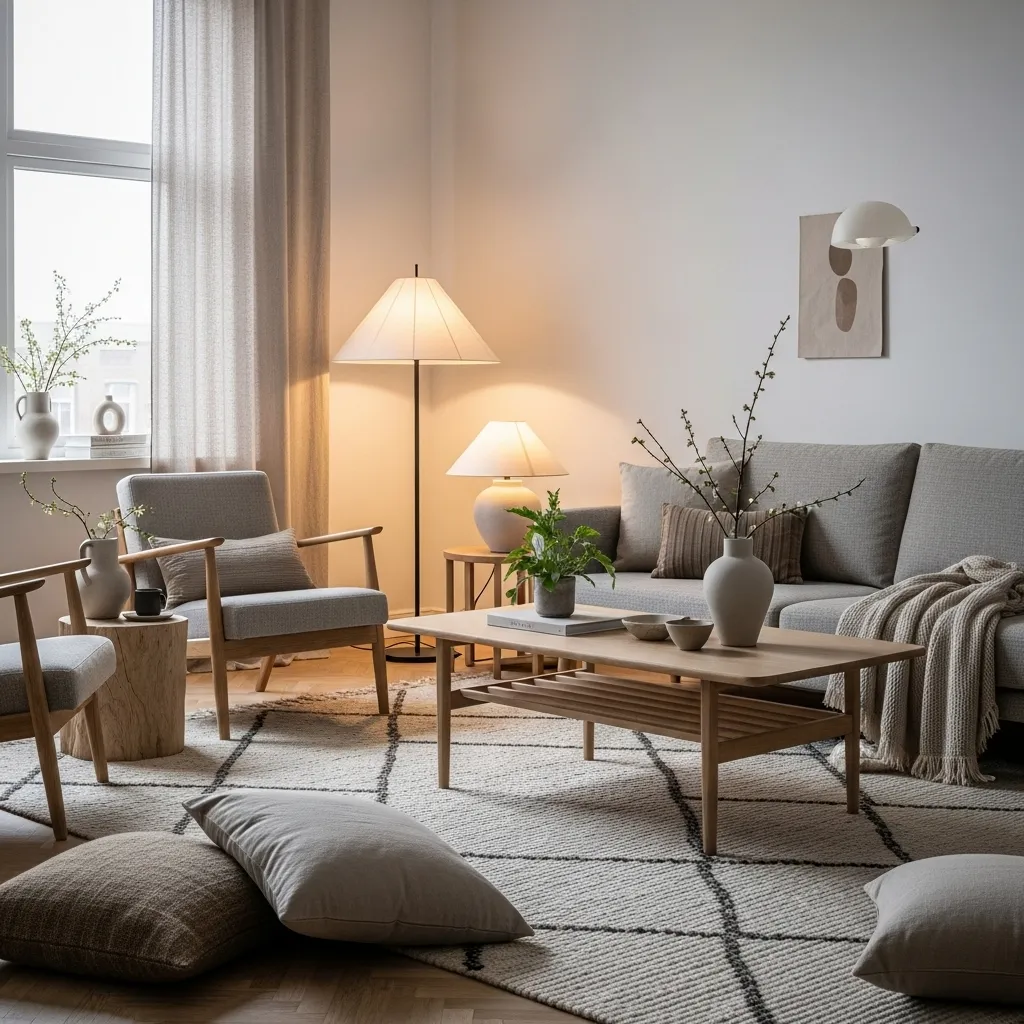
Pinterest users appreciate rugs that rely on texture rather than bold patterns. In Japandi interiors, rugs contribute to warmth and balance while supporting minimalist flow. The result is a cozy yet uncluttered living room that feels calm and grounded.
8. Japandi Statement Lighting
Lighting in Japandi living rooms is soft, warm, and intentional. Simple pendant lights, paper lanterns, or sculptural fixtures provide ambient illumination without visual heaviness. Lighting becomes both functional and artistic, enhancing mood and comfort.
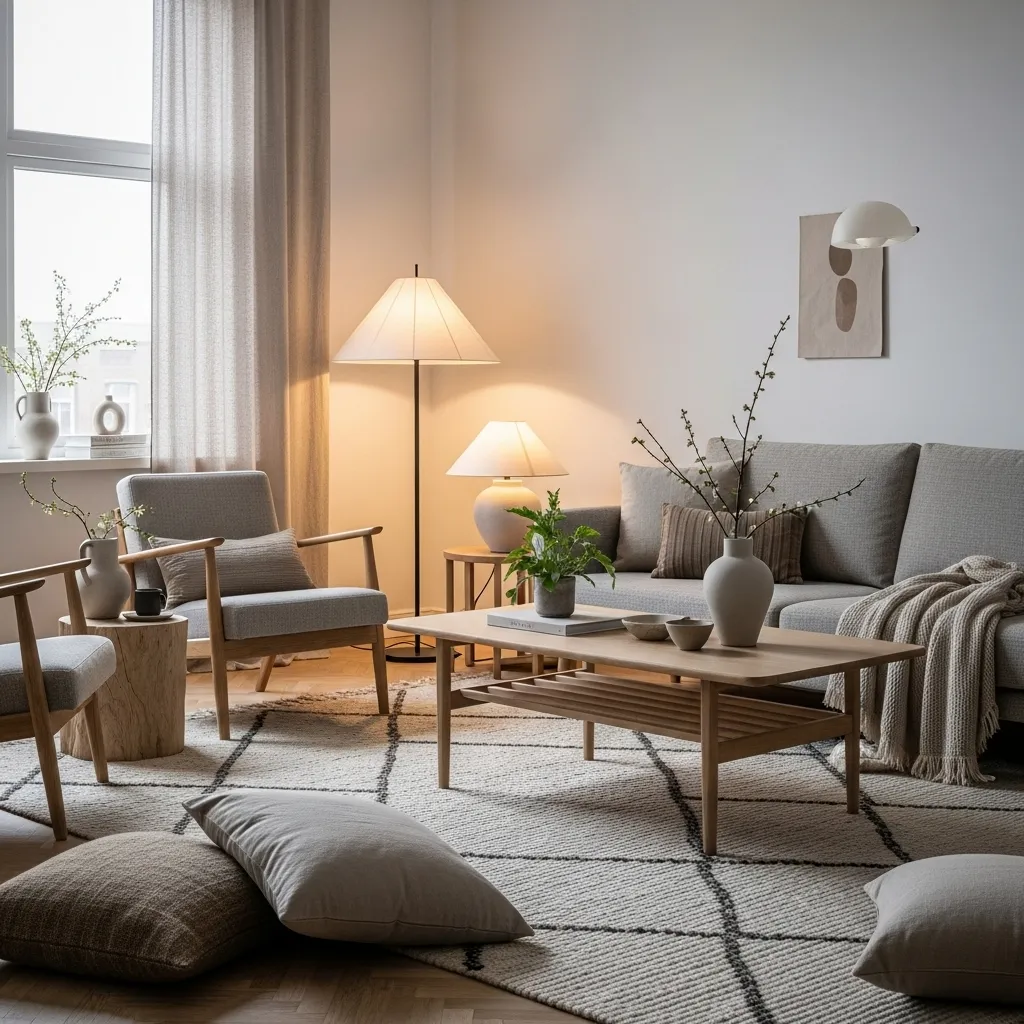
Pinterest audiences love serene lighting that transforms a space emotionally. Warm lighting highlights natural textures and creates a calming atmosphere. Thoughtful lighting design reinforces the Japandi goal of creating peaceful, human-centered interiors.
9. Minimal Indoor Plants
Indoor plants introduce life and balance into Japandi living rooms. Simple greenery like bonsai, olive trees, or minimal potted plants reinforces the connection to nature. Plants are used sparingly to avoid visual clutter while enhancing tranquility.
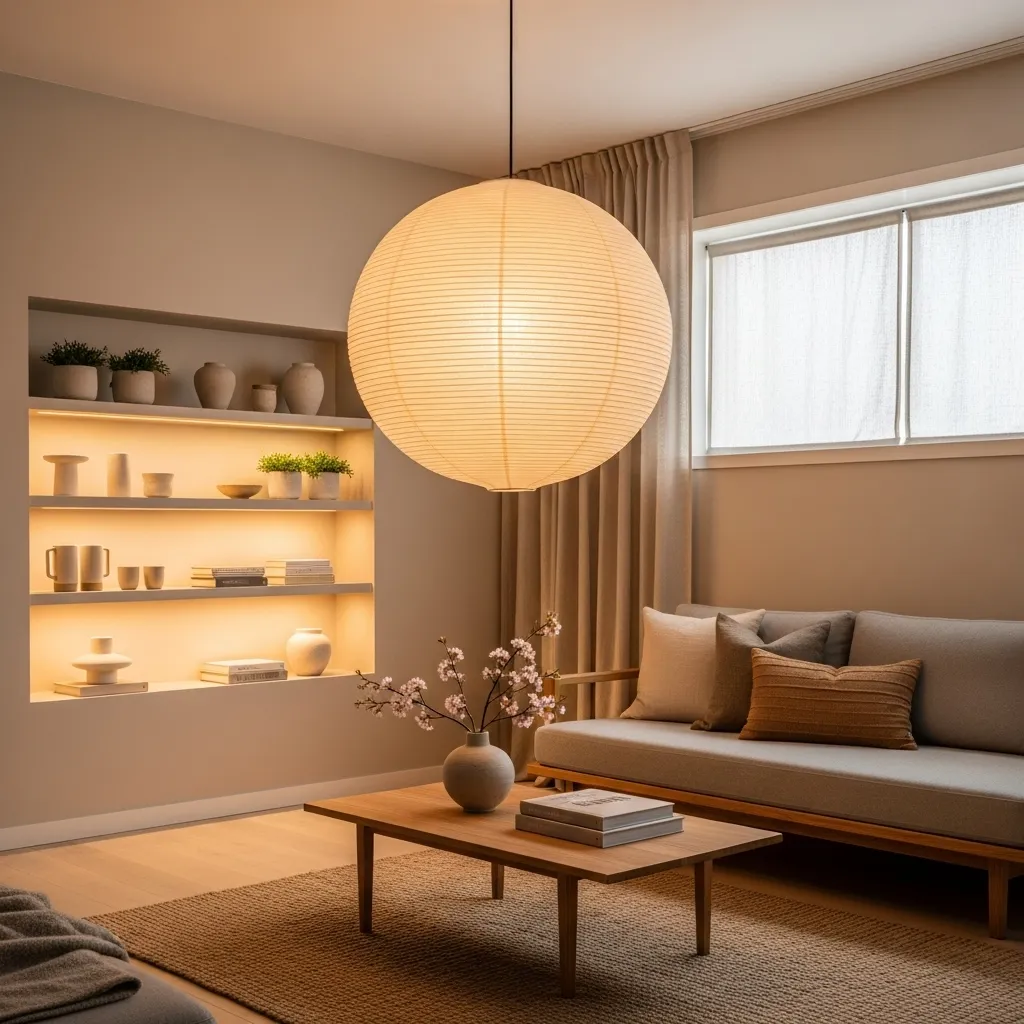
Pinterest users consistently save plant-styled minimalist interiors. A single statement plant or a few subtle accents add freshness without overwhelming the space. This restrained approach supports the calm, intentional feel of Japandi design.
10. Japandi Wall Art
Wall art in Japandi interiors is subtle and thoughtfully chosen. Abstract, nature-inspired, or monochrome artwork enhances visual interest without distracting from the minimalist environment. Art should complement the space, not dominate it.
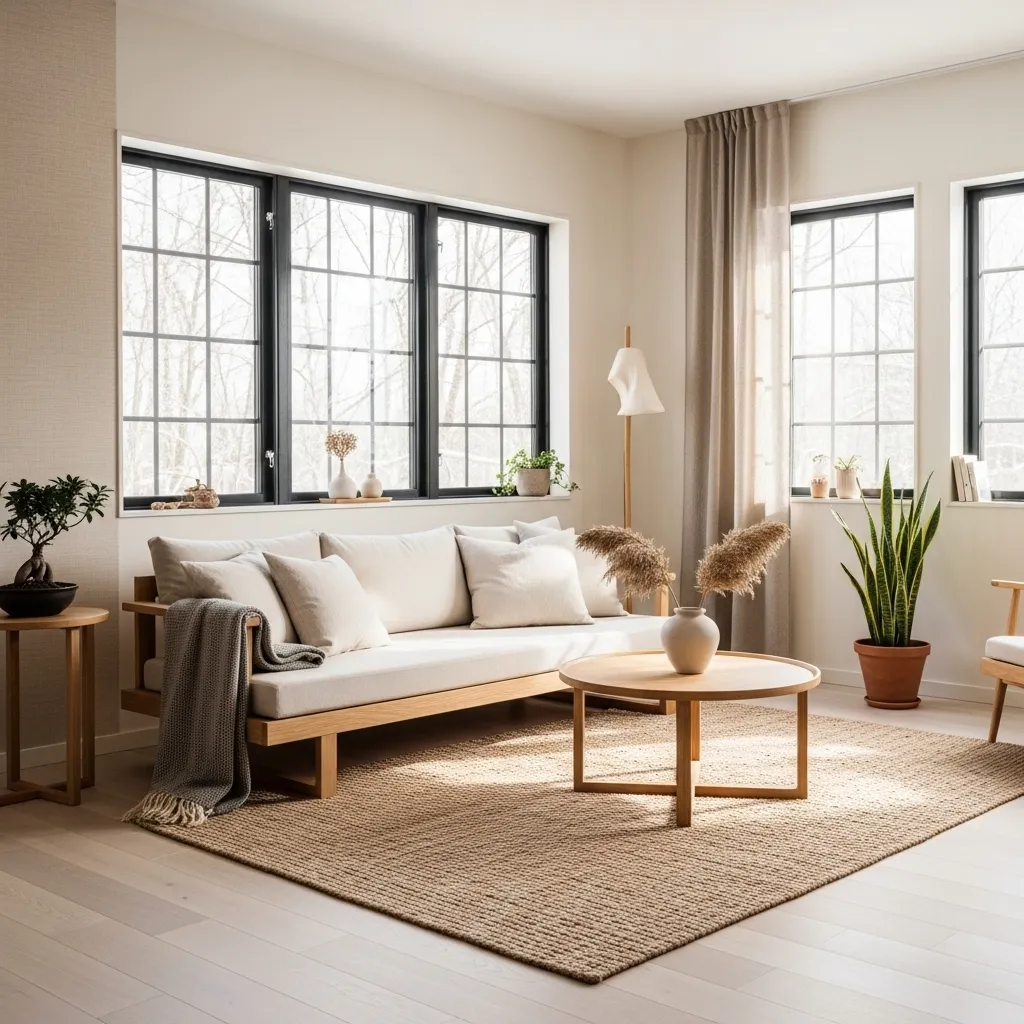
Pinterest audiences prefer understated wall decor that feels curated. Neutral art pieces add personality while preserving calm. This balance keeps the living room visually engaging yet peaceful and cohesive.
11. Built-In Japandi Storage
Built-in storage supports Japandi minimalism by hiding clutter and maintaining clean lines. Integrated shelving or cabinets blend seamlessly into the room, enhancing both functionality and aesthetics.
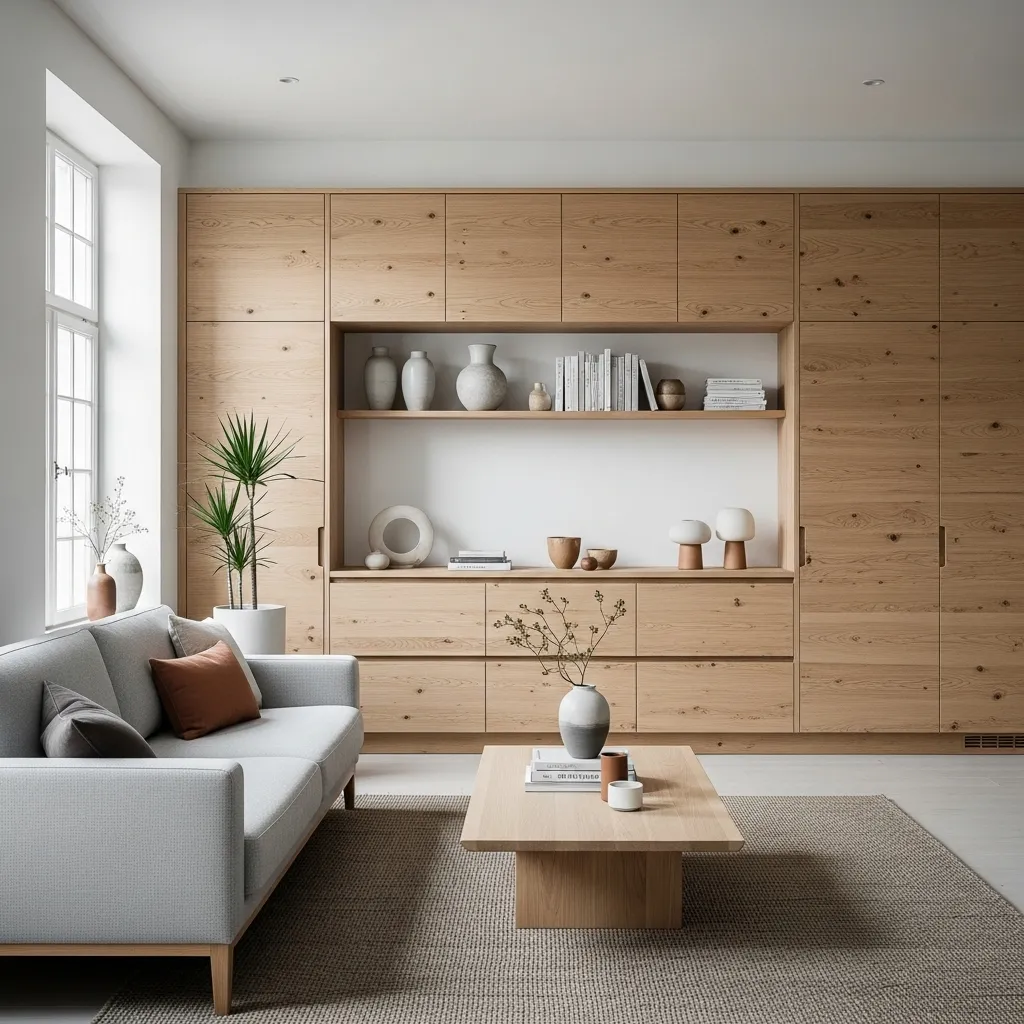
Pinterest users love smart storage solutions that elevate design. Built-ins reduce visual noise, allowing the living room to feel open, calm, and comfortable. This approach encourages mindful organization and stress-free living.
12. Muted Japandi Accent Colors
Muted accent colors like sage green, clay, or soft brown add warmth and depth to Japandi living rooms. These tones complement neutral palettes without overpowering the minimalist design.
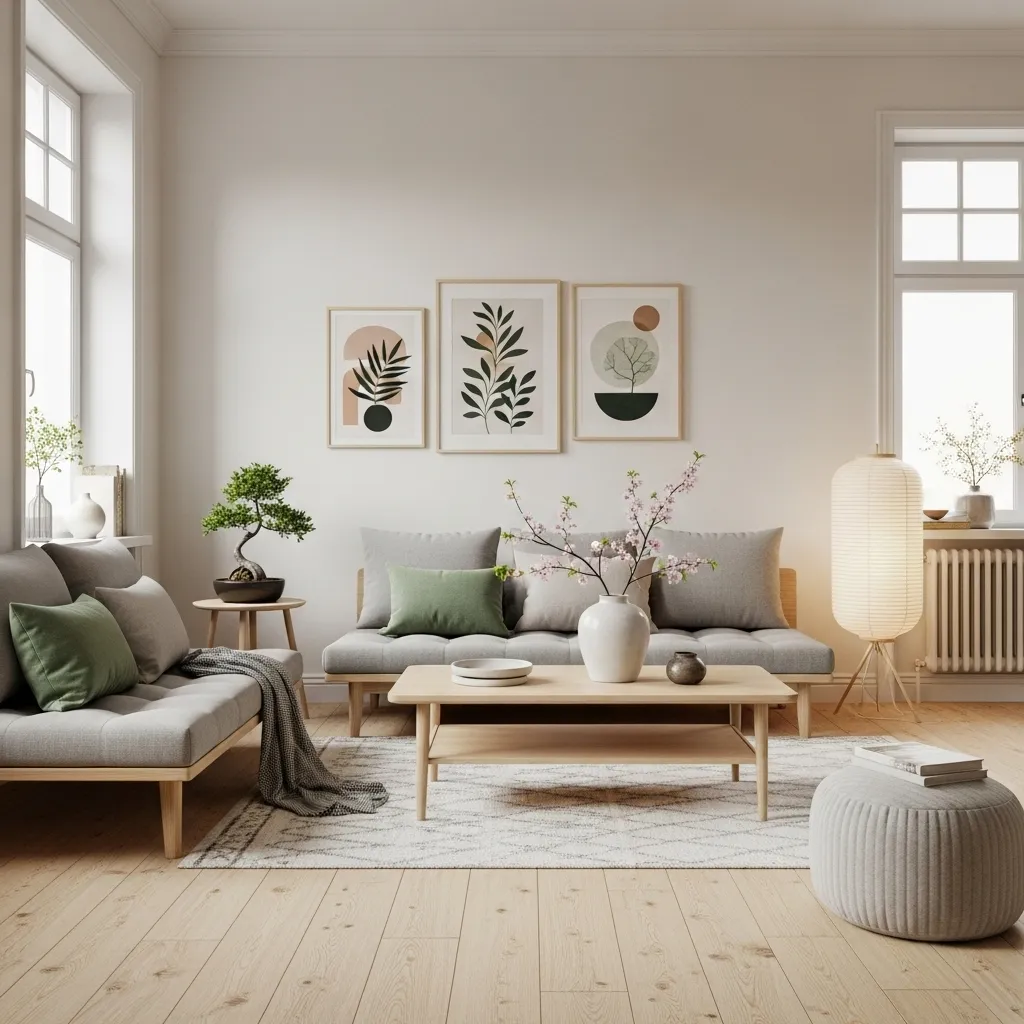
Pinterest audiences appreciate subtle color that feels intentional. Used sparingly in cushions or decor, muted accents enhance visual interest while maintaining serenity. This balance supports cozy minimalist comfort.
13. Clean Architectural Lines
Clean lines define Japandi interiors, creating order and clarity. Straight edges and simple forms guide the eye smoothly, enhancing visual flow and balance.
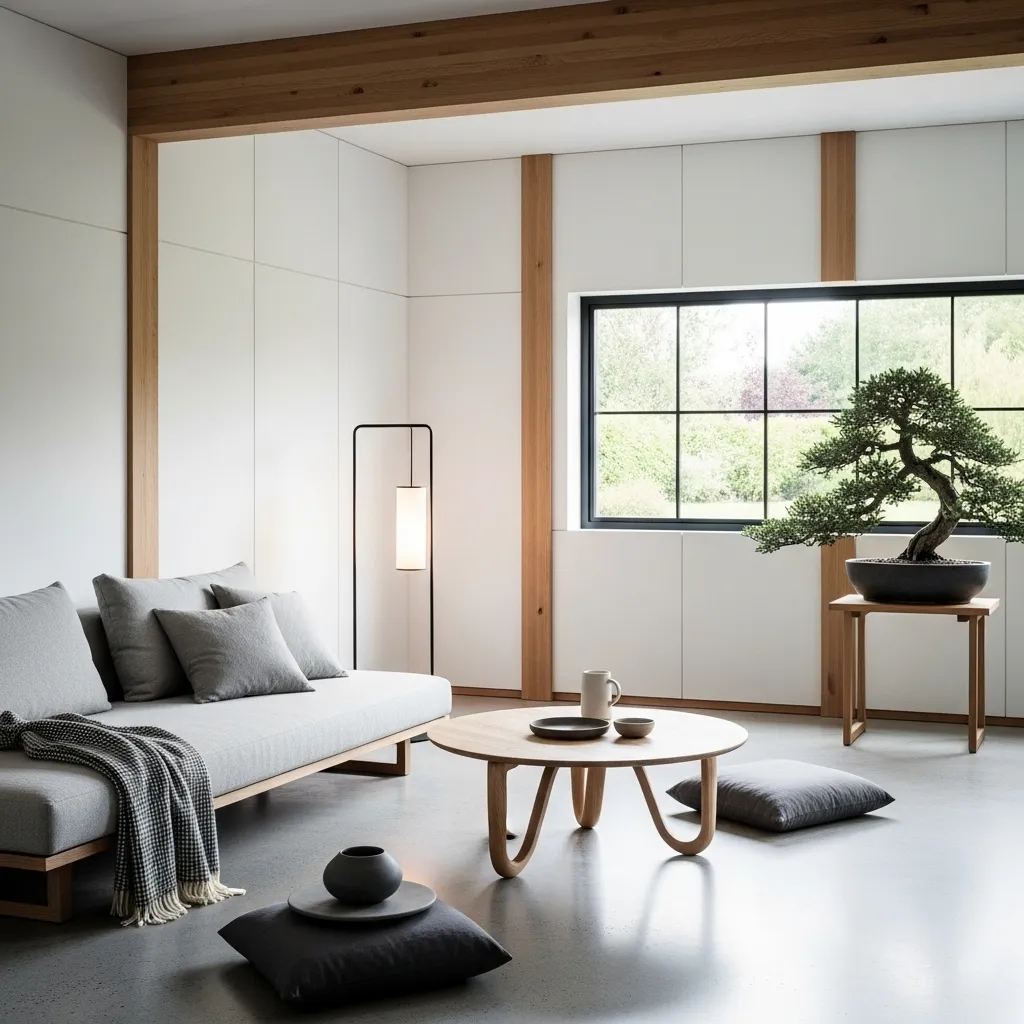
Pinterest users love interiors that feel calm and structured. Clean architectural lines support minimalism while improving comfort. This design principle creates timeless, harmonious living rooms.
14. Natural Light Emphasis
Natural light is essential in Japandi living rooms. Sheer curtains allow sunlight to filter gently, enhancing warmth and openness.
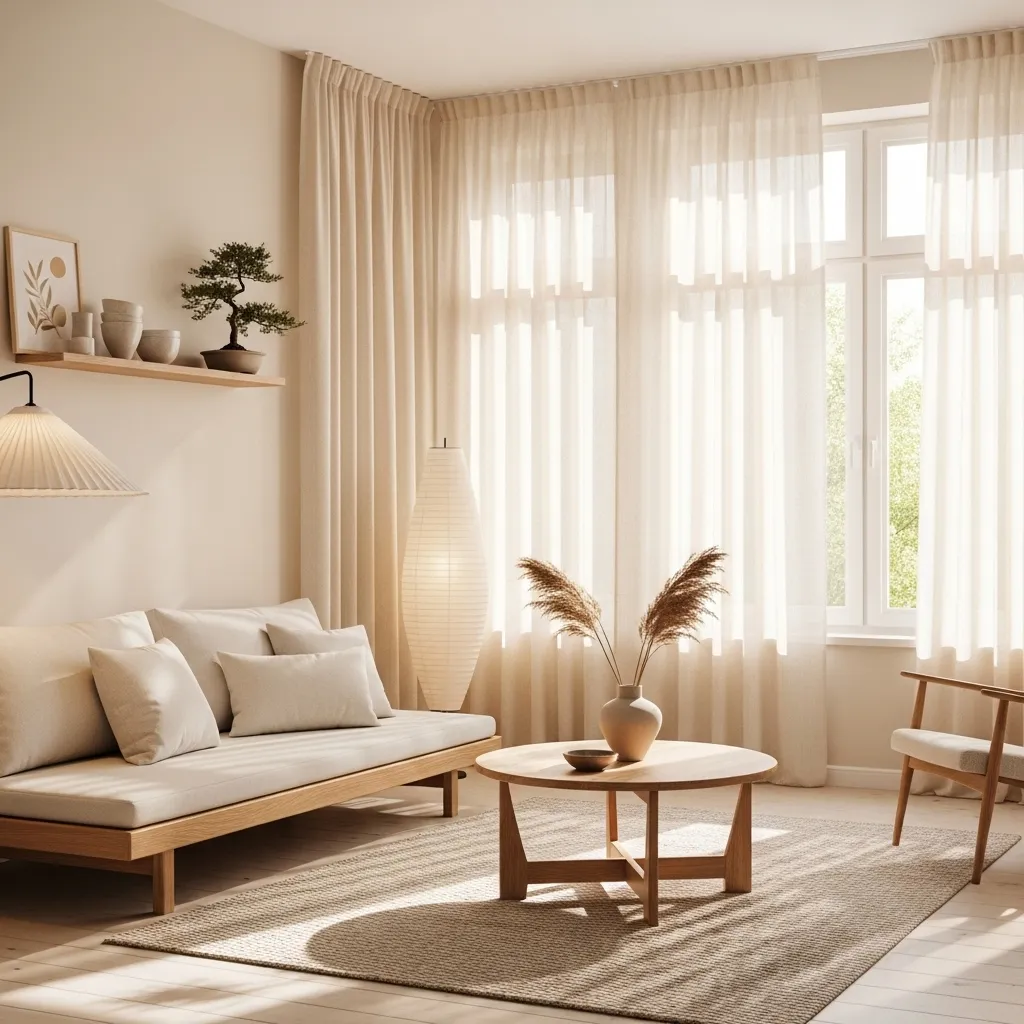
Pinterest audiences are drawn to bright yet soft interiors. Natural light highlights textures and creates a peaceful, uplifting environment that feels fresh and welcoming.
15. Wabi-Sabi Japandi Details
Wabi-sabi details celebrate imperfections, adding soul to Japandi living rooms. Uneven textures and organic forms soften minimalist spaces.
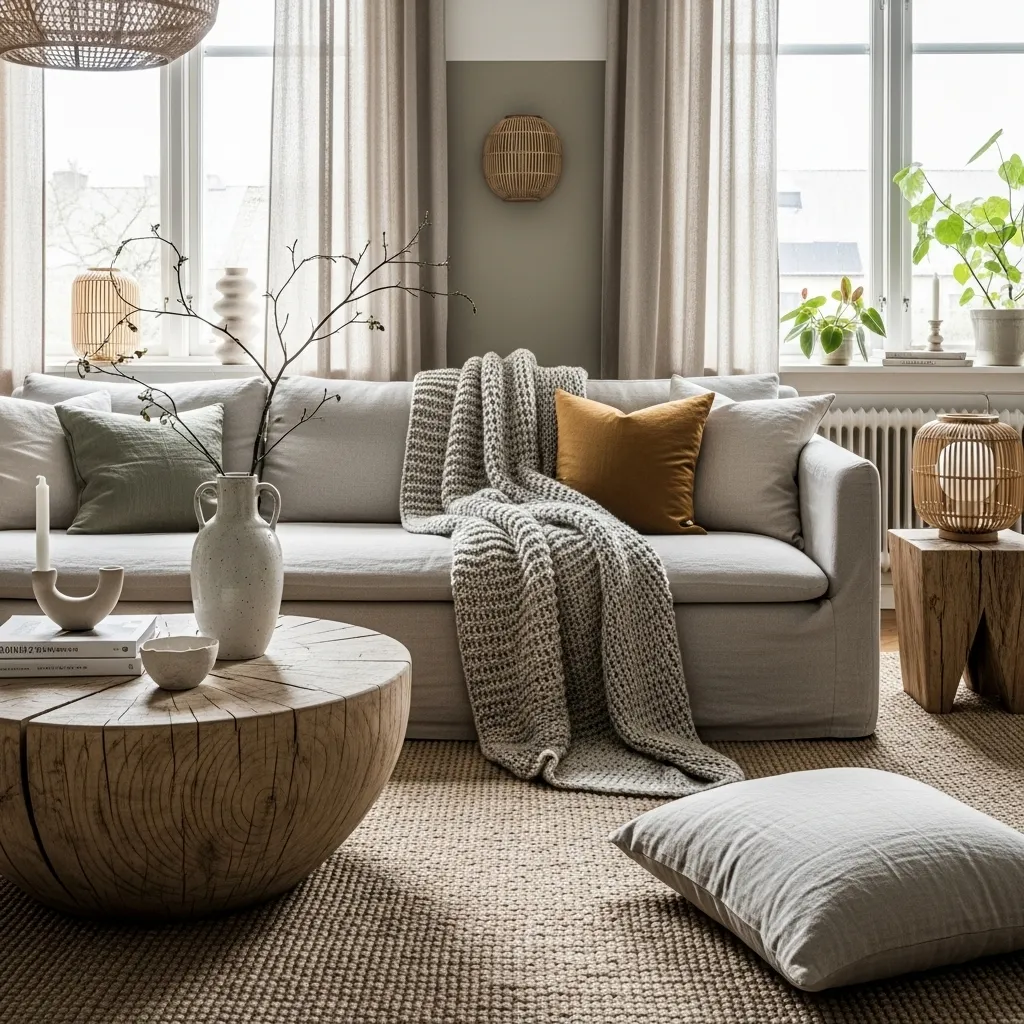
Pinterest users connect emotionally with imperfect beauty. This philosophy adds warmth and authenticity, making the living room feel deeply comforting.
16. Japandi Monochrome Styling
Monochrome styling is a powerful Japandi technique that enhances calm and visual flow. By using variations of one color—such as beige, sand, or warm gray—the living room feels cohesive and uncluttered. This approach removes harsh contrasts and allows texture to become the main design feature rather than color.
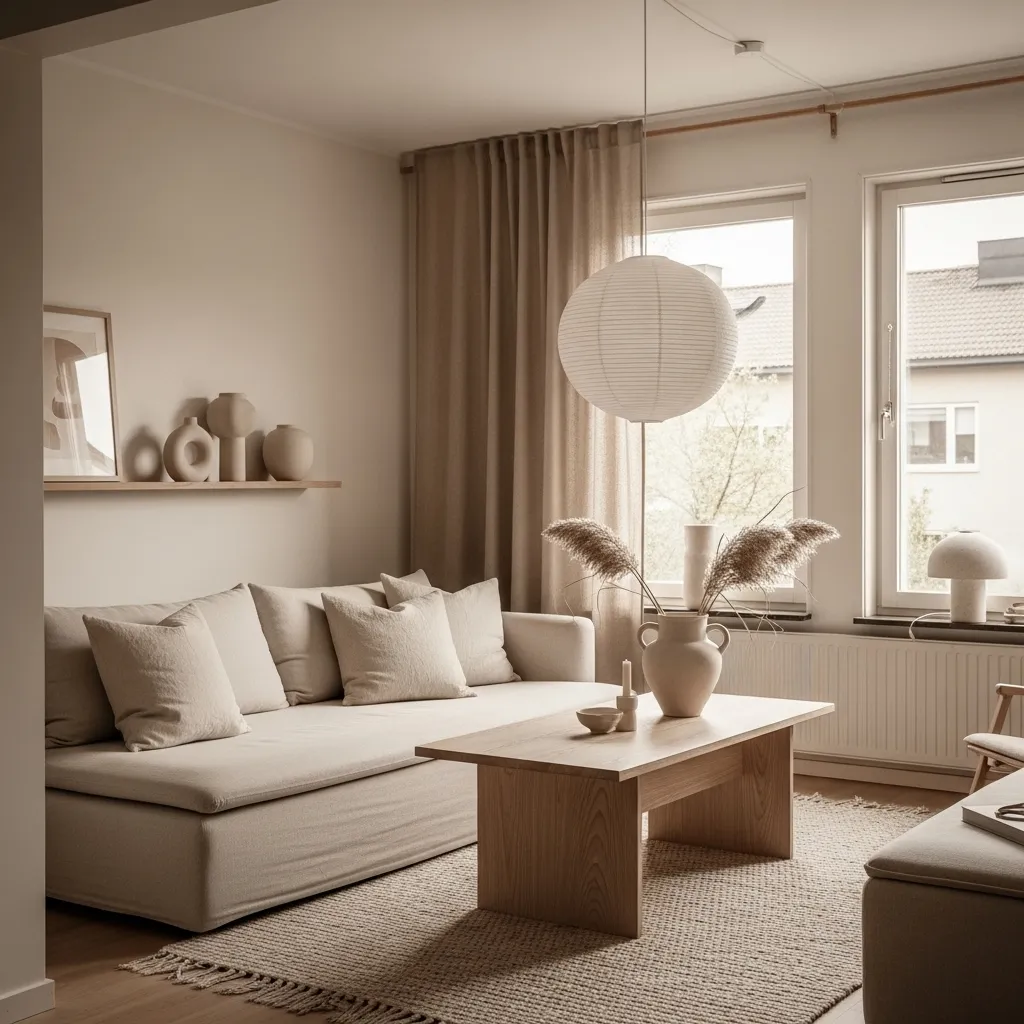
Pinterest users love monochrome Japandi living rooms because they feel elevated and timeless. Subtle tonal layering adds depth without visual chaos. When paired with natural materials, monochrome styling creates minimalist comfort that feels intentional, soothing, and effortlessly stylish.
17. Simple Japandi Coffee Table Styling
Japandi coffee table styling focuses on restraint and balance. Instead of clutter, a few carefully chosen items—such as a ceramic bowl, neutral-toned books, or a small plant—create visual interest while maintaining calm. Negative space is just as important as decor in Japandi interiors.
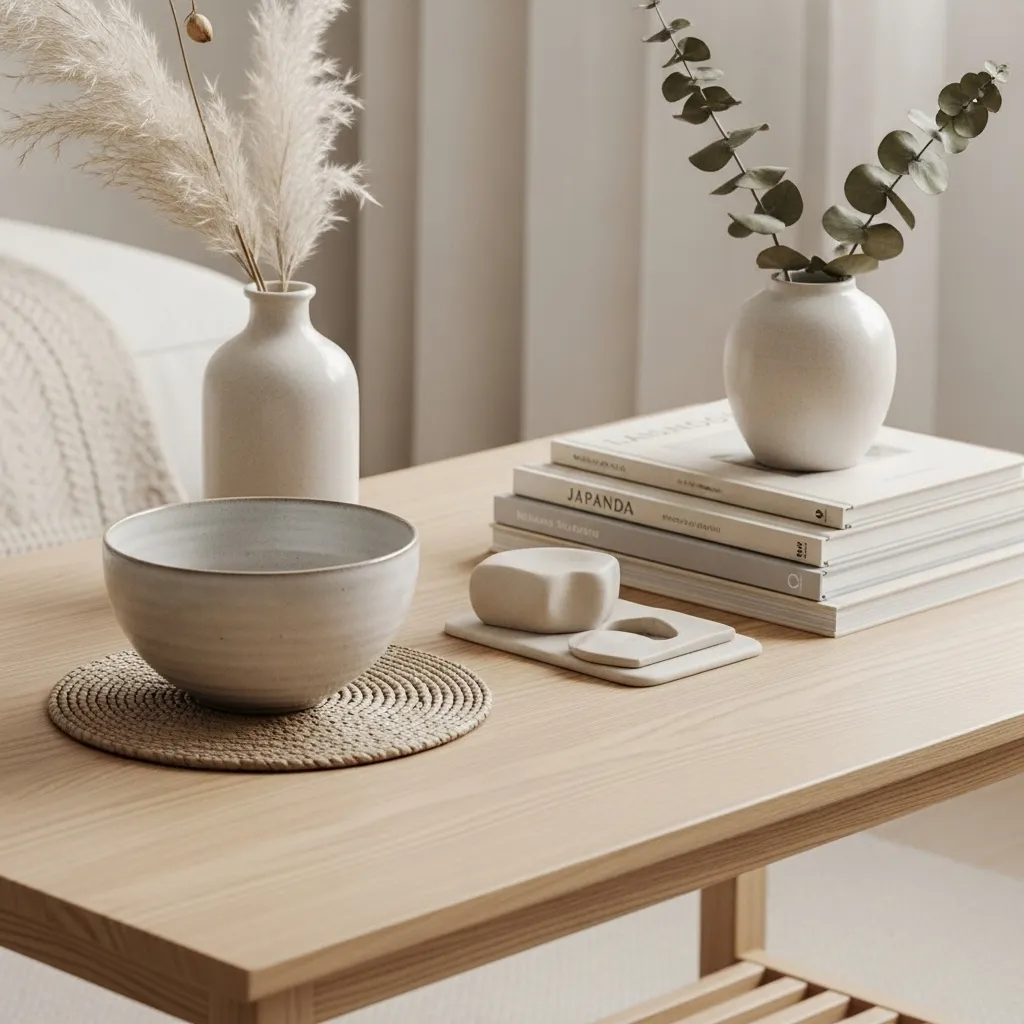
Pinterest audiences appreciate simple styling ideas that feel achievable. A minimalist coffee table enhances everyday comfort while keeping the living room visually light. This approach reinforces mindful living and keeps the space functional, elegant, and easy to maintain.
18. Japandi Floor Seating Elements
Floor seating is inspired by traditional Japanese living and blends beautifully with Scandinavian comfort. Floor cushions, poufs, or low benches create a relaxed atmosphere and encourage slower, more mindful living. These elements also help keep the room visually open and uncluttered.
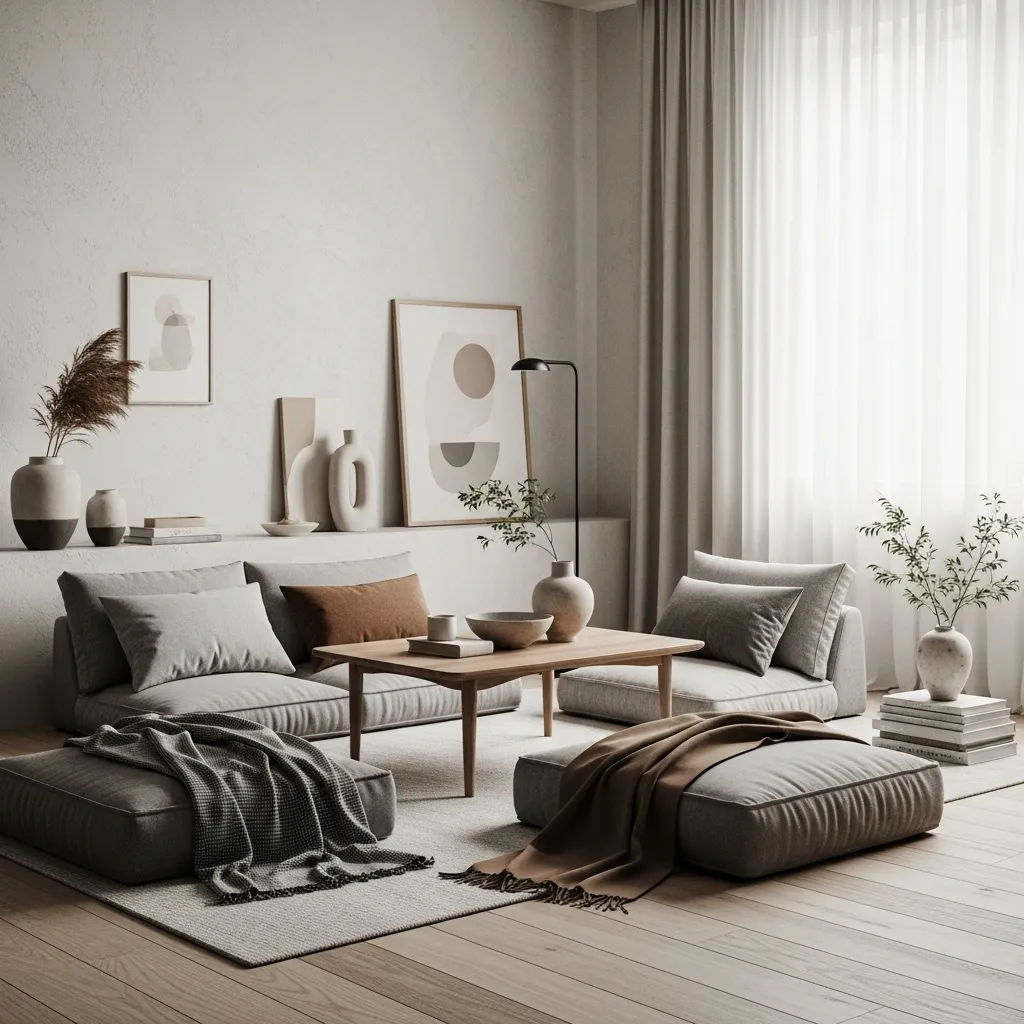
Pinterest users are drawn to cozy, grounded spaces that feel unique. Floor seating adds flexibility and warmth while supporting minimalist flow. When styled with neutral fabrics and natural textures, it enhances both comfort and authenticity in a Japandi living room.
19. Textured Japandi Wall Finishes
Textured wall finishes add subtle depth to Japandi living rooms without overwhelming the minimalist aesthetic. Limewash, plaster, or textured paint introduces organic movement that enhances warmth and visual interest. These finishes reflect light softly, contributing to a calm and inviting atmosphere.
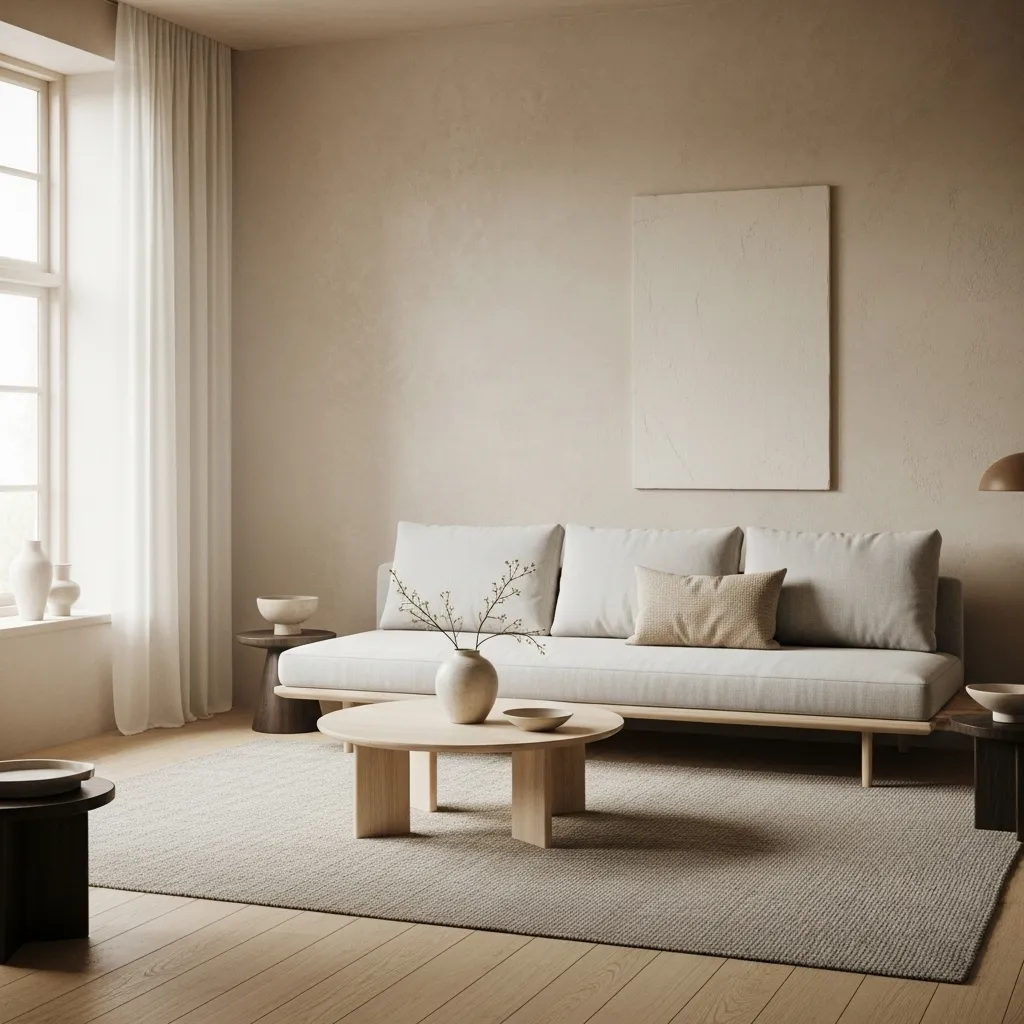
Pinterest audiences love tactile interiors that feel natural and refined. Textured walls elevate simplicity by adding character without clutter. This design choice strengthens Japandi’s balance between minimalism and comfort, making the living room feel serene and lived-in.
20. Balanced Japandi Symmetry
Symmetry brings order and harmony to Japandi living rooms. Balanced furniture placement helps guide the eye naturally, creating a sense of calm and stability. This layout works especially well in minimalist spaces where visual clarity is essential.
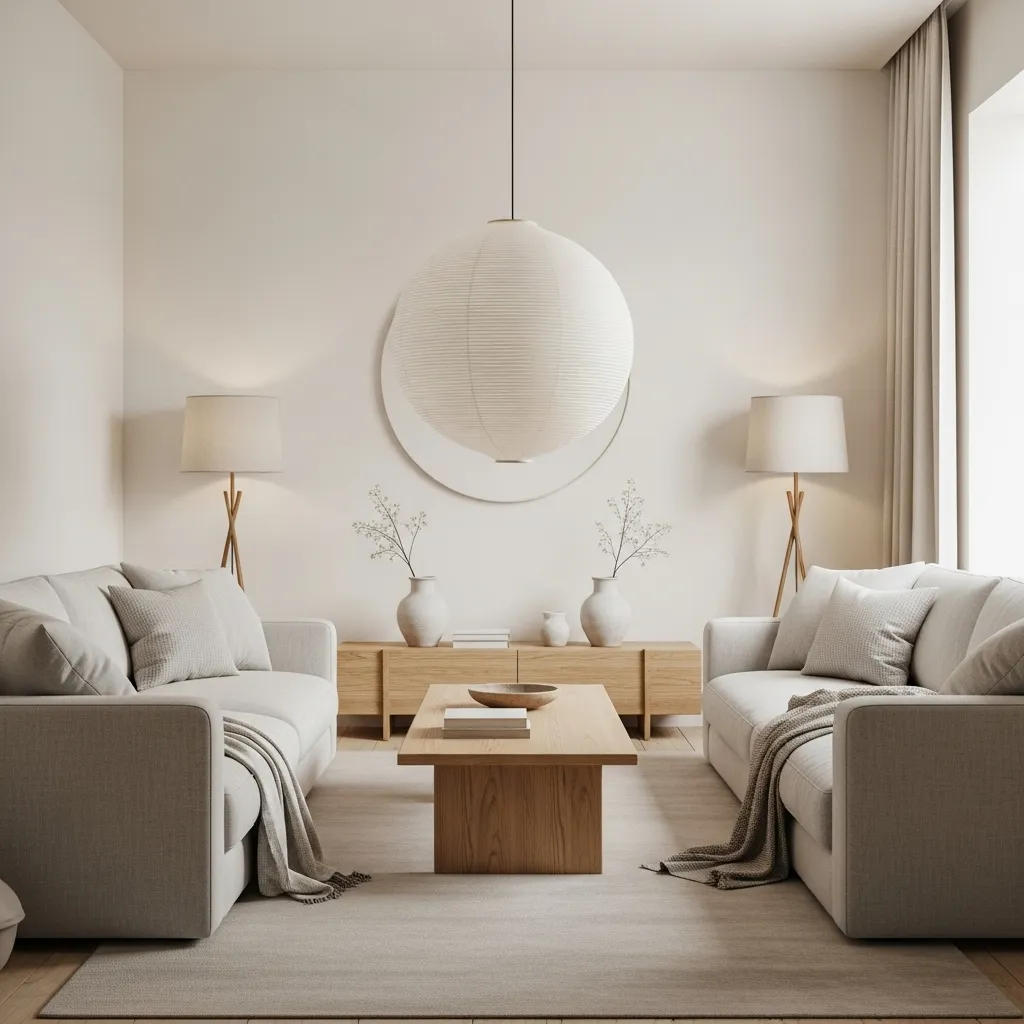
Pinterest users gravitate toward symmetrical interiors because they feel polished and peaceful. When combined with soft textures and neutral tones, symmetry enhances comfort rather than rigidity. This approach creates a living room that feels grounded, timeless, and effortlessly organized.
21. Minimal Japandi Window Treatments
Minimal window treatments allow natural light to become a key design feature. Sheer linen curtains soften sunlight while maintaining privacy, enhancing warmth and openness. Heavy drapes are avoided to preserve visual lightness and clean lines.
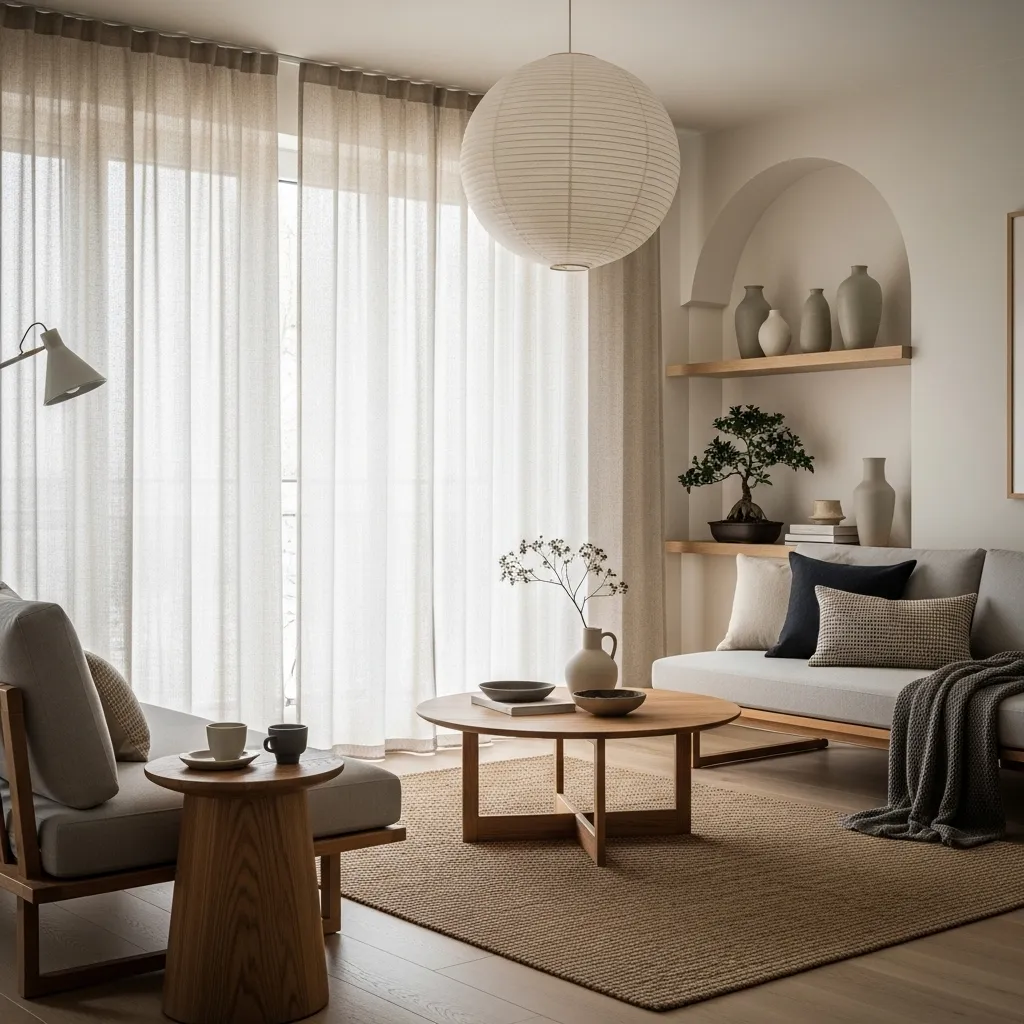
Pinterest audiences love bright, airy Japandi interiors. Simple window treatments highlight architectural beauty and natural textures. This approach supports a calm, uncluttered environment that feels both cozy and refreshing throughout the day.
22. Handmade Japandi Decor Pieces
Handmade decor adds soul and authenticity to Japandi living rooms. Items crafted from clay, wood, or natural fibers introduce subtle imperfections that soften minimalism. These pieces feel intentional and meaningful rather than mass-produced.
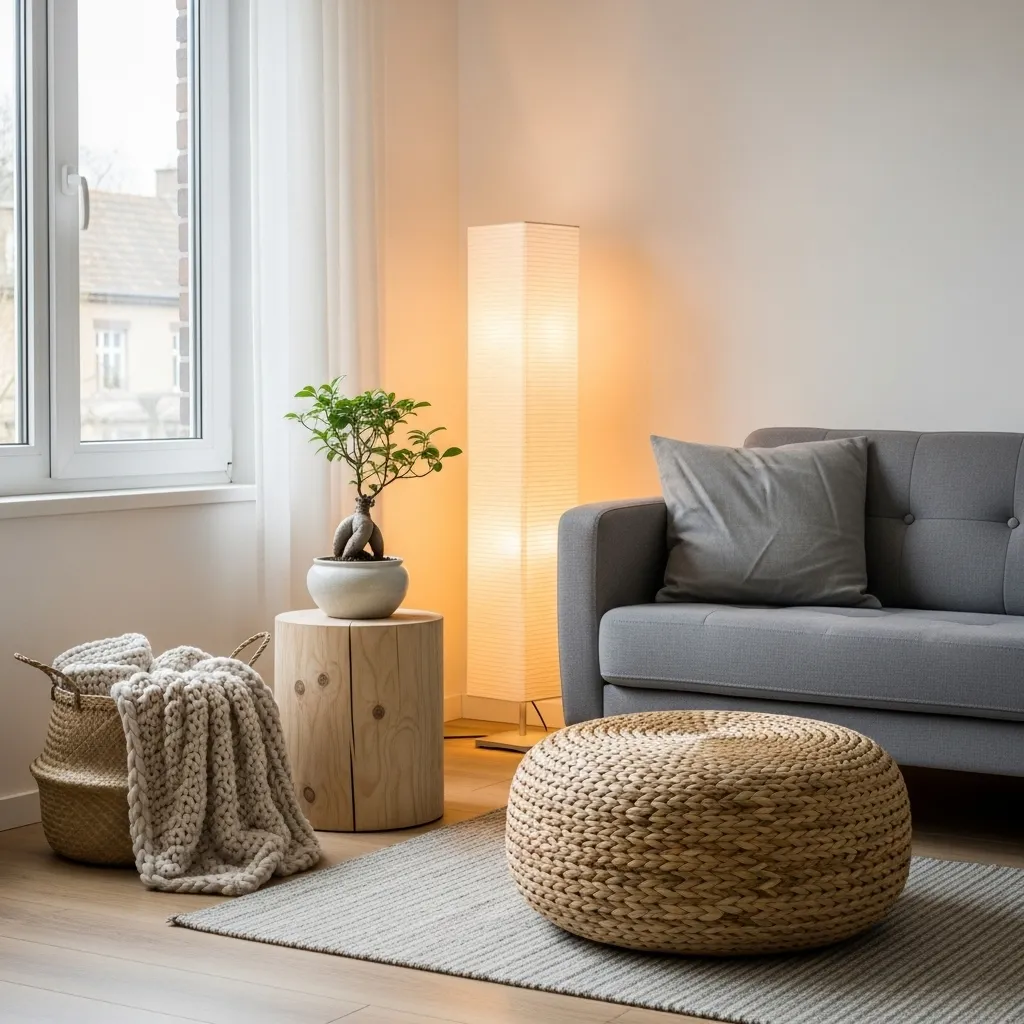
Pinterest users value decor with a story. Handmade elements enhance emotional warmth while maintaining visual simplicity. When used sparingly, they elevate the living room’s character and reinforce Japandi’s appreciation for craftsmanship and mindful living.
23. Warm Neutral Japandi Throw Pillows
Throw pillows are an easy way to add comfort to a Japandi living room without clutter. Neutral shades like taupe, cream, or soft brown keep the palette calm while adding softness. Textured fabrics enhance coziness without overpowering the minimalist design.
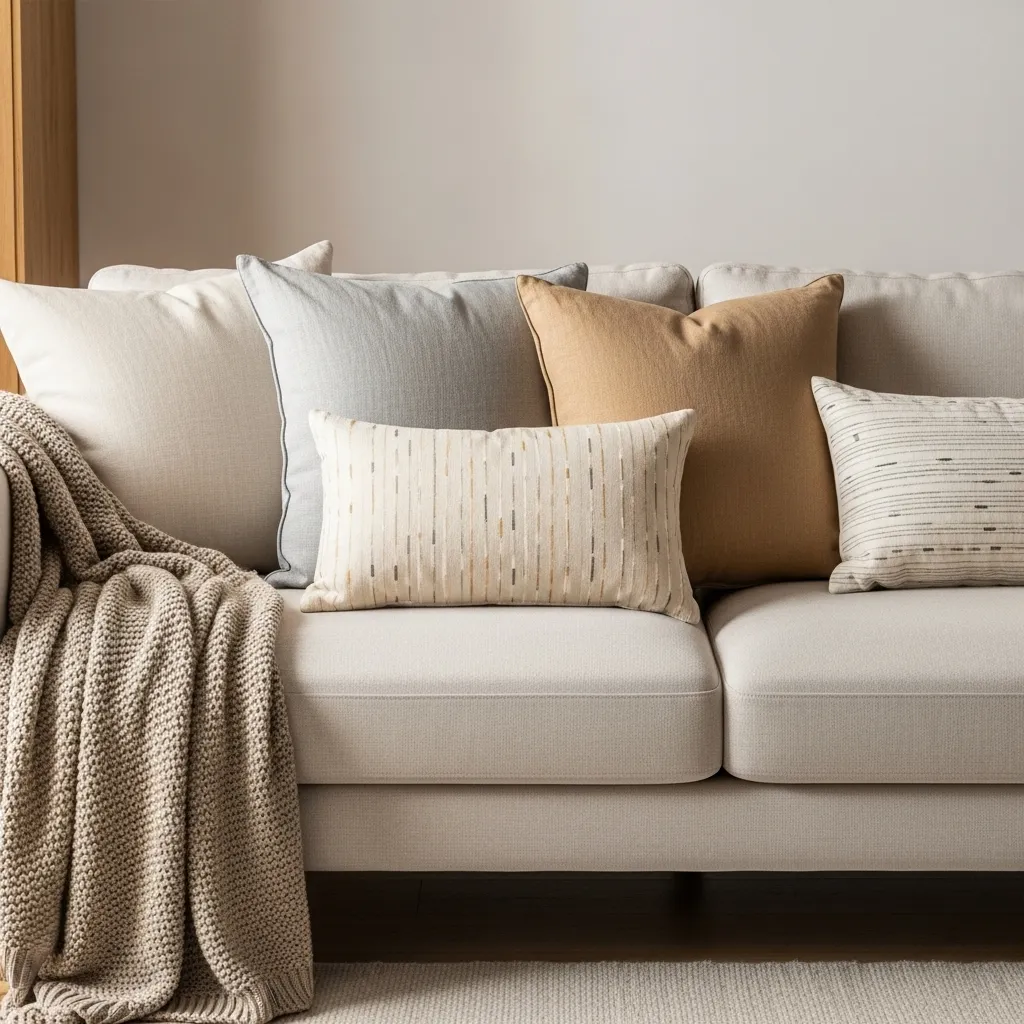
Pinterest audiences love cozy styling details that remain visually clean. A few well-chosen pillows enhance relaxation and warmth. This simple addition supports everyday comfort while preserving Japandi’s serene aesthetic.
24. Minimal Japandi Fireplace Feature
A minimalist fireplace adds warmth and focus to a Japandi living room. Clean lines and simple materials ensure the fireplace blends seamlessly into the design rather than dominating it. It becomes a quiet focal point that enhances comfort and balance.
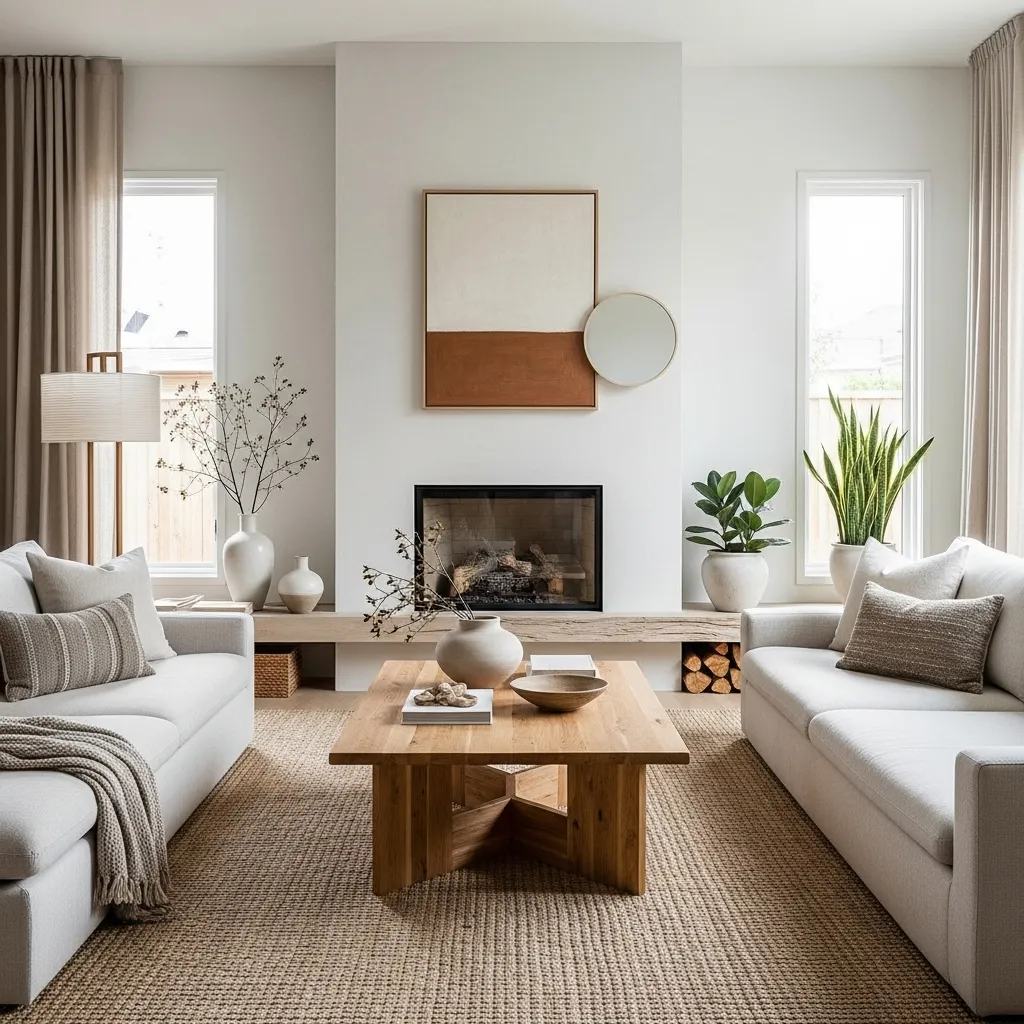
Pinterest users love fireplaces that feel modern and calming. When styled minimally, fireplaces support Japandi’s cozy yet uncluttered feel. This feature makes the living room inviting while maintaining visual harmony.
25. Calm, Clutter-Free Japandi Styling
Clutter-free styling is the essence of Japandi living room design. Every item serves a purpose, and unnecessary decor is removed to create mental and visual calm. This approach promotes mindful living and reduces daily stress.
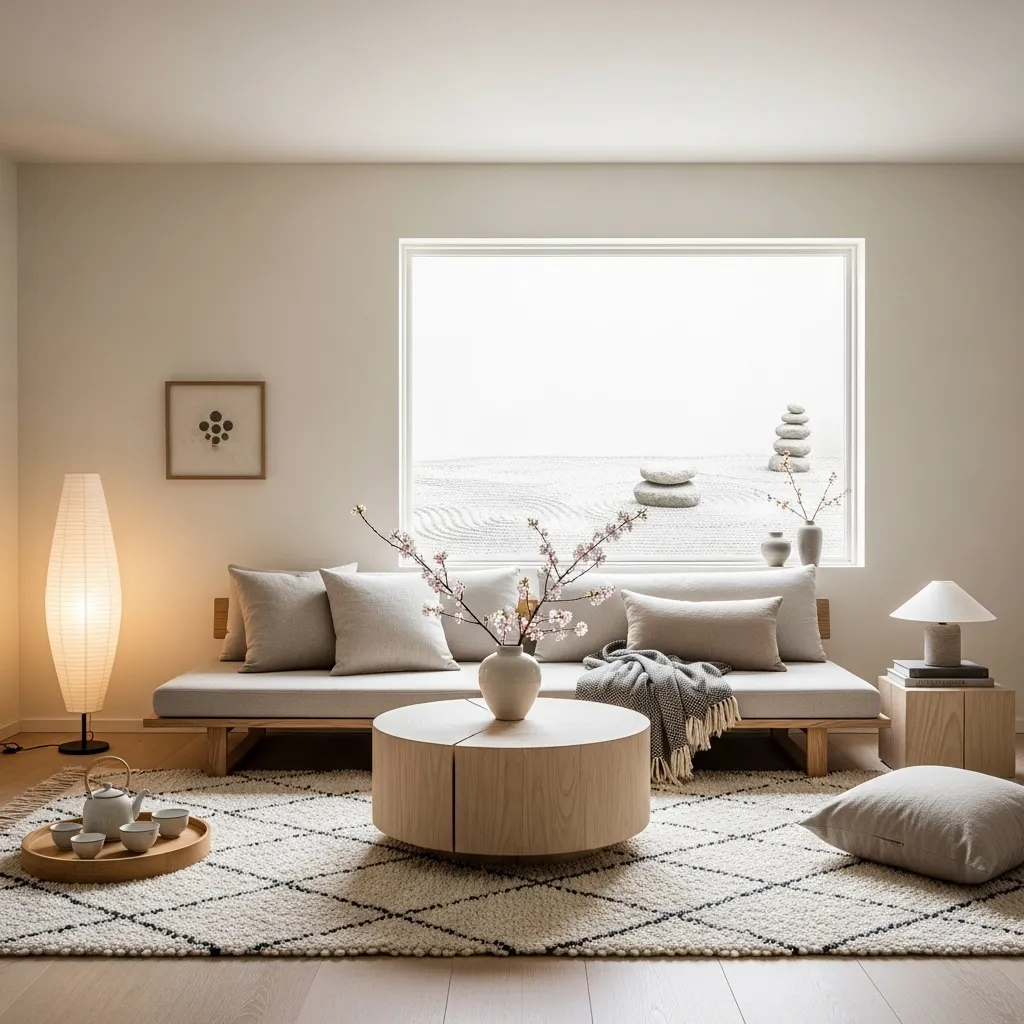
Pinterest audiences seek peaceful interiors that feel achievable and restorative. A clutter-free Japandi living room feels timeless, breathable, and deeply comforting. This final principle ties all Japandi elements together into a space that truly supports minimalist comfort.
Conclusion
Japandi living room design is the perfect balance between minimalism and comfort, blending Japanese simplicity with Scandinavian warmth. By focusing on neutral colors, natural materials, clean lines, and intentional styling, you can create a living space that feels calm, functional, and deeply inviting. Each Japandi idea emphasizes mindful living—where every piece has a purpose and visual clutter is kept to a minimum.
For Pinterest audiences, Japandi living rooms offer timeless inspiration that feels both aspirational and achievable. Whether you incorporate low-profile furniture, soft textiles, or handcrafted decor, these ideas help transform any living room into a serene retreat. Embracing Japandi design allows you to enjoy a clutter-free, cozy environment that supports relaxation, balance, and everyday well-being. 📌✨